Most of jiu-jitsu needs a partner, but a surprising amount of it does not. The way you move your hips, roll over your shoulders and get back to your feet can all be trained alone, on a few square feet of floor. This guide covers the solo jiu jitsu drills we recommend to students at GMA in Gallatin, TN: what each one builds, how to do it, and how to put them together into a short session you can run at home on days you cannot make it to class.
One thing up front: solo drills support mat time, they do not replace it. They make the movements you learn in class smoother and more automatic, so that when a coach shows you a new escape or guard recovery, your body already knows the basic pattern.
Why Solo Jiu Jitsu Drills Are Worth Your Time
Almost every technique in jiu-jitsu is built from a small set of body movements. A mount escape is a bridge plus a hip escape. A guard recovery is a hip escape plus a leg swing. A sweep from the bottom often finishes with a technical stand-up. When those base movements are clumsy, every technique built on them feels clumsy too.
Solo drills let you repeat those movements hundreds of times without wearing out a training partner. They also do a few other useful jobs:
- Coordination. Beginners often know what they want to do but cannot get their hips, shoulders and feet to cooperate. Repetition fixes that faster than anything else.
- Conditioning that transfers. A few rounds of shrimping and bridging works the same muscles in the same way you will use them when someone heavy is on top of you.
- Consistency. Ten or fifteen minutes on a living room floor is easy to fit into a busy week, and it keeps you moving between classes.
If you want a full strength program to go with them, our guide to strength training for jiu-jitsu covers the lifts that matter most for grapplers.
The Core Movements: Bridge, Shrimp and Technical Stand-Up
If you only have time for three drills, make it these. They show up in nearly every class, at every belt level.
Bridge (upa)
Lie on your back with your knees bent and your feet flat, close to your hips. Drive through your feet and lift your hips as high as you can, then come back down with control. In jiu-jitsu you rarely bridge straight up, so alternate: bridge up and turn so your weight goes over one shoulder, come down, then bridge over the other shoulder. Look in the direction you are bridging. This is the movement behind the classic mount escape, where you trap an arm and a foot on one side and bridge your opponent over.
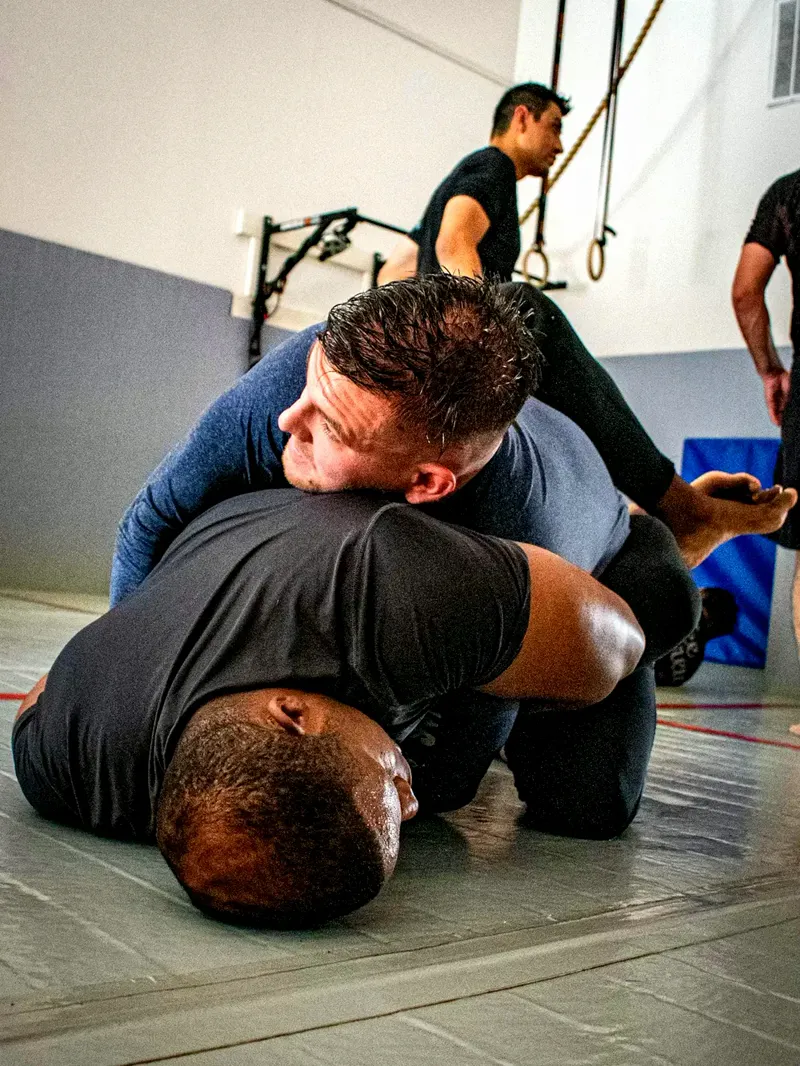
Shrimp (hip escape)
From the same starting position, turn onto one side, push off the foot on the floor and drive your hips back and away, as if pushing someone off you with your hands. Your shoulders stay roughly in place while your hips travel. Reset onto your back, then shrimp to the other side. Done down the length of a mat or hallway, it looks like a shrimp swimming backward, which is where the name comes from.
The shrimp is how you create space when someone is on top of you in side control or mount, and it is the first step in getting your guard back. The common mistakes are staying flat on your back and rushing. Move your hips first, then everything else follows.
Technical stand-up
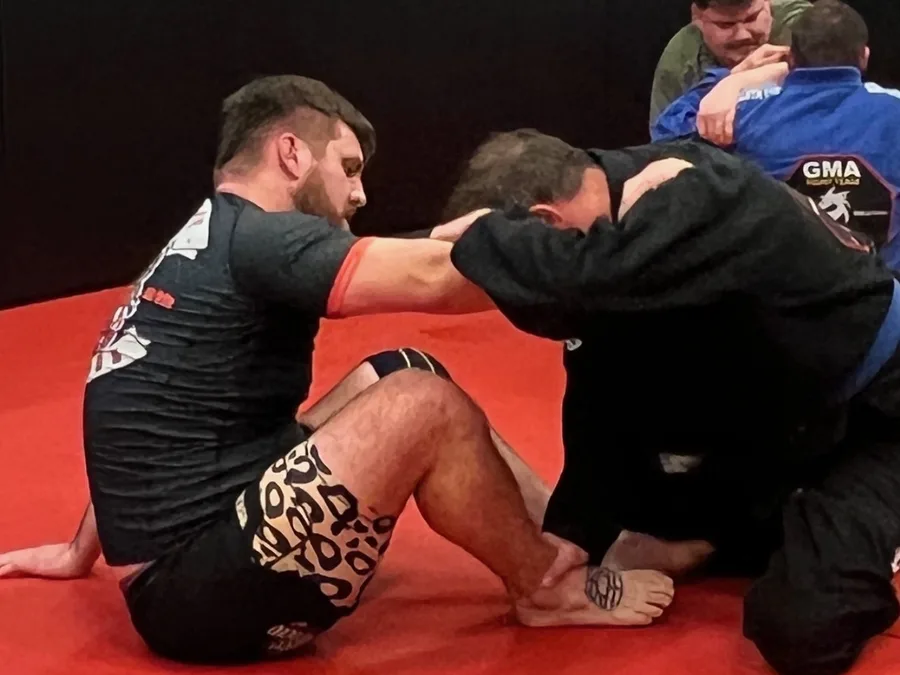
Sit on the floor with one hand posted behind you and the opposite foot planted. Your free hand stays up in front of your face. Lift your hips, swing the other leg back through the gap under your body, and stand up into a balanced stance, a step back from where you started. Keep your eyes forward the whole time.
This is the safest way to get from the ground to your feet, in a gym or anywhere else, because you are never off balance and your head stays protected. Practice it on both sides.
Rolls and Inversions
Being comfortable upside down and rolling over your shoulders is a big part of guard play, escaping the back and recovering when a takedown goes wrong. These drills need a little more floor and a soft surface. A gym mat, a thick rug or grass works. Bare hardwood does not.
Forward and backward shoulder rolls
Jiu-jitsu rolls go over one shoulder, not over the top of the head. For a forward roll, tuck your chin, look away from the shoulder you are rolling over, and let your body travel diagonally across your back to the opposite hip. A backward roll follows the same path in reverse. These are the first rolls our coaches teach, and they are worth getting smooth before trying anything harder.
Granby roll
The Granby roll is an inverted roll across your shoulders, used to recover guard and to escape when someone is trying to take your back. It is harder than it looks. Learn it in class first, keep your weight on your shoulders and off your neck, and practice slowly. If you are not yet confident with basic shoulder rolls, skip it at home for now.
Sit-through and turtle movements
From hands and knees, sit through by kicking one leg under your body so you end up seated, facing the other way, with one hand posted. Come back to hands and knees and switch sides. This builds the hip movement you use to escape turtle and to scramble back to a better position.
Guard Movement Drills
A lot of good guard work comes down to keeping your hips mobile and your legs between you and your opponent. These drills help with both.
- Hip heist. From sitting with one hand posted, lift your hips and swing one leg back so you come up on a knee. It is a short version of the technical stand-up and shows up in many sweeps.
- Leg circles. On your back, circle your legs in the air as if keeping a passer from getting around them. Go both directions. It builds the hip flexor endurance you need to keep a guard.
- Bridge and shrimp combinations. Bridge, turn to your side, shrimp, square back up. This is a mount or side control escape in slow motion.
- Sprawl. From a standing stance, drop your hips to the floor and shoot your legs back, then pop back up. It is the basic defense to a takedown and a solid conditioning drill on its own.
A 15-Minute Solo Jiu Jitsu Drills Session
You do not need a long workout. A simple structure is 30 seconds of work and 30 seconds of rest per drill, which keeps the quality high. Warm up first with a few minutes of light movement (jumping jacks, arm circles, hip circles), then run through the list:
| Drill | Time | Focus |
|---|---|---|
| Bridges (alternating shoulders) | 2 x 30 seconds | Hip drive, turning over a shoulder |
| Shrimps (both sides) | 2 x 30 seconds | Hips move first, shoulders stay put |
| Technical stand-up | 2 x 30 seconds | Hand up, eyes forward, both sides |
| Forward and backward shoulder rolls | 2 x 30 seconds | Chin tucked, roll on the shoulder |
| Sit-throughs | 2 x 30 seconds | Smooth hips, posted hand |
| Hip heists | 2 x 30 seconds | Get up onto the knee quickly |
| Sprawls | 2 x 30 seconds | Hips down, legs back, pop up |
Start slow and clean. Speed comes from repetition, not from rushing. Once the session feels easy, add rounds before you add speed. Two or three short sessions a week, on days you are not training, is plenty for most people.
Safety Notes for Training at Home
Solo drills are low risk compared to live rolling, but a few rules still apply:
- Use a soft surface for anything that involves rolling or inverting, and clear space around you.
- Keep weight off your neck in every roll. If a drill puts pressure on your neck, stop and ask a coach to look at it in class.
- Do not practice submissions on family members or friends who have not trained. Submissions are learned under a qualified coach, with a partner who knows to tap early.
- If you have a back, neck or knee injury, talk to your doctor before adding drills like rolls or sprawls.
Bring It Back to the Mat
The real test of solo drilling is whether the movements show up when someone is resisting. That is where class and open mat come in. Our open mat and open gym runs weekday mornings from 11:00 AM to 1:00 PM, and it is the right place to take a movement you have been drilling alone and try it against a partner, with instructors on the mat if you want a correction. Escape drills pair especially well with submission defense; our breakdown of the types of chokes in BJJ shows what you are escaping from.
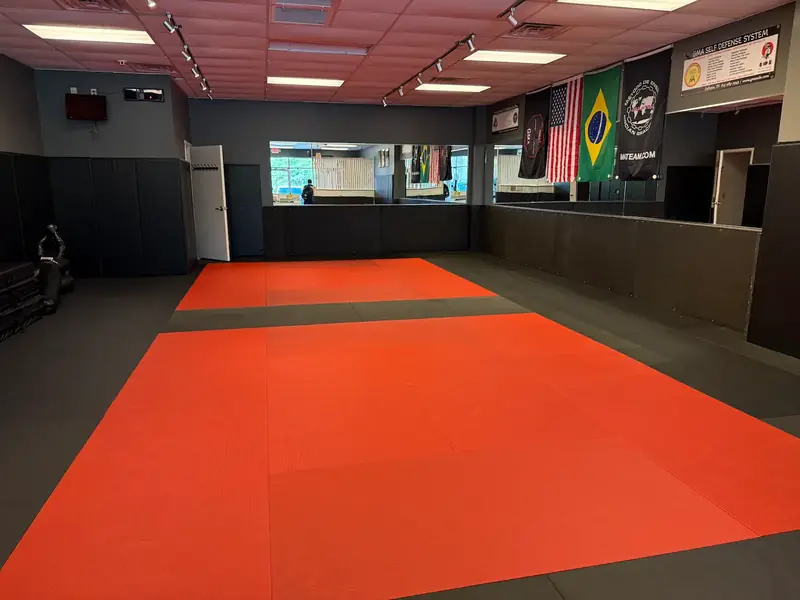
You can see every adult, teen and kids class on our class schedule. If you are new and want to learn these movements properly from the start, our coaches teach them in the first weeks of the adult and kids programs, and your first class is free.
Put Your Drills to Work
Bring what you drill at home to class or open mat in Gallatin, TN. Beginners welcome, and your first class is free.
Book Your Free ClassFrequently Asked Questions
Can you learn jiu-jitsu at home with solo drills?
Solo drills build the movements jiu-jitsu is made of, like bridging, shrimping and standing up safely, but they cannot replace training with a partner and a coach. Use them to support your classes, not instead of them.
What is the most important solo BJJ drill?
The shrimp (hip escape) is the one most coaches would pick. It is how you create space from the bottom, escape side control and mount, and recover your guard.
How often should I do solo jiu-jitsu drills?
Two or three short sessions of 10 to 15 minutes a week, on days you are not in class, is enough for most people. Focus on clean repetitions before speed.
Where can I practice drills with a partner in Gallatin?
Our open mat runs weekday mornings from 11:00 AM to 1:00 PM, and every class is listed on the schedule. New students can book a free trial class.