Jiu-jitsu is built on the idea that technique beats strength, so it is fair to ask why a grappler should lift at all. The honest answer: technique wins, but a stronger body holds positions longer, survives bad ones better and gets hurt less. Good strength training for jiu jitsu is not about turning into a bodybuilder. It is about building the specific qualities the mat asks for, without stealing energy from the classes that actually make you better. This is how we explain it to adults who train with us in Gallatin, TN, and it is the same approach our own competitors use.
One rule before anything else: lifting supports your jiu-jitsu, it does not replace it. If you only have three hours a week, spend them on the mat in adult Gi Jiu-Jitsu classes. Add the weight room once mat time is steady.
What Strength Training for Jiu Jitsu Should Build
Grappling is not a powerlifting meet. Most of a roll is spent holding, pulling, framing and bridging against a resisting person. Research on BJJ athletes points to a few qualities that matter most:
- Grip strength and grip endurance. Studies of experienced BJJ competitors consistently find high isometric handgrip strength, and grip endurance is linked to success in holds, takedowns and submissions. In the gi, your hands fatigue before almost anything else.
- Isometric strength. Holding side control, keeping a closed guard locked or finishing a choke are all strength held in place, not lifted through a range of motion.
- Lower body power. Takedowns, bridges, hip escapes and stand-ups all start from the hips and legs.
- Pulling strength. Breaking posture, pulling into guard and holding the back are pulling motions. Most grapplers need more rows and pull-ups than presses.
- Trunk and neck resilience. Your core transfers force between your hips and hands, and your neck takes load every time someone stacks you or pulls your head down.
Notice what is not on the list: a giant bench press or beach muscles. Those are fine, but they are not what keeps you safe and effective on the mat.
The Core Lifts for Grapplers
You do not need fancy equipment. A small set of compound movements covers almost everything above.
Hinge: deadlift or trap bar deadlift
The hip hinge builds the posterior chain (hamstrings, glutes and back) that powers bridges, lifts and posture in guard. The trap bar version is easier on the lower back for most beginners.
Squat: goblet squat, front squat or split squat
Squats build the legs you use to stand up in guard, finish takedowns and base out. Front-loaded versions also train the upper back and trunk to stay upright under load, which carries straight over to keeping posture.
Pull: rows and pull-ups
Rows and pull-ups are the backbone of grappling strength. To make them grip work at the same time, hang a towel or an old gi over the bar and pull while holding the fabric. That single change turns a standard pull-up into one of the most jiu-jitsu-specific exercises you can do.
Push: push-ups and overhead press
Pushing is still useful for framing and creating space. Push-ups and a moderate overhead press are usually enough. Keep the pressing volume below your pulling volume.
Carry and hold: farmer's carries and dead hangs
Walking with heavy dumbbells or kettlebells, and hanging from a bar for time, build grip endurance and the ability to hold tension, which is most of what a hard roll feels like.
Trunk and neck
Planks, side planks, dead bugs and Pallof presses build a trunk that resists twisting. For the neck, start with light bodyweight isometrics (pressing your head gently into your own hand in each direction). Avoid aggressive neck bridging until a coach has checked your form.
A Simple Weekly Program
The U.S. Physical Activity Guidelines recommend muscle-strengthening work at least two days a week for adults, and two sessions is the right starting point for most people who also train jiu-jitsu. Here is a template that fits around two to four mat sessions:
| Day A | Day B |
|---|---|
| Trap bar deadlift: 3 sets of 5 | Front or goblet squat: 3 sets of 6 |
| Towel or gi pull-up: 3 sets of as many clean reps as you can | One-arm dumbbell row: 3 sets of 8 per side |
| Push-ups: 3 sets of 10 to 15 | Overhead press: 3 sets of 6 to 8 |
| Farmer's carry: 3 trips of about 30 to 40 yards | Split squat: 2 sets of 8 per leg |
| Side plank: 3 holds of 30 seconds per side | Dead hang: 3 holds, as long as you can |
Pick weights that leave one or two good reps in the tank on every set. You should finish feeling worked, not wrecked. Add a little weight or a rep or two each week while your form stays clean.
How to schedule it around class
- Lift on non-class days if you can. If you must lift on a class day, train jiu-jitsu first and lift afterward, or separate them by several hours.
- Avoid heavy leg work the day before a hard rolling session or a tournament.
- Sessions of 40 to 50 minutes are plenty. Longer is not better when you are also grappling.
- Drop to one session a week (or lift lighter) during a competition camp, when mat training gets more intense.
Common Mistakes Grapplers Make in the Weight Room
Training to failure every set. Grinding out the last possible rep leaves you sore for class and raises injury risk. Grapplers get better results from steady, repeatable sessions.
Copying a bodybuilding split. Five days of isolated body parts eats the recovery you need for rolling. Two or three full-body sessions do more for a grappler.
Doing conditioning in the weight room instead of on the mat. Jiu-jitsu itself is the best conditioning for jiu-jitsu. Use lifting for strength and let rolling build your gas tank.
Ignoring the small stuff. Grip, neck and trunk work take ten minutes and pay off every roll. They are usually the first things people skip.
Lifting through pain. Sore muscles are normal. Sharp pain, joint pain or anything that gets worse during a set is not. Stop, and talk to your doctor or a qualified professional before you push through it. If you have an existing injury or a medical condition, get cleared by your doctor before starting a new program.
Recovery, Protein and Sleep
Strength is built while you recover, not while you lift. A large 2018 meta-analysis in the British Journal of Sports Medicine (Morton and colleagues, 49 studies) found that gains in muscle from resistance training levelled off at a total protein intake of about 1.6 grams per kilogram of body weight per day. For a 180-pound person that is roughly 130 grams of protein a day, most of which can come from ordinary food. A protein shake is simply a convenient way to close the gap on busy days; GMA's own sports nutrition line has whey, vegan protein and creatine if you want one. Talk to your doctor before starting supplements, especially if you take medication or have a health condition.
Sleep matters as much as anything you do in the gym. Seven or more hours a night is the baseline most adults need, and you will feel the difference the first week you take it seriously.
Where to Train in Gallatin
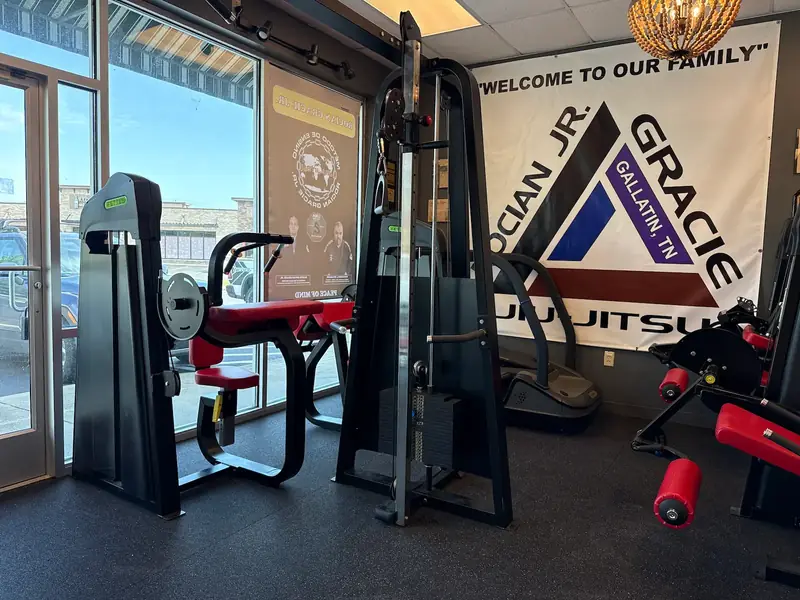
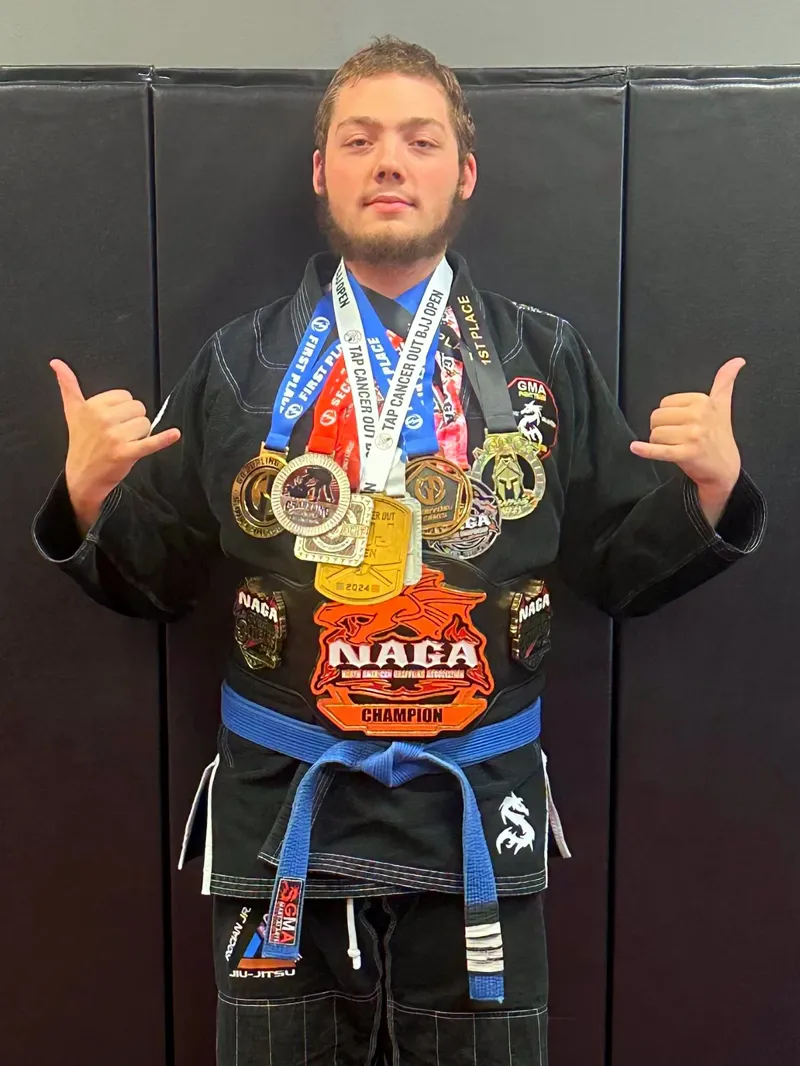
At Rocian Gracie Jr. Jiu-Jitsu at GMA, adult members get free access to the weight room in the same building, so lifting and grappling happen under one roof. You can finish an evening class and walk straight to the barbell, or come in on a non-class day for a 45-minute session. Our instructors are happy to talk through how to fit lifting around your training schedule.
If you have never trained jiu-jitsu, start on the mat first. Come to a free trial class, learn the basics, and build the weight room in once you are training regularly. The strength will make you better, but only the mat makes you a grappler.
Train Jiu-Jitsu and Lift Under One Roof
Adult members get free weight room access in the GMA building in Gallatin, TN. Start with a free jiu-jitsu class.
Book Your Free ClassFrequently Asked Questions
Should I lift weights if I do jiu-jitsu?
Yes, for most adults. Two short strength sessions a week build grip, pulling strength and resilience that help you hold positions and stay healthy. Keep mat time the priority; lifting supports it.
How many days a week should a grappler lift?
Two sessions is the right starting point if you train jiu-jitsu two to four times a week. Drop to one lighter session during a competition camp.
Should I lift before or after jiu-jitsu class?
Train jiu-jitsu first and lift afterward, or lift on non-class days. Arriving at class already fatigued makes technique sloppier and raises injury risk.
Will lifting make me too stiff or slow for BJJ?
Not if you train through a full range of motion, avoid grinding to failure, and keep rolling regularly. Strength and mobility can be built together.
Do GMA members have access to a weight room?
Yes. Adult members have free access to the weight room in the GMA building. See adult classes or book a free trial to get started.