Plenty of adults walk into a jiu-jitsu academy because the scale has been creeping up and the treadmill got boring. That is a perfectly good reason to start. Jiu jitsu for weight loss works for a lot of people, but not for the reason most expect. A class burns real calories, yet the bigger payoff is that it is hard enough to change your fitness and interesting enough that you keep showing up for years. This guide covers what the research says about calorie burn, what a realistic timeline looks like, and how to set up your training and eating so the mat actually moves the number.
If you have never trained before, you do not need to get in shape first. Your first class is free, and you can book a free trial class and see how it feels before you commit to anything.
Does Jiu Jitsu for Weight Loss Actually Work?
Yes, with one honest caveat: exercise alone rarely produces big weight loss. The American College of Sports Medicine reviewed the research in its position stand on physical activity and weight loss (Donnelly et al., 2009). Its conclusions are worth knowing before you start:
- About 150 to 250 minutes a week of moderate activity mostly prevents weight gain and produces only modest loss on its own.
- More than about 250 minutes a week has been linked to clinically meaningful loss.
- Most studies that show meaningful loss combine exercise with eating fewer calories.
- Activity is one of the strongest predictors of keeping weight off once it is lost.
So the realistic picture is this: jiu-jitsu gives you a big, regular calorie burn and a reason to eat better, and the combination is what works. Three classes a week at roughly an hour each puts you around 180 minutes, right in the range that holds weight steady and supports loss when your diet is in order.
The CDC notes that losing even 5 to 10 percent of your body weight is likely to improve blood pressure, cholesterol and blood sugar. For a 220-pound adult, that is 11 to 22 pounds. That is a reachable first goal for someone training consistently and eating a bit less.
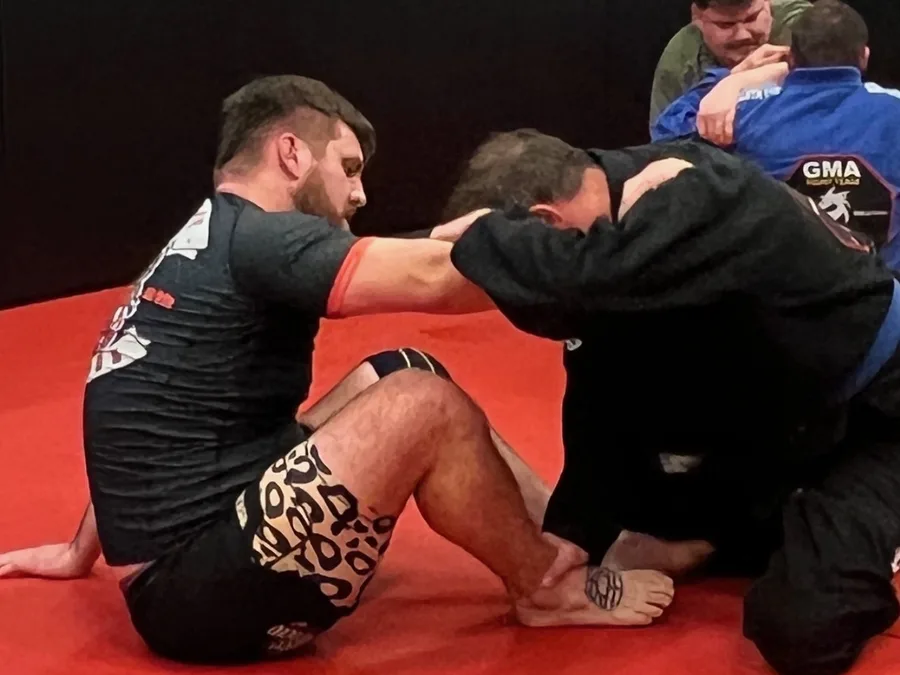
How Many Calories Does a BJJ Class Burn?
The best public reference for this is the 2024 Adult Compendium of Physical Activities, which researchers use to estimate the energy cost of activities in METs (multiples of resting energy use). It does not have a separate jiu-jitsu entry, but it lists:
- Martial arts, slower pace, novice, practice: 5.3 METs
- Martial arts, moderate pace (jujitsu, judo, karate and similar): 10.3 METs
A rough formula is METs x body weight in kilograms x hours. For a 180-pound adult (about 82 kg), one hour works out to roughly:
| Part of class | Intensity | Approx. calories per hour (180 lb adult) |
|---|---|---|
| Technique drilling at a beginner pace | 5.3 METs | about 430 |
| Live rolling at a steady pace | 10.3 METs | about 845 |
A real class is a mix. You warm up, watch the instructor demonstrate, drill with a partner, and finish with rolling. Your actual number for a full class will usually land somewhere between those two rows, and it will be lower in your first weeks while you are still learning the movements. Fitness watches give a ballpark at best, so treat any single reading loosely.
Heavier people burn more for the same work, and the harder you roll, the more you burn. That is also why weight often comes off faster for beginners carrying more of it.
Why the Mat Works Better Than the Treadmill for Many People
Calorie for calorie, a hard spin class can match a BJJ class. The difference is everything around the calories.
You stop counting minutes
On a treadmill you watch the clock. In a roll you are trying to escape side control or finish a sweep, and five minutes are gone before you notice. Work that holds your attention is work you will repeat, and consistency over months is what drives weight loss.
It builds muscle while you lose fat
Grappling is a full-body strength workout: pulling, bridging, gripping and holding positions against resistance. Keeping and building muscle while you eat less helps you lose fat rather than just weight, and it keeps you strong as the number drops. If you want to add lifting, our guide to strength training for jiu-jitsu lays out a simple two-day program.
Accountability comes built in
Your training partners notice when you miss a week. Classes run on a fixed weekly schedule, so training becomes an appointment, not a decision you have to make every day.
What to Expect: A Realistic Timeline
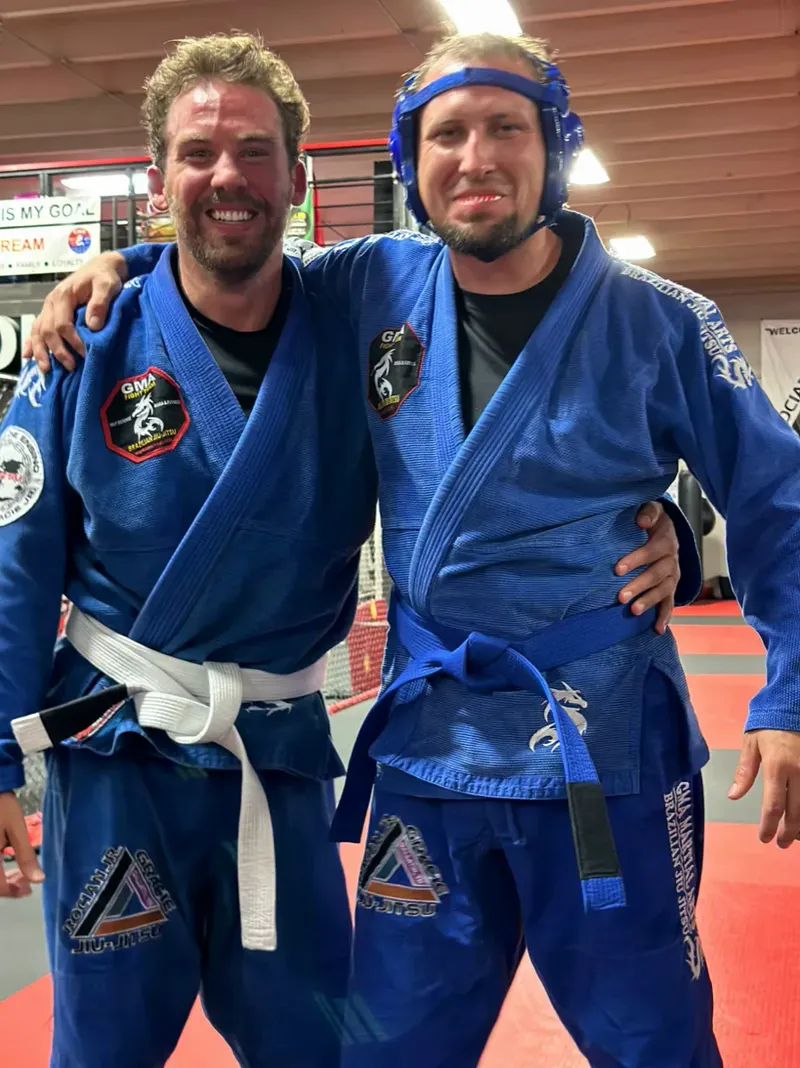
Everyone is different, and anyone promising a set number of pounds by a set date is guessing. Here is the pattern we see most often with adults who train two to three times a week.
- Weeks 1 to 4: You are sore, you get tired fast, and you spend a lot of energy because you are tense and inefficient. The scale may not move much. Some people even gain a pound or two as muscles hold more water after new training. Keep going.
- Months 2 to 3: Cardio improves noticeably. You can roll a full round without gassing out. If your eating has tightened up, clothes start to fit differently.
- Months 3 to 6: This is usually where visible change shows up for people who stayed consistent. Rolling feels like play instead of survival, which makes it easier to train more.
- Beyond six months: Training is a habit. That habit is the real asset, because keeping weight off depends on staying active.
One thing to watch: as you get better, you get more relaxed and efficient, so the same class burns a little less. That is a good problem. Push the pace in rolls, add an extra session, or add an at-home solo drill routine on off days.
Setting Up Your Week
How often to train
Two to three classes a week is the right starting point for most adults. It is enough to build skill and burn meaningful calories while giving your body time to recover. At GMA in Gallatin, adult Gi classes run Monday through Wednesday evenings and Friday, with open grappling after the Monday and Wednesday classes and a weekday morning open gym (11:00 AM to 1:00 PM, four-person minimum). Check the class schedule for exact times.
Eat to recover, not to restrict hard
Jiu-jitsu is hard to do on an empty tank. Crash dieting will leave you flat in class and more likely to quit. A moderate approach works better:
- Cut back on the easy extras first: sugary drinks, alcohol, late-night snacking.
- Build meals around protein and vegetables, which keep you full and support recovery.
- Eat something light one to two hours before class so you have energy to train.
- Drink water through the day, especially on training days.
Protect the habit
Injury and burnout end more weight-loss efforts than anything else. Tap early, roll with control, and tell your instructor if something hurts. Sitting out a round is always allowed. A missed week is fine; a missed six months is the problem.
Jiu-Jitsu, MMA Conditioning and Other Options at GMA
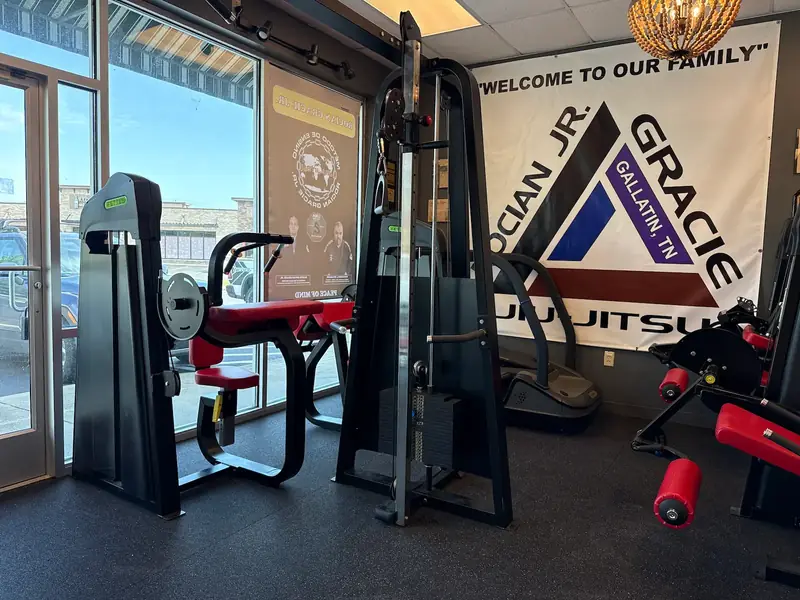
Jiu-jitsu is not the only path. Some people prefer striking, or want structured conditioning alongside grappling. GMA runs several programs in the same building, and our main gym covers MMA-style body transformation training for people who want that route. Adult jiu-jitsu members also have free access to the weight room in the GMA building, which makes it easy to lift and train under one roof.
The best program is the one you will still be doing a year from now. For many adults, that is jiu-jitsu, because it gives you something to get better at, not just something to get through.
Before You Start
Jiu-jitsu is a contact sport and it is demanding. If you have a heart condition, high blood pressure, diabetes, joint problems or a lot of weight to lose, talk to your doctor before you start a new training program, and let your instructor know about any injuries on day one. You do not need to be fit to begin. Most of our adult students in Gallatin started out of shape, and that is exactly who our beginner-friendly classes are built for.
Start Training, Not Just Dieting
No fitness required to begin. Try a free adult jiu-jitsu class in Gallatin, TN and see how it feels.
Book Your Free ClassFrequently Asked Questions
Is jiu-jitsu good for losing weight?
Yes, especially combined with eating a little less. A class mixes drilling and live rolling, and research estimates put martial arts between about 5 and 10 METs depending on pace. The bigger benefit is that people tend to stick with it.
How many calories does a jiu-jitsu class burn?
For a 180-pound adult, estimates from the 2024 Compendium of Physical Activities range from about 430 calories an hour at a slow beginner pace to about 845 at a steady rolling pace. A full class usually falls in between.
How many times a week should I train BJJ to lose weight?
Two to three classes a week is a good starting point. As your recovery improves, adding open mat or a third or fourth session raises your weekly activity. See the class schedule for options.
Do I need to lose weight before starting jiu-jitsu?
No. Classes are self-paced, you can sit out a round any time, and most beginners start out of shape. Talk to your doctor first if you have a health condition, then book a free trial.
Why am I not losing weight even though I train jiu-jitsu?
Usually it is eating, not training. Hard sessions raise appetite, and it is easy to eat back what you burned. Early weeks can also show a small gain from water held by sore muscles. Give it a few months and tighten up your diet.