Chokes are the most common way a jiu-jitsu match ends, and they are one of the first things new students want to understand. This guide covers the main types of chokes in BJJ: how they work, which positions they come from, and which ones need a gi. It is the same overview we give adults and teens who start training with us in Gallatin, TN. Use it to put names to what you see in class, not as a substitute for learning them on the mat.
A quick word on safety before anything else. Every choke in this article should be learned from a qualified coach, drilled slowly with a cooperative partner, and released the instant your partner taps. If you are the one being choked, tap early. There is no prize for waiting.
How Chokes Work: Blood Chokes vs Air Chokes
Almost every choke in jiu-jitsu falls into one of two groups, based on what it squeezes.
Blood chokes (also called strangles) compress the carotid arteries on both sides of the neck, cutting blood flow to the brain. They are the ones jiu-jitsu prefers. When they are applied correctly they take very little strength, they do not crush the windpipe, and they work quickly, which is why a partner who does not tap can go unconscious within seconds. The rear naked choke and the triangle are classic examples.
Air chokes press on the front of the throat and the windpipe. They are uncomfortable and can make someone tap, but they are slower (the person can hold their breath) and they carry more risk of injury to the throat. Good technique turns most chokes into blood chokes: the forearm or the lapel goes on the sides of the neck, not across the front.
In practice, many chokes can land as either one depending on the angle. A guillotine that sits across the throat is an air choke; the same guillotine with the forearm angled into the side of the neck is a blood choke. Learning the difference is a big part of what coaches correct in class.
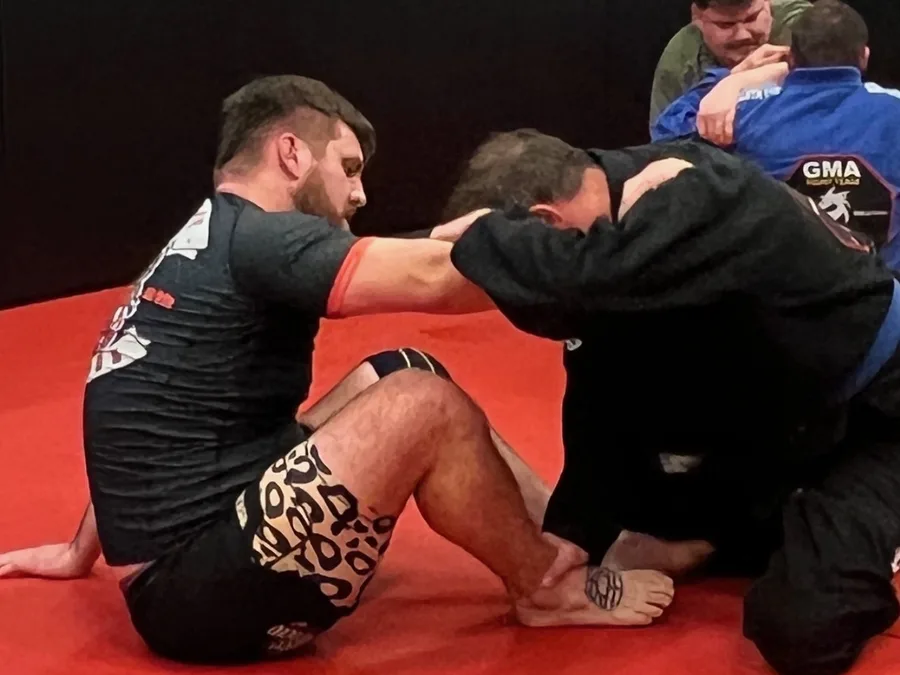
Types of Chokes in BJJ That Work With or Without a Gi
These chokes use only your arms and legs, so they work in gi classes, no-gi classes and self-defense situations alike.
Rear naked choke
The rear naked choke comes from back control. One arm wraps around the neck with the elbow under the chin, the hand grips the opposite biceps, and the other hand goes behind the head. It is the highest percentage finish from the back and usually the first choke a beginner learns. The key detail is getting the elbow under the chin so the pressure lands on the sides of the neck.
Triangle choke
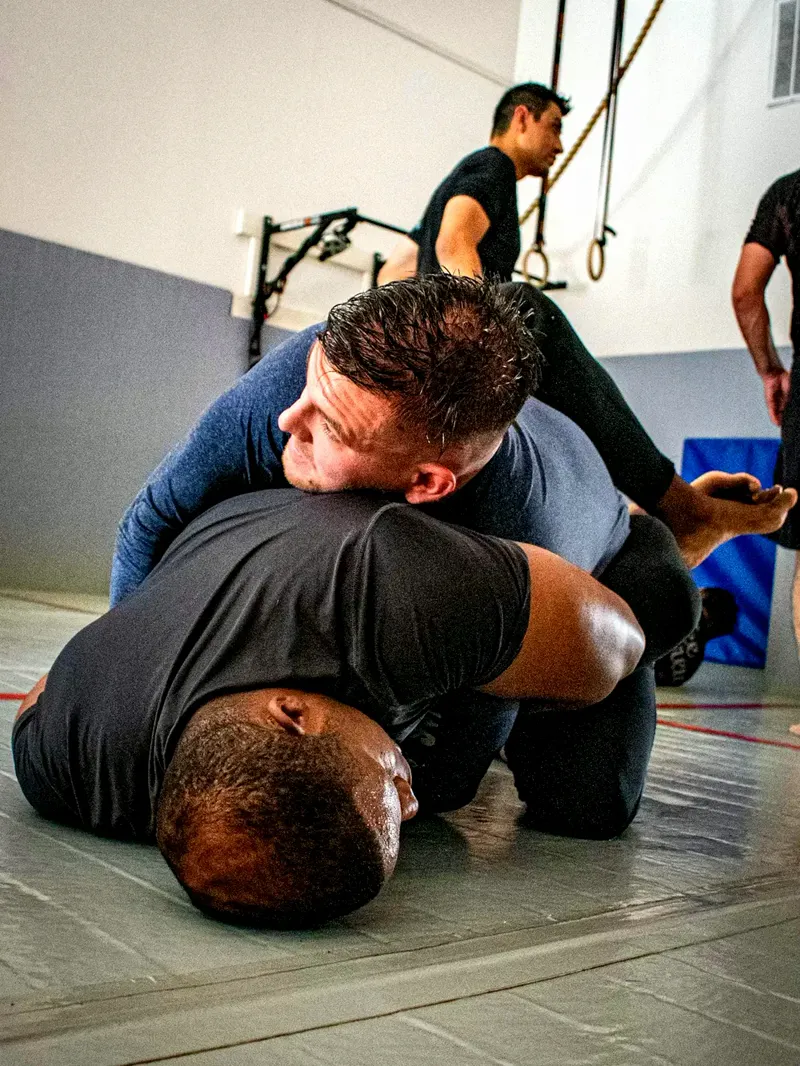
The triangle uses the legs. With one of your partner's arms inside and one outside, you lock your legs in a figure-four around the neck and the trapped arm, so their own shoulder presses against one side of the neck while your thigh presses the other. It is most often set up from closed guard, but it also appears from mount, the back and even from the bottom of side control.
Arm triangle
The arm triangle (sometimes called kata gatame, its judo name) traps your partner's head and one arm inside your arms. It usually comes from mount or side control: you pin their arm against their own neck, lock your hands, and drop your weight to the side to finish.
Guillotine
The guillotine attacks the neck from the front, often when a partner shoots for a takedown or ducks their head. There are several versions, including arm-in (one of their arms trapped with the head) and no-arm. The arm-in version usually works as a blood choke; the no-arm version is more likely to be an air choke if the angle is off.
D'Arce and anaconda
Both are arm-in chokes from the front headlock position, common against a partner on hands and knees (turtle) or one who is trying to pass low. You thread your arm under their neck and arm, lock a figure-four grip, and roll or sprawl to tighten it. The difference is mostly in which way the arm threads and how you finish.
North-south choke
From north-south position (you on top, head to their chest, facing their legs) you wrap an arm around the neck and use your shoulder and chest weight to close the space. It is a pressure choke that rewards patience more than speed.
Gi Chokes: Using the Collar and Lapels
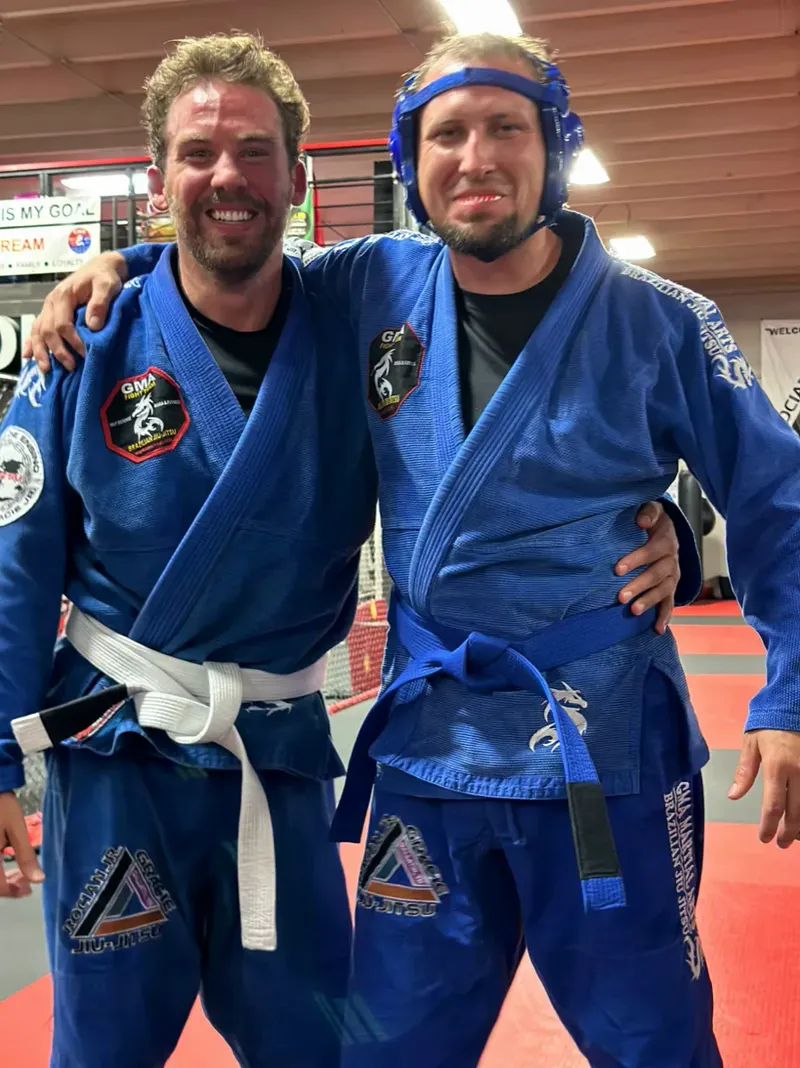
The gi adds a whole family of chokes, because the collar and lapels become handles you can use against your partner's neck. This is one reason many coaches consider gi training the best place to learn chokes in detail: you get more ways to attack and more ways to defend.
Cross collar choke
Both hands grip deep in your partner's collar, one on each side, and you pull your elbows apart and toward you so your wrists press the sides of the neck. It is a fundamental choke from closed guard and mount, and the depth of the first grip decides whether it works.
Bow and arrow choke
From the back, one hand controls the collar across the neck while the other grabs the pants or the leg. You then swing your body to the side and stretch out like a drawn bow. It is one of the tightest chokes in gi jiu-jitsu.
Loop choke and clock choke
The loop choke uses one collar grip to wrap around the neck, often catching a partner who drives their head forward into your guard. The clock choke attacks a partner in turtle: with a collar grip under the neck, you walk your legs around their head like the hands of a clock to tighten it.
Baseball bat choke
Named for how you hold the collar (both hands in the collar, like gripping a bat), this choke is often set up from knee on belly or side control. You then rotate your body around your partner's head to finish.
Ezekiel choke
The Ezekiel uses your own sleeve. From mount (or even from inside someone's guard) you slide one hand behind their neck, grip your own sleeve, and press the blade of your other forearm across the neck. In no-gi, a version gripping the wrist or forearm is also used.
The Main Chokes at a Glance
| Choke | Gi or no-gi | Common position |
|---|---|---|
| Rear naked choke | Both | Back control |
| Triangle | Both | Closed guard, mount |
| Arm triangle | Both | Mount, side control |
| Guillotine | Both | Front headlock, guard |
| D'Arce / anaconda | Both | Front headlock, turtle |
| North-south choke | Both | North-south |
| Cross collar choke | Gi | Closed guard, mount |
| Bow and arrow | Gi | Back control |
| Loop / clock choke | Gi | Guard, turtle |
| Baseball bat choke | Gi | Knee on belly, side control |
| Ezekiel | Gi (no-gi variation exists) | Mount, inside guard |
Chokes in Competition and Kids Jiu-Jitsu
If you plan to compete, check the rules of the event. Under the IBJJF rule book (version 6.0, June 2024), several chokes are illegal in kids divisions. For ages 4 to 12 that includes the sleeve Ezekiel, the frontal guillotine, the arm triangle and triangles where you pull the head down, as well as chokes that also crank the spine. Most of those stay illegal for ages 13 to 15. Spinal locks without a choke (neck cranks) are illegal in every IBJJF division. Rules for adults also vary by belt, so read the current rule book or ask your coach before registering.
For kids who train at GMA, that means the choke work they see is age-appropriate and built around control and position first. Adult and teen students (14 and up) train in our adult gi jiu-jitsu classes, where chokes are part of the regular curriculum alongside armbars, kimuras, sweeps and escapes.
How to Learn Chokes the Right Way
Knowing the names of the types of chokes in BJJ is the easy part. Making them work on a resisting partner takes repetition, feedback and time. A few habits speed that up:
- Position before submission. Almost every choke above starts from a controlling position: back, mount, side control, guard. If the position is loose, the choke will be too.
- Drill slowly with a partner who gives you feedback. Ask them where they feel the pressure. If it is on the front of the throat, adjust the angle.
- Learn the defense at the same time. Every choke has a first line of defense (usually hands and chin). Knowing it makes you safer and makes your own attacks sharper.
- Tap early, release immediately. This is not optional. It is what makes it possible to train chokes hard for years.
Our weekday open mat is a good place to add the extra repetitions: you can pick one choke, drill it for the whole session, and ask an instructor to check your details. For a longer list of submissions beyond chokes, including joint locks, see the BJJ submissions guide from Global Martial Arts.
If you are new to jiu-jitsu, you do not need to know any of this before your first class. Our coaches teach the fundamentals from day one, and your first class is free.
Learn Chokes the Right Way
Train with IBJJF-certified black belts in Gallatin, TN. Beginners welcome, and your first class is free.
Book Your Free ClassFrequently Asked Questions
What is the most common choke in BJJ?
The rear naked choke is the most common finish from back control and is usually one of the first chokes beginners learn, along with the cross collar choke and the triangle.
What is the difference between a blood choke and an air choke?
A blood choke compresses the carotid arteries on the sides of the neck and works quickly with little force. An air choke presses on the windpipe, is slower and carries more risk to the throat. Good technique aims for the sides of the neck.
Are chokes safe to learn in jiu-jitsu?
Chokes are trained safely every day when students learn them from a qualified coach, apply them with control, tap early and release immediately when a partner taps. Never practice chokes unsupervised.
Do beginners learn chokes in their first class?
Beginners at GMA train in the regular adult classes from day one, with an instructor guiding them. Chokes come in as part of the curriculum once you understand the positions they come from. You can book a free trial class to see how it works.