Parents who search for jiu jitsu for kids with autism or ADHD are usually asking two questions at once: could this actually help my child, and will this gym understand my child? Both are fair. Brazilian Jiu-Jitsu (BJJ) is a structured, hands-on grappling art, and that structure is exactly why many neurodivergent kids do well in it. It is also why the coaching matters more than the sport. This guide covers what the research says, what a good class looks like, and how we approach it at our academy in Gallatin, TN.
One thing up front: jiu-jitsu is not a treatment for autism or ADHD, and no honest coach will tell you it is. It is a physical activity with rules, routines and a clear path to progress. For many children that combination is a very good fit. For some it takes adjustments, and for a few it is not the right activity yet.
Why Jiu Jitsu for Kids With Autism or ADHD Can Be a Good Fit
Every child is different, so treat these as reasons it often works, not promises. These are the features of jiu-jitsu that parents of neurodivergent kids tell us matter most:
- Predictable routine. Class runs in the same order every time: bow in, warm up, learn a technique, drill it, play a game, roll, bow out. Kids who find surprises stressful know what comes next.
- Learning through the body. Techniques are shown, then done, not just explained. A child who struggles to sit and listen can often learn a hip escape by doing it twenty times.
- One partner at a time. Jiu-jitsu is a team environment, but the work happens with one partner, face to face, with clear rules. That is easier to handle than a busy field or court full of moving players.
- Immediate, concrete feedback. Either the escape worked or it did not. There is no subjective scoring and nothing to guess about.
- Visible progress. Stripes on the belt mark progress in small steps, so effort turns into something a child can see and hold.
- No striking. There are no punches or kicks, and the whole art is about control rather than damage.
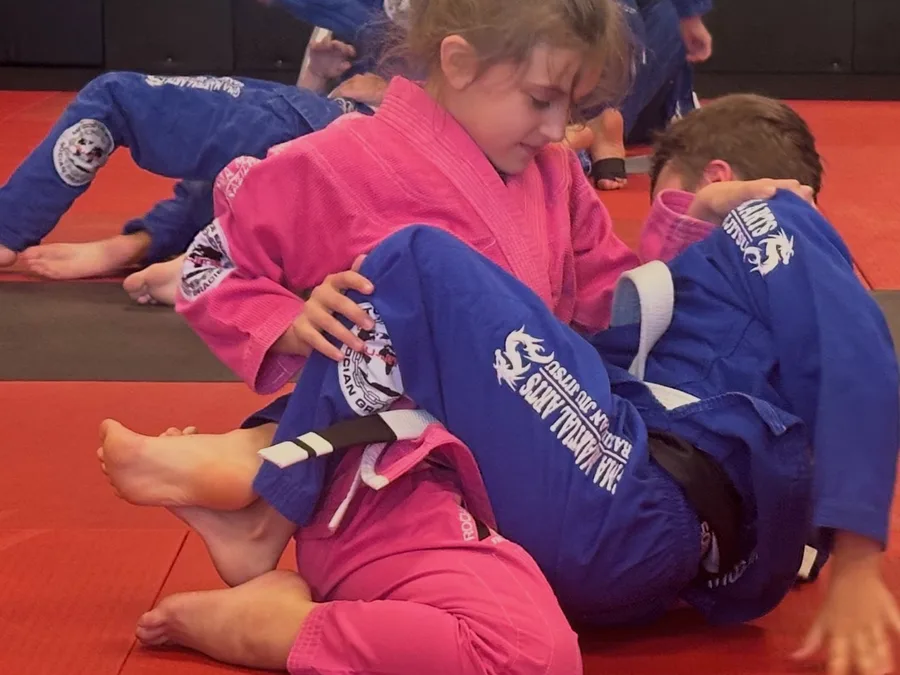
Our Kids Jiu Jitsu classes are for ages 6 to 12, grouped by age and size, with every live round supervised by a coach.
What the Research Says So Far
There is a small but growing body of research on martial arts for children with autism and ADHD. It is encouraging, but most studies are small, so read it as promising rather than proven.
Autism
The best-known trial is by Phung and Goldberg, published in the Journal of Autism and Developmental Disorders. Forty-three children ages 8 to 11 with an autism diagnosis were randomly assigned to a mixed martial arts program or a waitlist group. The program was about 26 classes over 13 weeks and included grappling, brief mindfulness, social games and partner work. The martial arts group improved on measures of executive function (behavioral inhibition, working memory and cognitive flexibility), and parents reported better emotional and behavioral regulation. The authors were careful to say they could not tell which part of the program did the work.
Earlier, a karate study by Bahrami and colleagues trained 30 autistic children in kata (set movement patterns) for 14 weeks and reported a large drop in stereotyped, repetitive movements compared with a control group, with the effect still present a month after training ended.
ADHD
For ADHD, recent reviews of martial arts studies report improvements in attention, working memory and impulse control, especially in structured arts like judo and taekwondo. The same reviews say the studies are few, small and uneven in quality. More broadly, systematic reviews of exercise and sport find that physical activity tends to help executive function in children and teens with ADHD.
What none of this means: jiu-jitsu does not replace medical care. The CDC recommends behavior therapy as the first treatment for ADHD in children under 6, and for older children the best results usually come from a combination of behavior therapy and, when appropriate, medication. Think of jiu-jitsu as one more good thing in a child's week, alongside the plan you have with your child's doctor and therapists.
What a Good Class Looks Like for a Neurodivergent Child
The difference between a great experience and a bad one is mostly the coach. When you visit any school, here is what to look for.
Coaches who adapt
A good coach will ask about your child before the first class: what helps, what overwhelms them, how they communicate when they need a break. They will break a technique into smaller steps, demonstrate more than they explain, and give one instruction at a time.
A clear plan for touch and noise
Jiu-jitsu involves close physical contact, and gyms can be loud. Some children with sensory sensitivities love the deep pressure of grappling. Others need time. A child might start with solo movements, then drill with a coach, then with one familiar partner, before any live rolling. That is a perfectly good way to start.
Safety rules that are taught and enforced
Every child learns to tap (signal stop) early and often, and to let go the moment a partner taps. Kids are matched by age and size, and submissions are limited by age. If your child has trouble reading a partner's signals, the coach should keep them in controlled drills until they are ready.
Room to step out
A child who is overwhelmed should be allowed to step to the side of the mat, reset and come back. That is not a failure. Learning to notice it and take a break is a skill in itself.
How We Approach It at GMA in Gallatin
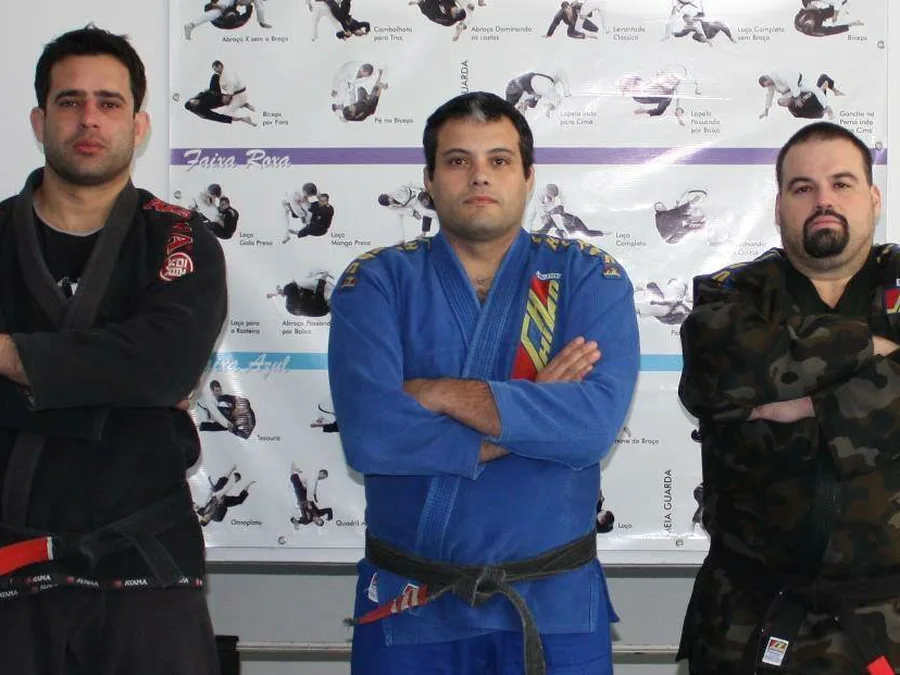
GMA has run a special needs program for years, led by an instructor with a degree in child development. Our coaches are Safe Sport certified and background checked, and we work with each child at their own pace rather than pushing everyone through a fixed curriculum.
What we ask is simple: talk to us before the first class. Tell us about your child, what works at school or therapy, and anything that tends to upset them. That conversation lets us plan the first visit properly, whether that means a quieter class time, starting with the basics one on one with a coach, or letting your child watch a class before they step on the mat. Call us first, then book your child's free trial class.
For more on safety, age groups and what kids class looks like in general, read our guide for parents: is jiu-jitsu good for kids? If your child likes to practice at home, the movements in our solo BJJ drills guide are a low-pressure way to get familiar with the basics.
Tips for Your Child's First Weeks
- Visit first. Come watch a class together so the room, the sounds and the routine are familiar before your child joins.
- Preview the routine at home. Tell your child what will happen in order. Some families use a simple picture schedule.
- Keep it short and positive at first. If your child participates for part of a class, that is a win. Build up from there.
- Be consistent. The same days and times each week help the routine become automatic. Two classes a week works for most kids.
- Share what works. If your child uses a specific word or signal when they need a break, tell the coach so everyone uses it.
- Measure progress by your child, not other kids. Look for things like trying a new drill, partnering without prompting, or wanting to come back.
If your child has a medical condition, takes medication that affects exertion, or you are unsure whether a contact sport is right for them, talk to your doctor before they start.
Talk to Us, Then Try a Free Class
Tell us about your child and we will plan their first Kids Jiu Jitsu class in Gallatin, TN around them. The first class is free.
Book Your Free ClassFrequently Asked Questions
Is jiu-jitsu good for kids with autism?
For many, yes. The predictable routine, hands-on learning and one-partner-at-a-time format suit a lot of autistic children, and early research on martial arts is encouraging. Every child is different, so talk to us first and let your child try a free class.
Can jiu-jitsu help a child with ADHD?
Many parents tell us it helps with focus and patience, and studies of martial arts and exercise point the same way. It is not a substitute for treatment, so keep it alongside the plan you have with your child's doctor.
What if my child does not like being touched?
That is common and workable. Many children start with solo movements and drilling with a coach before any live rolling. We go at your child's pace.
Does GMA have a special needs program?
Yes. GMA has run a special needs program for years, led by an instructor with a degree in child development. Contact us before the first class so we can plan it around your child.
What age can my child start?
Our Kids Jiu Jitsu class is for ages 6 to 12, and younger children start in the Little Lions program.