When a parent asks us about jiu jitsu bullying prevention, the real question is usually simpler and more painful: my child is being picked on, and I want them to be able to handle it without getting hurt or getting suspended. That is a reasonable thing to want. Brazilian Jiu-Jitsu (BJJ) is a good fit for it, not because it teaches kids to fight, but because it teaches them to stay calm, keep their distance, and control a situation when someone grabs or shoves them.
This guide explains how that works, what jiu-jitsu can and cannot do about bullying, and how we coach it in our kids classes in Gallatin, TN.
How Common Bullying Is
Bullying is not rare, and it is not something kids simply grow out of. According to the National Center for Education Statistics, about 19 percent of students ages 12 to 18 reported being bullied at school during the 2021-22 school year. That figure only covers middle and high school students who said so on a survey, so the real picture for younger kids is harder to measure.
Most bullying is not physical. It is name-calling, exclusion, rumors, and more and more of it happens online. Jiu-jitsu does not fix a group chat. What it changes is the child: how they carry themselves, how they react under pressure, and what they can do in the rare moment when words turn into shoving.
Why Grappling Beats Punching
Most of what kids see about self-defense comes from movies, where the bullied kid learns to punch and lands one big hit at the end. Real life does not work that way, and parents know it. A punch thrown at school almost always ends with both kids in the principal's office, no matter who started it. It can injure someone, and it often escalates a problem instead of ending it.
Grappling solves the problem differently. A child who knows jiu-jitsu has options between doing nothing and throwing a punch:
- Distance and posture. Kids learn to keep space, keep their hands up in a calm, open way, and avoid being grabbed in the first place.
- Breaking grips. If someone grabs a wrist or a shirt, there is a simple, technical way to get free without hurting anyone.
- Staying on their feet, and falling safely. Breakfalls teach a child to hit the ground without injury, and drills teach them to get back up.
- Control, not damage. If a situation does go to the ground, a child who can hold a calm, controlling position can wait for an adult instead of trading hits.
None of that looks dramatic, and that is the point. Schools and parents want the problem to stop with nobody hurt. Control-based skills are the closest thing to that outcome.
How Jiu Jitsu Bullying Prevention Works Before Anything Gets Physical
The bigger benefit of jiu-jitsu for a bullied child happens long before any grabbing starts. It comes from what happens on the mat every week.
Confidence that comes from real skill
Telling a child to "just be confident" rarely works. Confidence that lasts comes from competence. In jiu-jitsu, kids spend every class being held down, getting out, and trying again. After a few months of that, being uncomfortable stops feeling like an emergency. That calm shows up in how a child stands, makes eye contact and speaks up, and kids who bully tend to look for someone who seems easy to rattle.
Practice staying calm under pressure
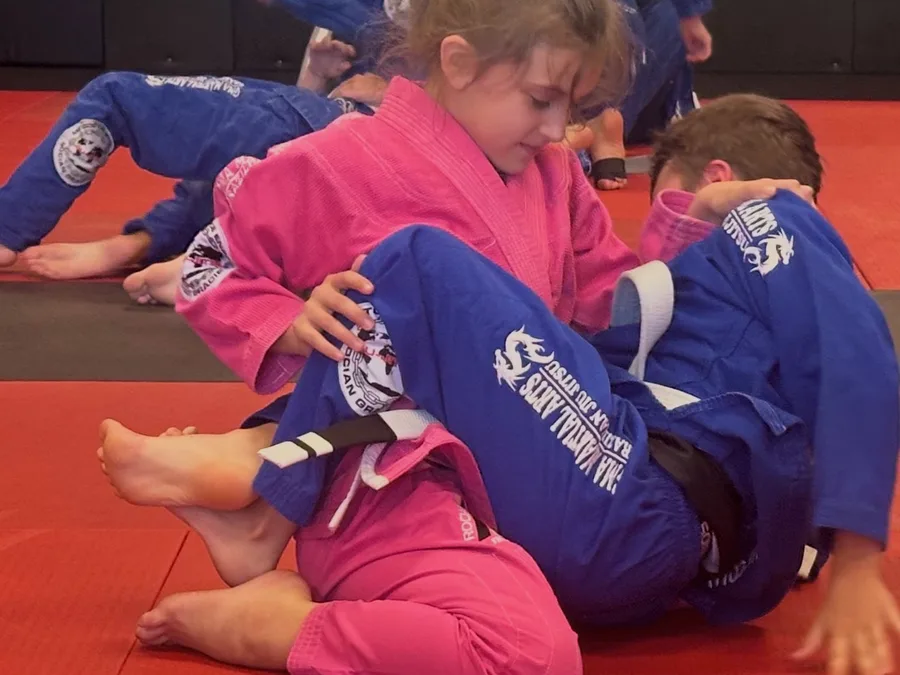
Live rounds (which BJJ calls rolling) put kids in a safe, supervised version of a stressful situation. A partner is on top of them, they are tired, and they have to think instead of panic. That is a skill most children never get to rehearse. A child who has practiced breathing and thinking under pressure is far more likely to walk away, speak up or find an adult when it matters.
A group that has their back
Kids who are being bullied are often isolated. A jiu-jitsu class gives them a regular group of training partners and coaches who know their name, outside of school. That belonging matters as much as any technique.
What We Teach Kids to Do First
Every good anti-bullying approach starts with the same rules, and they come before any technique. StopBullying.gov, the federal resource on the topic, tells kids to talk to a trusted adult and to stay near adults and other kids, because most bullying happens when adults are not around. We teach the same order of priorities:
- Use your words. A clear, calm "Stop. Leave me alone." said loudly enough for others to hear.
- Walk away. Leaving is a win. It is not running away.
- Tell an adult. A parent, a teacher, a coach. Telling is not tattling when someone is being hurt.
- Protect yourself only if you have to. If someone puts their hands on you and you cannot get away, use the control skills from class to stay safe until help comes.
Jiu-jitsu skills sit at step four, not step one. A child who knows they can handle step four is usually much better at steps one through three, because they are not frozen by fear.
What Jiu-Jitsu Can't Do
It would be dishonest to sell jiu-jitsu as a cure. It does not replace a parent's involvement or the school's responsibility to deal with bullying. If your child is being bullied, document it, talk to the school, and keep talking to your child. If bullying is affecting your child's sleep, mood or health, talk to your doctor or a counselor.
It also takes time. A few classes will not change much. The confidence parents describe usually shows up after a few months of steady training, which is why we encourage two classes a week for most kids. Our sister after-school program has a parent guide to martial arts and anti-bullying if you want a broader view.
How Kids Classes Handle This at GMA
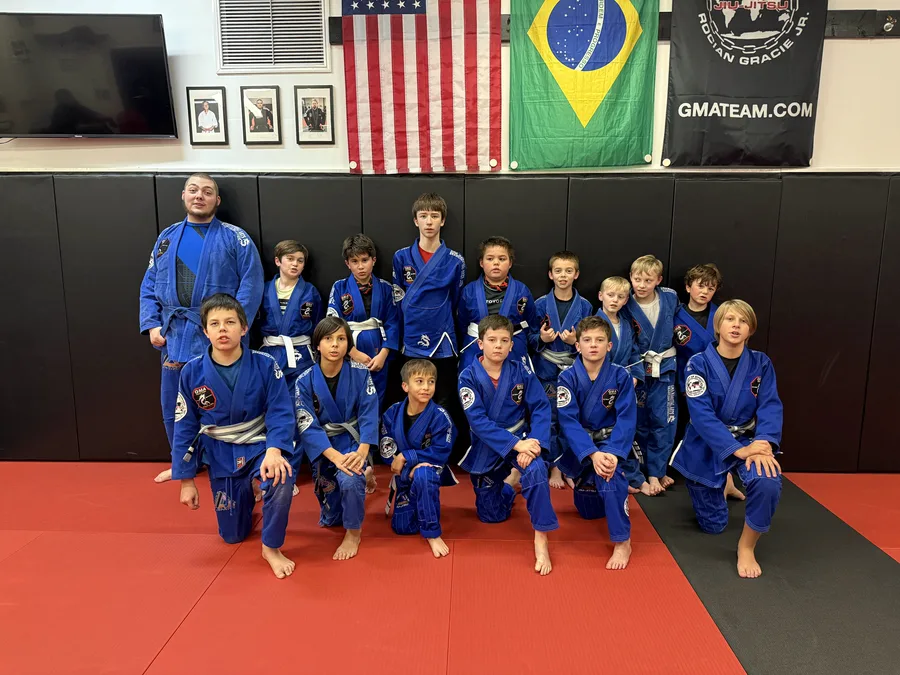
Our Kids Jiu Jitsu classes for ages 6 to 12 are taught in the Rocian Gracie Jr. method, which is grappling only: no punching and no kicking. Classes are grouped by age and size, every live round is supervised, and every instructor is Safe Sport certified and background checked. Children 4 to 6 start in our Little Lions program, and teens 14 and up train in the adult Gi classes.
The class structure itself does a lot of the work. Kids bow in, line up, listen, drill with a partner and then test what they learned in a controlled round. They learn to respect a training partner, to tap and to let go when a partner taps, which teaches restraint as much as any technique. Parents also ask whether jiu-jitsu will make a child more aggressive. In our experience, it is the opposite: children who know they can handle themselves have less to prove. We cover that and other common questions in is jiu-jitsu good for kids?, and if your child also has trouble with focus, read our guide to jiu-jitsu for kids with ADHD or autism.
Getting Started
The best first step is a trial class. Your child gets to try it with no pressure, and you get to watch how the coaches run the room. Tell us what is going on at school when you come in; it helps us pair your child with the right partners and focus on the skills that matter most for them. You can book a free trial class online, and we will lend your child a gi for the first day.
Bring Your Child to a Free Class
Kids Jiu Jitsu for ages 6 to 12 in Gallatin, TN, taught by Safe Sport certified, background-checked coaches. Control-based skills, real confidence, and the first class is free.
Book Your Free ClassFrequently Asked Questions
Will jiu-jitsu teach my child to fight at school?
No. We teach kids to use their words, walk away and tell an adult first. Jiu-jitsu skills are a last resort for staying safe when someone puts hands on them and they cannot get away, and they are about control, not hurting anyone.
How long before jiu-jitsu helps with bullying?
Every child is different, but the confidence parents notice usually shows up after a few months of steady training, about two classes a week. A handful of classes will not change much on its own.
What age can my child start?
Our Kids Jiu Jitsu class is for ages 6 to 12, Little Lions covers ages 4 to 6, and teens 14 and up train in the adult Gi classes. Thirteen year olds are placed case by case.
Does jiu-jitsu help with cyberbullying?
Not directly. It cannot stop online messages. What it can do is build the confidence and calm that help a child talk to you about it. For online bullying, save the messages, block the account and report it to the school or platform.
Is jiu-jitsu safe for kids?
It is one of the safer martial arts for children because there is no striking. At GMA every live round is supervised, kids are grouped by age and size, and our coaches are Safe Sport certified and background checked.