Most parents who call us about jiu jitsu for kids ask some version of the same question: is this actually good for my child, or is it just another activity that will last a month? It is a fair thing to ask before you sign anyone up for a sport where kids hold each other down on purpose. This guide answers the questions we hear most often from parents at our academy in Gallatin, TN, honestly, including the parts that are not a fit for every child.
The short version: for most children, yes. Brazilian Jiu-Jitsu (BJJ) is a grappling art with no punching or kicking, it is built around control instead of damage, and it gives kids a mix of exercise, structure and confidence that is hard to find in one place. The longer version depends on your child, the school and the way classes are run, so here is the detail.
What Jiu Jitsu for Kids Actually Looks Like
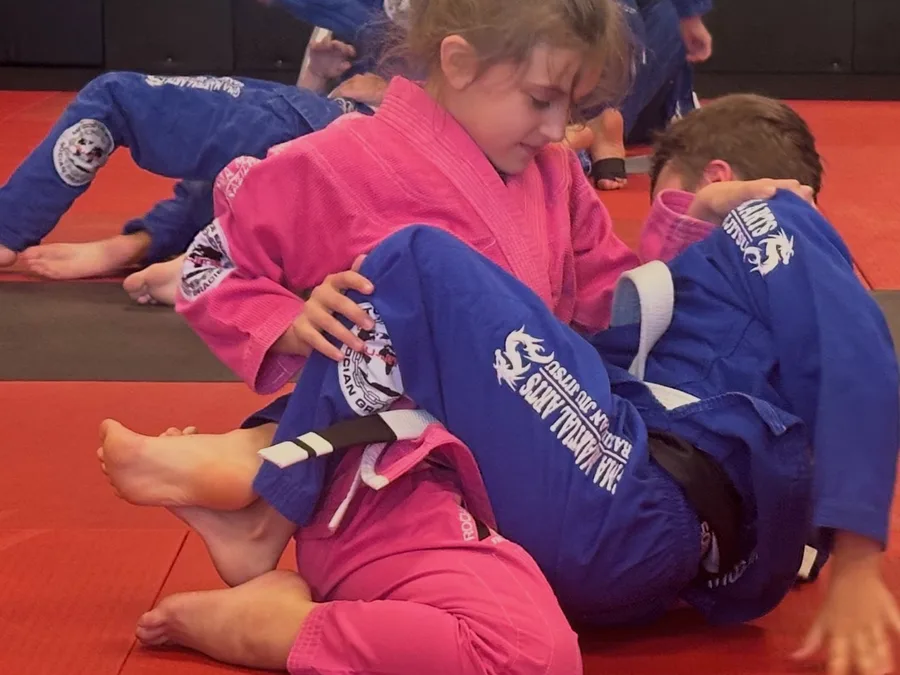
Jiu-jitsu is grappling. Instead of striking, kids learn how to get to a safe position, hold it, escape when someone is on top of them, and (as they get older) finish with an age-appropriate submission. The whole art is built on the idea that leverage and technique beat size and strength, which is exactly what a smaller child needs to hear.
A typical kids class at GMA follows a predictable rhythm, and children do well with predictable:
- Bow in and line up. Class starts the same way every time, and kids learn to listen before they move.
- Warm-up and movement drills. Rolls, shrimping (a hip escape movement), bridging and breakfalls, which teach a child how to fall without getting hurt.
- Technique. The coach shows one or two moves, and kids drill them with a partner of similar age and size.
- Games and live rounds. Positional games and supervised sparring, which BJJ calls rolling. This is where the technique gets tested, at a pace the coach controls.
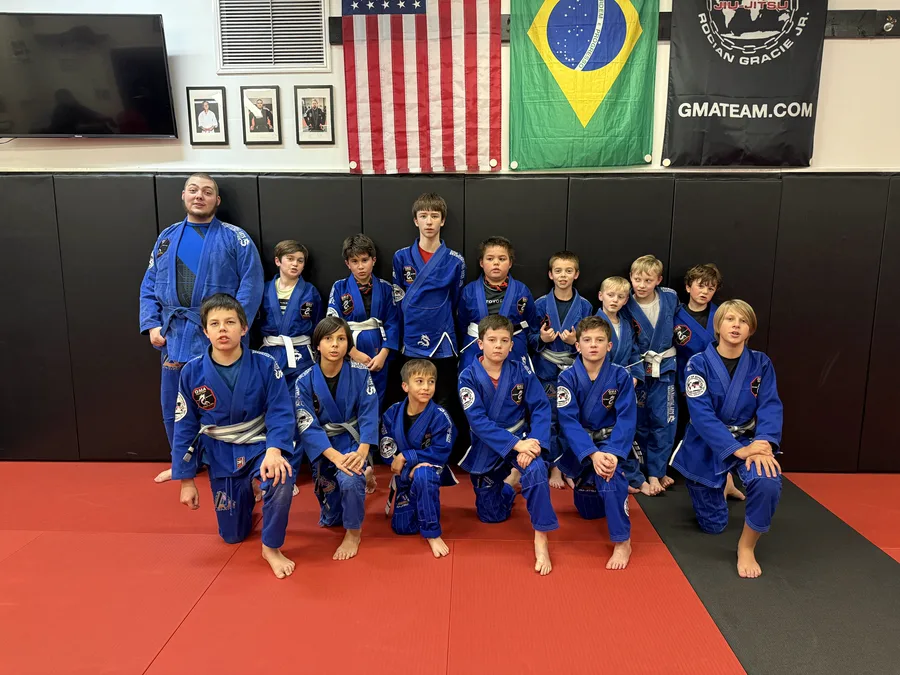
Our Kids Jiu Jitsu classes are for ages 6 to 12 and run Monday, Tuesday, Wednesday and Friday afternoons. Classes are grouped by age and size, and every live round is supervised.
Is Jiu-Jitsu Safe for Kids?
This is the first question almost every parent asks, so it gets a direct answer. No martial art or contact sport is injury free, and anyone who tells you otherwise is selling something. What makes jiu-jitsu one of the safer options for children is what it leaves out: there are no punches or kicks to the head. Kids are learning to control a partner, not to hurt one.
The safety of a kids program comes down to how it is run. When you visit any school, look for these things:
- Supervised rolling. A coach should be watching every live round and stopping it the moment it gets out of hand.
- Matched partners. A small seven year old should not be rolling with a large twelve year old.
- Age-based rules for submissions. The IBJJF (the largest jiu-jitsu federation) limits which submissions are legal in kids divisions by age, and good schools teach to those limits. We cover the details in our guide to the types of chokes in BJJ.
- Tapping is taught first. Children learn to tap (signal stop) early and often, and to let go the instant a partner taps.
- Vetted coaches. Our instructors are Safe Sport certified and background checked.
If your child has a medical condition, an old injury, or you are unsure whether a contact sport is right for them, talk to your doctor before they start.
The Real Benefits of Jiu-Jitsu for Children
Parents tend to come in for one reason (fitness, confidence, bullying, focus) and stay for the others. Here is what we see most often, and what is realistic to expect.
Exercise that does not feel like exercise
The U.S. Physical Activity Guidelines recommend that children and teens ages 6 to 17 get at least 60 minutes of moderate to vigorous activity every day. A jiu-jitsu class is close to an hour of pushing, pulling, rolling and scrambling, and most kids are having too much fun to notice they are working hard. It builds grip strength, balance, coordination and body awareness that carry over to wrestling, football and almost every other sport.
Confidence that is earned
Jiu-jitsu gives kids a kind of confidence that comes from proof. A child who has escaped from underneath a bigger partner a hundred times in class knows they can handle a hard situation. That is different from being told they are great. It is also why parents often tell us the change shows up at home and at school before it shows up on the mat.
Structure, focus and patience
Class asks a lot of a child's attention: listen to the instruction, remember the steps, do them in order, wait your turn. Kids who struggle to sit still often do well here because the focus is physical. Progress is slow and visible, through stripes on the belt, which teaches patience in a way a lecture never will.
Self-defense without throwing a punch
Because jiu-jitsu is about control, a child learns to get out of a grab, stay on their feet, or hold someone down without hurting them. For parents worried about bullying, that matters: it gives a child options that do not involve hitting anyone, which is what schools want too. Our sister site has more on the benefits of BJJ training for all ages.
Will Jiu-Jitsu Make My Child More Aggressive?
In our experience, the opposite. Children who know they can handle themselves usually have less to prove, not more. The class structure reinforces that: you bow in, you train with a partner, you take care of that partner, and you stop when they tap. Rough play that ignores the rules gets stopped by the coach right away.
There is also a built-in humility to jiu-jitsu. Every student, including the coaches, gets put on their back and taps in training. Kids learn early that losing a round is part of learning, and that the partner who just beat them is the same one who will help them get better next week.
What Age Is Right to Start?
There is no single right age, but there are good starting points. At GMA:
- Ages 4 to 6: younger children start in the Little Lions preschool program, where they step onto the jiu-jitsu mat from age 4 in short, game-based classes.
- Ages 6 to 12: the Kids Jiu Jitsu class.
- Age 13: case by case. Depending on size and maturity, some 13 year olds move up to the adult classes and others stay in the kids class. We are happy to talk it through with you.
- Ages 14 and up: teens train in the adult Gi classes.
Kids also have their own belt system. The IBJJF kids ranks run from white through grey, yellow, orange and green, each with minimum ages (grey from 4, yellow from 7, orange from 10, green from 13). At 16, students move to the adult belts. That means a child can make steady, visible progress for years before they are old enough for a blue belt.
How to Tell If Jiu Jitsu for Kids Is a Fit for Your Child
Jiu-jitsu suits a wide range of children: shy kids, high-energy kids, kids who have never played a sport, and kids who play three. It can be a harder fit for a child who strongly dislikes close physical contact, at least at first. Some of those children warm up to it quickly once they see it is a game with rules; others need more time. Watching a class before they try it helps.
A few practical tips for the first weeks:
- Start with two classes a week. That is the sweet spot for most kids: enough to build real skill without burning out.
- Expect the first month to feel awkward. New movements, new words and new people. It gets easier fast.
- Ask the coach, not just your child. Kids are not always the best reporters of their own progress.
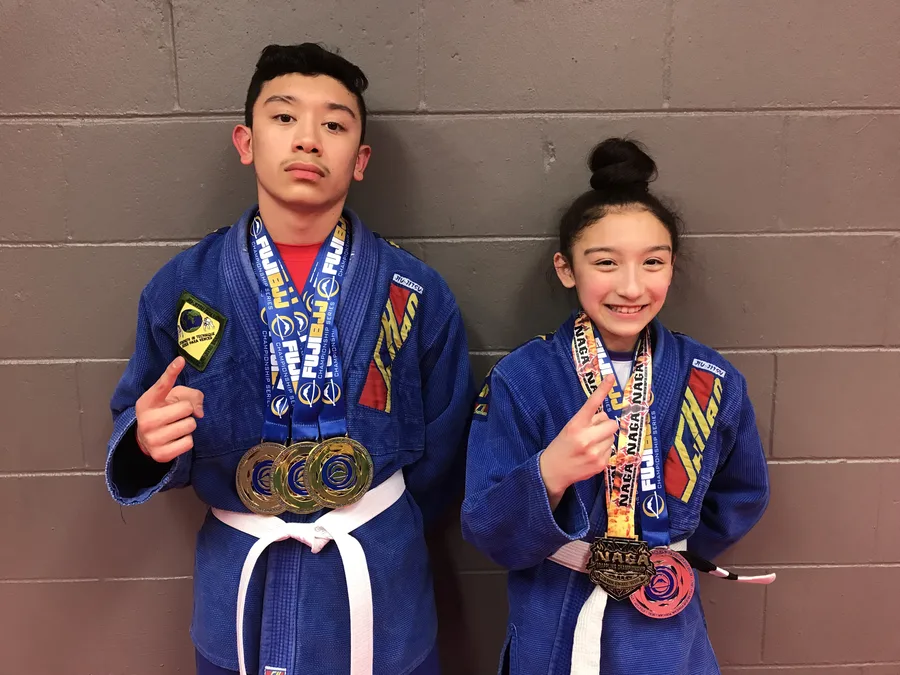
- Do not push competition. Tournaments are completely optional. Plenty of students train for years and never compete.
Trying a Kids Class in Gallatin
The best way to answer the question for your own child is to let them try it. Your child's first class is free. Wear comfortable athletic clothes with no zippers, buttons or pockets, bring a water bottle, trim nails and leave jewelry at home. We lend a gi for the trial class, and training is barefoot. Arrive about 10 minutes early so the coach can meet your child before class starts.
You can check class times on the class schedule, and if you want to train alongside your child, many of our families have a parent and kids on the mat, with family discounts of 10% to 25% for additional members. When you are ready, book a free trial class and see how your child takes to it.
Bring Your Child to a Free Class
Kids Jiu Jitsu for ages 6 to 12 in Gallatin, TN, taught by background-checked, Safe Sport certified coaches. The first class is free.
Book Your Free ClassFrequently Asked Questions
Is jiu-jitsu good for shy kids?
Often, yes. Jiu-jitsu works with one partner at a time instead of in front of a crowd, and the confidence it builds comes from real skill. Many shy children open up within a few weeks. Watching a class first helps them know what to expect.
What age can my child start jiu-jitsu at GMA?
Our Kids Jiu Jitsu class is for ages 6 to 12. Children ages 4 to 6 start in the Little Lions program. Thirteen year olds are placed case by case, and teens 14 and up train in the adult Gi classes.
Is jiu-jitsu safe for children?
It is one of the safer martial arts for kids because there is no striking. At GMA every live round is supervised, kids are matched by age and size, and our coaches are Safe Sport certified and background checked. If your child has a medical condition, talk to your doctor first.
How often should my child train?
Two classes a week is the sweet spot for most kids. Our kids classes run Monday, Tuesday, Wednesday and Friday afternoons; see the schedule for times.
Does my child have to compete?
No. Competition is completely optional. Kids who want to compete can train toward IBJJF and local tournaments, and plenty of students train for years without ever entering one.