Parents ask us some version of this question every week: what age to start jiu jitsu, and is my child too young (or too old) to begin? The honest answer is that there is no single perfect age. There is a right starting point for your child, and it depends more on attention span, comfort with other kids and willingness to follow instructions than on a number on a birthday cake. This guide walks through what training looks like at each age, how the official youth rank system handles age, and how we place kids at our academy in Gallatin, TN.
The short version: most children can start learning the basics of grappling around age 4 in a short, game-based class, a structured kids class works well from about 6, and there is no upper limit. A 10 or 12 year old starting for the first time is not behind. They are simply starting.
What Age to Start Jiu Jitsu: The Quick Answer
Here is how we think about it, age band by age band, with how GMA handles each one:
| Age | What fits | At GMA |
|---|---|---|
| 3 to 4 | Movement, listening and play. Short classes. | Little Lions preschool program (TaeKwonDo from 3, jiu jitsu mat time from 4) |
| 4 to 6 | Falling safely, moving on the ground, partner games | Little Lions, 30 minute classes |
| 6 to 12 | Real technique, drilling and supervised live rounds | Kids Jiu Jitsu class |
| 13 | Depends on size and maturity | Case by case: kids class or adult classes |
| 14 and up | Full curriculum with older training partners | Adult Gi classes (adults and teens 14+) |
The ages in that table are guides, not gates. A mature five year old and a shy seven year old can need very different starts, which is why we always suggest a free trial class before committing to anything.
Ages 3 to 6: Can Toddlers and Preschoolers Do Jiu-Jitsu?
Yes, with the right class. A preschooler is not ready for a 55 minute class built for ten year olds, and putting them in one usually ends in tears or boredom. What works at this age is short, active and built around games.
The U.S. Physical Activity Guidelines say children ages 3 through 5 should be physically active throughout the day, and that caregivers should encourage active play with a variety of activities. A well-run preschool martial arts class fits that description: kids roll, crawl, bridge, balance and play tag-style games on a soft mat, and they practice listening the first time and taking turns.
At GMA, younger children start in Little Lions, our preschool martial arts program for ages 3 to 6. Kids begin TaeKwonDo as young as 3 and step onto the jiu jitsu mat from age 4. Classes run 30 minutes, long enough to learn a real skill and short enough to hold a four year old's attention. The focus is on:
- Falling safely. Breakfalls protect a child on the mat, on the playground and on a bike.
- Moving on the ground. Rolling, shrimping (a hip escape movement) and getting back up.
- Partner manners. Training with someone without anyone getting hurt, and stopping the moment a coach says stop.
- Listening and following a routine. Bowing in, lining up and waiting your turn.

The official youth belt track starts at age 4, so Little Lions earn stripes on the same white belt progression the older kids use. By the time they move into the kids class, they already know how class works. If you want the full picture of the colored belts, our guide to the youth BJJ belt system covers grey, yellow, orange and green.
Ages 6 to 12: The Sweet Spot for Kids Jiu-Jitsu
Around age 6, most children can follow a two or three step instruction, remember it for a few minutes and repeat it with a partner. That is what a real jiu-jitsu class asks of them, so this is where structured training starts to pay off quickly.
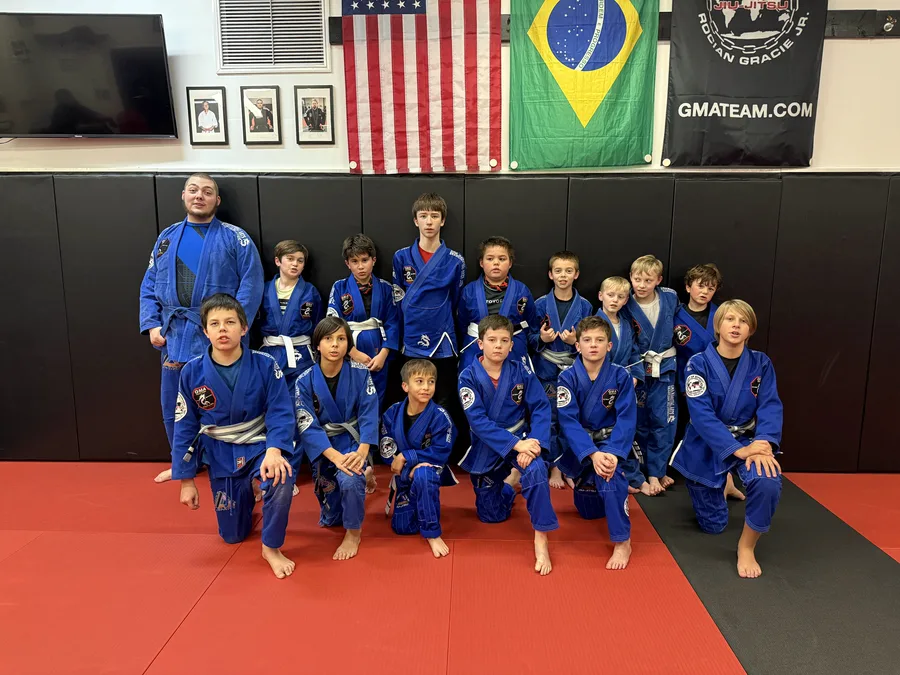
Our Kids Jiu Jitsu classes are for ages 6 to 12 and run Monday, Tuesday, Wednesday and Friday afternoons. A typical class looks like this:
- Bow in and line up. Every class starts the same way.
- Warm-up and movement drills. Rolls, bridges, shrimping and breakfalls.
- Technique. A coach shows one or two moves, and kids drill them with a partner of similar age and size.
- Games and live rounds. Positional games and supervised sparring (rolling), at a pace the coach controls.
Kids learn positions (mount, side control, back control and guard), escapes, takedowns and how to fall, and, as they get older, age-appropriate submissions. The IBJJF restricts which submissions are legal in kids divisions by age, and we teach to those limits. Every live round is supervised and partners are matched by age and size.
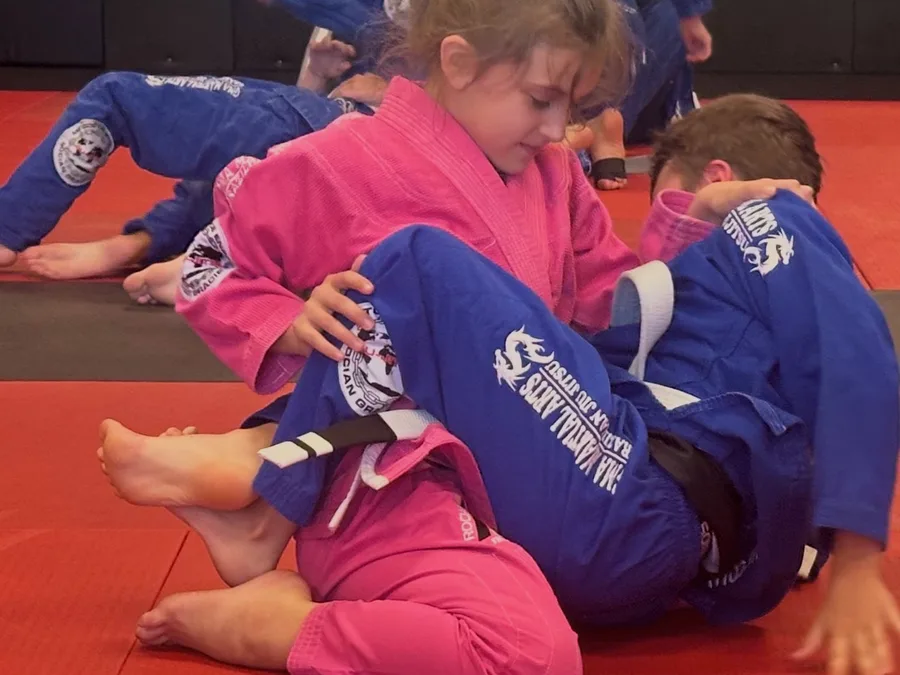
The Physical Activity Guidelines recommend at least 60 minutes of moderate to vigorous activity a day for kids ages 6 to 17. Two jiu-jitsu classes a week will not cover all of that on their own, but they are a fun, hard-working chunk of it, and most kids are having too much fun to notice they are exercising. For more on benefits, safety and the questions parents ask before signing up, read is jiu-jitsu good for kids?
Is my child too old to start at 9, 10 or 12?
No. Older kids often pick up technique faster because they can focus longer and understand why a move works. A beginner who walks in at 11 trains next to kids their own size and starts at white belt like everyone else. There is no catching up to do, only showing up.
Ages 13 and Up: Teens on the Mat
Thirteen is the in-between year. Depending on size and maturity, some 13 year olds move up to the adult classes and others stay in the kids class for a while. We decide that case by case with the family, so if you have a 13 year old, talk to us and we will figure out the right fit together.
From 14, teens train in our adult Gi classes, which are open to adults and teens 14 and up. Under the IBJJF rank system, the kids belt track runs through age 15, and students move onto the adult belt track at 16. Age in that system is counted by birth year, not birthday.
Signs Your Child Is Ready for Jiu-Jitsu
Age gets you in the door. Readiness is what makes the first few months go well. Look for these:
- They can follow a simple instruction from an adult who is not their parent.
- They are OK being close to other kids. Jiu-jitsu is a contact sport. Some children love that right away, others need a few classes.
- They can stay with the group. For the whole class, the child needs to stay on the mat with the coach and the other kids.
- They are curious. A child who wants to try is worth more than any age guideline.
If your child is not there yet, that is fine. Waiting six months is not a setback. And if your child has a medical condition, an old injury, or you are unsure whether a contact sport is right for them, talk to your doctor before they start.
How to Start Jiu-Jitsu in Gallatin
The easiest way to answer the readiness question is to watch your child on the mat. Book a free trial class, bring comfortable athletic clothes with no zippers or buttons and a water bottle, and we will lend a gi for the day. Arrive about 10 minutes early so the coach can meet your child before class.
After the trial, we will tell you honestly where we think your child fits: Little Lions, the kids class, or (for teens) the adult classes. Rocian Gracie Jr. Jiu-Jitsu at GMA has been teaching martial arts in Gallatin for more than 50 years, and every coach on our kids mat is Safe Sport certified and background checked.
See If Your Child Is Ready
Kids Jiu Jitsu for ages 6 to 12 and Little Lions for younger children, taught by Safe Sport certified coaches in Gallatin, TN. The first class is free.
Book Your Free ClassFrequently Asked Questions
What is the youngest age to start jiu-jitsu at GMA?
Children can step onto the jiu jitsu mat from age 4 in our Little Lions preschool program (Little Lions TaeKwonDo starts at 3). The Kids Jiu Jitsu class starts at 6.
Is 4 too young for jiu-jitsu?
Not in the right class. Four year olds do best in short, game-based classes that focus on falling safely, moving on the ground and listening. Our Little Lions classes run 30 minutes for exactly that reason.
Is it too late to start jiu-jitsu at 12 or 13?
No. Older beginners often learn faster because they can focus longer. Twelve year olds join the kids class at white belt, 13 year olds are placed case by case, and teens 14 and up train in the adult Gi classes.
How do I know if my child is ready?
If they can follow a simple instruction from a coach, are comfortable around other kids and want to try, they are usually ready. The easiest test is a free trial class.
Do kids have to compete?
No. Competition is completely optional. Kids who want to compete can train toward IBJJF and local tournaments, and many students train for years without entering one.