If your child trains jiu-jitsu, sooner or later they will come home with a grey belt and a question you cannot answer: what comes next? The youth BJJ belt system is different from the adult one, and most parents have never seen it before. This guide walks through every belt a child can earn between ages 4 and 15, the minimum ages, how stripes work, and what happens to a young student's rank at 16, using the official IBJJF rules and how we apply them at our academy in Gallatin, TN.
The short version: kids have their own track of 13 ranks built around four colors (grey, yellow, orange and green), each split into three steps. Adults have a separate track, and a teenager moves over to it in the year they turn 16.
How the Youth BJJ Belt System Works
The International Brazilian Jiu-Jitsu Federation (IBJJF) publishes the rank structure most academies follow, including ours. Its General System of Graduation (updated June 2026) lists 13 belts for athletes aged 4 to 15, in this order:
- White
- Grey and White
- Grey
- Grey and Black
- Yellow and White
- Yellow
- Yellow and Black
- Orange and White
- Orange
- Orange and Black
- Green and White
- Green
- Green and Black
Each color is a group of three belts. The "and White" version has a white stripe running down the center of the belt, the solid version is the plain color, and the "and Black" version has a black stripe down the center. So a child does not jump straight from grey to yellow. They work through grey and white, solid grey and grey and black first, which gives younger students a visible goal every few months instead of once every few years.
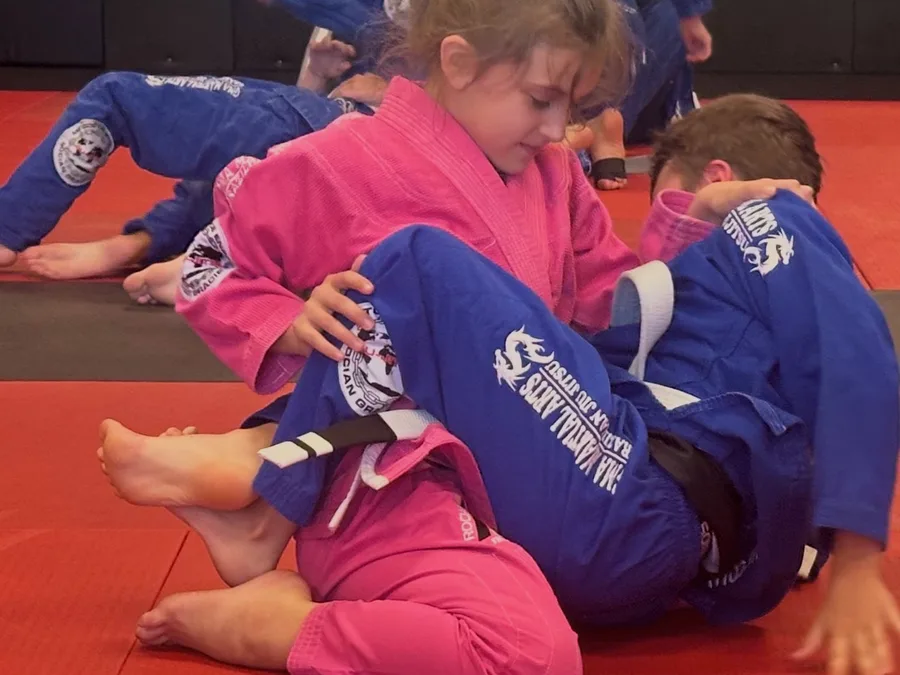
At GMA, the kids track runs from white belt at age 4 through green belt at age 15. Our Kids Jiu Jitsu classes for ages 6 to 12 and the Little Lions program for younger children use the same progression, so a four-year-old earning stripes in Little Lions is already on the path the older kids follow.

Minimum Ages for Each Youth Belt
The IBJJF sets a minimum age for each color group. A child can wear white belt at any age, but the colored belts open up as they get older:
| Belt group | Belts in the group | Ages (IBJJF) |
|---|---|---|
| White | White | Any age |
| Grey | Grey and White, Grey, Grey and Black | 4 to 15 |
| Yellow | Yellow and White, Yellow, Yellow and Black | 7 to 15 |
| Orange | Orange and White, Orange, Orange and Black | 10 to 15 |
| Green | Green and White, Green, Green and Black | 13 to 15 |
Those ages line up with the IBJJF's kids competition divisions: Mighty-Mite (4 to 6), Pee-Wee (7 to 9), Junior (10 to 12) and Teen (13 to 15). One detail that surprises parents: the IBJJF counts age by birth year, not birthday. Your child's age for belt purposes is the current year minus their birth year, so a child born in 2019 counts as 7 for all of 2026, even before their birthday.
A minimum age is a floor, not a schedule. A seven-year-old is allowed to wear yellow, but that does not mean every seven-year-old should. Plenty of kids reach the age for a new color while they are still working through the one before it, and that is normal.
How Stripes Work on Kids Belts
Stripes (the IBJJF calls them degrees) are the small markers taped onto the black bar at the end of the belt. They break a long stretch at one belt into smaller wins, which matters a lot to a child.
The IBJJF leaves the stripe system for ages 4 to 15 up to each professor and offers three suggested models: a quarterly system (a stripe every three months, three stripes per belt, with the fourth step being the next belt), a triannual system (a stripe every four months, two stripes per belt) and a monthly system (eleven small degrees per belt). For white belt and grey and white belt, it suggests one degree a month, about six months at each.
Here is how it works at GMA. Every kids belt carries four stripes. Stripes are awarded in class when a student is ready, which usually works out to roughly every three to four months for a child who trains consistently. Each new belt comes with a formal belt test. What we look at is mainly technique and attendance, and sometimes competition. A child does not have to compete to be promoted.
There Is No Minimum Time at Each Kids Belt
For adults, the IBJJF sets minimum times at most belts. For athletes aged 4 to 15, it sets none. How long a child spends at a given belt is entirely the professor's call.
That is a good thing. Kids develop at very different speeds. A coordinated nine-year-old who trains three times a week and a shy six-year-old who trains once a week should not be on the same clock, and a fixed timeline would either rush one or hold back the other. When a child stays at a belt longer than a friend, it usually comes down to attendance, age, or one skill that still needs work, not a judgment on the child.
If you are curious where your child stands, ask the coach after class. A good answer sounds like "we are working on their escapes from side control," not "it has been six months, so they are due."
What Happens to a Youth Belt at Age 16
In the year a student turns 16 (the IBJJF's Juvenile division), they move from the youth track to the adult track of white, blue, purple, brown and black. The IBJJF converts their rank like this:
- White belt: may stay white.
- Grey, yellow or orange belt: must move to blue.
- Green belt: moves to blue or purple, at the professor's discretion.
The time spent on the youth track also counts later. Once that student reaches the adult division at 18, the IBJJF's normal two-year minimum at blue belt drops to one year if they were previously a grey, yellow or orange belt, and to no minimum if they were a green belt. Years of kids training are not wasted when a teen moves up; they shorten the road.
At GMA, teens 14 and up train in the adult Gi classes, and thirteen-year-olds are placed case by case depending on size and maturity. Training with adults does not change the belt track, though. Under IBJJF rules, a 14 or 15-year-old keeps a youth belt until the year they turn 16. If you want the full picture of where the adult ranks lead, our guide to the highest belt in BJJ covers everything from black belt to red, and Global Martial Arts USA has an overview of the adult BJJ belt ranking system.
Why the Youth Belt Ranks Matter in Competition
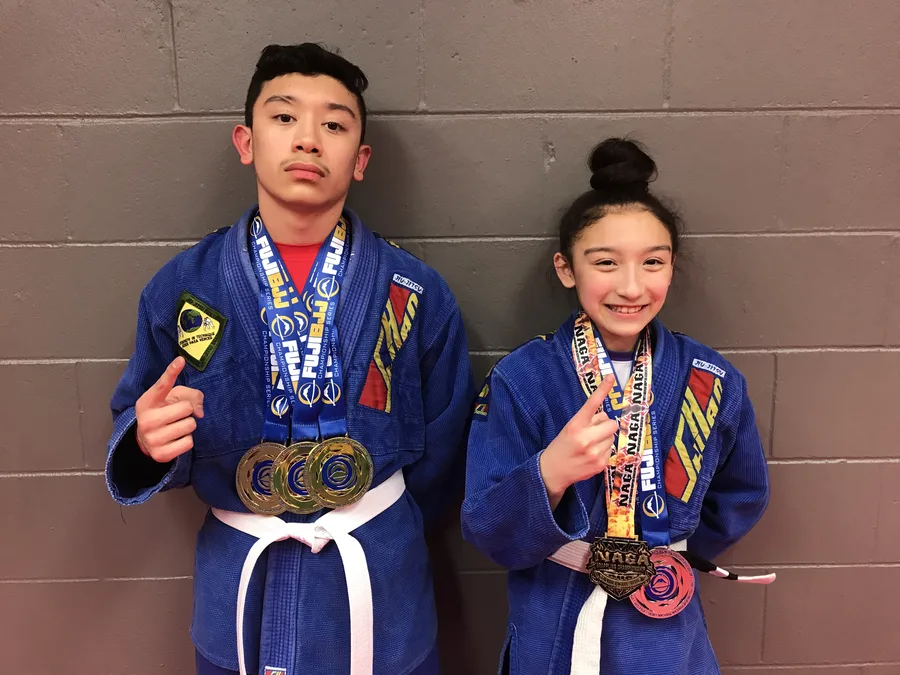
For kids who compete, the belt matters beyond the wall at home. IBJJF youth divisions are organized by age, belt and weight, so a child's rank decides who they face. The rules on which submissions are allowed also change with age, which is one more reason the youth track is separate from the adult one.
Our academy is registered with the IBJJF (#4746) and the USA Brazilian Jiu-Jitsu Federation, so a belt earned here is recognized at tournaments and at academies elsewhere. Competition is encouraged and never required. Plenty of our students earn every belt on the youth track without entering a single tournament.
How Parents Can Help Through the Youth Belts
A few things make the biggest difference, and none of them involve pushing for the next stripe:
- Keep them consistent. Two classes a week is the sweet spot for most kids. Attendance is one of the main things we look at, and steady training beats bursts.
- Celebrate the stripe, not the speed. A stripe means your child learned something real. How fast it came is less important than the fact that it came.
- Do not compare belts between kids. Different ages, different start dates, different training schedules. Comparing just makes the slower child feel worse.
- Talk to the coach. If your child is frustrated, ask what they are working on so you can encourage the right thing at home.
If you are still deciding whether the sport is right for your child, start with our parent guide on whether jiu-jitsu is good for kids. If you are ready to try it, every family in Gallatin and the surrounding area can book a free trial class, and your child's first step on the youth BJJ belt system starts there.
Start Your Child on the Belt Path
Kids Jiu Jitsu for ages 6 to 12 in Gallatin, TN, with Little Lions for younger children. Every child starts at white belt, and the first class is free.
Book Your Free ClassFrequently Asked Questions
What are the kids belt colors in BJJ?
Under the IBJJF system, kids aged 4 to 15 progress through white, then grey, yellow, orange and green. Each color has three steps: the color with a white center stripe, the solid color, and the color with a black center stripe, for 13 ranks in total.
How long does it take a child to earn a new belt?
There is no fixed timeline. The IBJJF sets no minimum time at any kids belt, so it is the professor's decision. At GMA, stripes usually come roughly every three to four months for a child who trains consistently, and each new belt comes with a formal belt test.
Can a 6-year-old earn a yellow belt?
Not under IBJJF rules. The yellow group starts at age 7, the orange group at 10 and the green group at 13. Age is counted by birth year (current year minus birth year), not by birthday.
What belt does a kid get at 16?
In the year they turn 16, grey, yellow and orange belts move to blue. A green belt moves to blue or purple, at the professor's discretion. A white belt may stay white.
Does my child have to compete to be promoted at GMA?
No. Promotions at GMA are based mainly on technique and attendance. Competition is encouraged but never required. See our Kids Jiu Jitsu page for how classes are run.