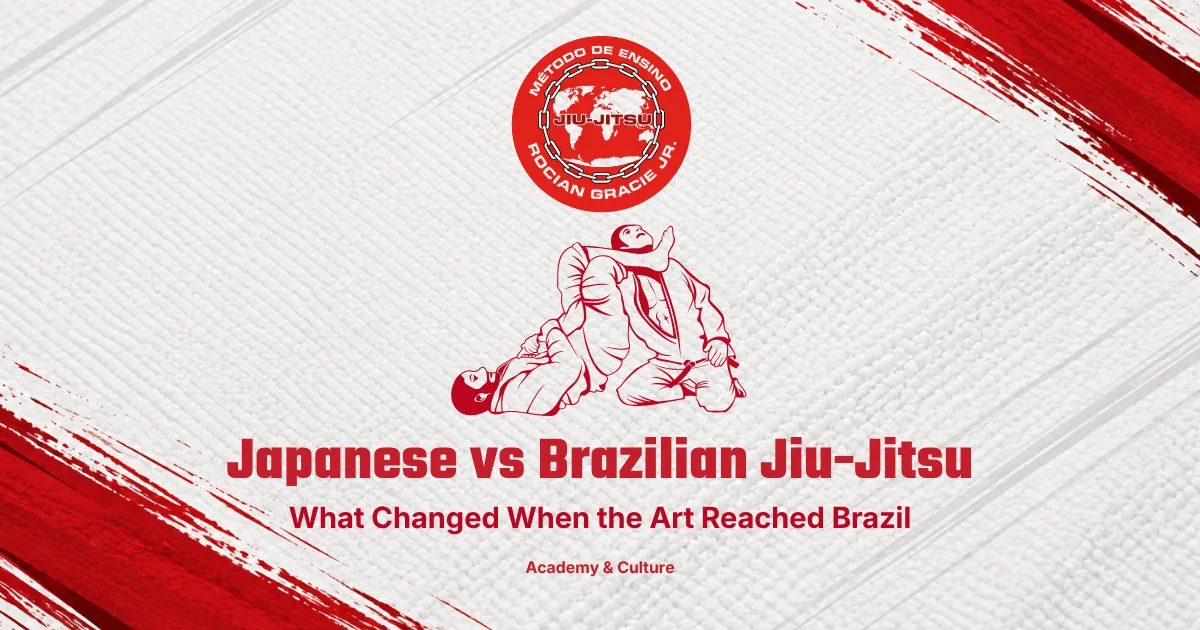
Plenty of people searching for a martial art run into two names that sound almost identical: Japanese jiu-jitsu and Brazilian jiu-jitsu. They share a word, a history and a lot of techniques, but they train very differently. If you are comparing Japanese jiu jitsu vs Brazilian jiu jitsu, the short version is this: the Japanese arts grew out of battlefield and self-defense systems with throws, joint locks, strikes and weapons, while the Brazilian art narrowed its focus to fighting on the ground against a fully resisting partner.
This guide walks through where each art came from, what changed when the art reached Brazil, and what those changes mean for someone walking into a class today. We teach Brazilian Jiu-Jitsu here at GMA in Gallatin, TN, so we will be clear about our bias, but both traditions deserve respect.
What Is Japanese Jiu-Jitsu?
"Jiu-jitsu" is an older Western spelling of the Japanese word jujutsu, usually translated as "the gentle art" or "the art of yielding." It is not one style. It is a family of hundreds of separate schools, called ryu, that developed in Japan over several centuries.
The older schools, known as koryu, were built for warriors. One of the oldest surviving jujutsu schools, Takenouchi-ryu, traditionally dates its founding to 1532, and its core curriculum centers on grappling while armed with a short sword against an armored opponent. That context explains a lot about the old arts. An armored samurai could not count on punches or kicks, so the methods leaned on throws, joint locks, pins, chokes and restraint, often combined with a blade.
A typical traditional curriculum included:
- Nage-waza: throwing techniques
- Kansetsu-waza: joint locks
- Shime-waza: chokes
- Atemi: strikes to vulnerable points
- Weapons: work with or against the sword, staff, knife and rope
Most of this was taught through kata: set, pre-arranged sequences practiced with a cooperative partner. Kata let students rehearse dangerous techniques, like strikes to the throat or breaking a joint, that could not be done at full speed on a training partner. Many modern Japanese jiu-jitsu schools still train this way, with a strong self-defense focus and a wide syllabus that covers standing and ground situations.
The Bridge: Judo and Live Training
The step between the old Japanese schools and Brazilian Jiu-Jitsu is judo. Jigoro Kano trained in two jujutsu schools, Tenjin Shin'yo-ryu and Kito-ryu, and in 1882 he opened his own school in Tokyo, the Kodokan. He removed the most dangerous techniques, dropped striking and weapons from free practice, and made randori (live sparring against a resisting partner) the center of training instead of kata alone.
That one decision changed everything that followed. When you spar for real, you find out quickly which techniques work under pressure and which only work when your partner cooperates. Kano also gave us much of what a jiu-jitsu class still looks like today: the white cotton training jacket, the colored belt, the bow at the edge of the mat, and the idea that a martial art can be practiced safely as a sport and as education.
In the early 1900s, judo was often still called "Kano jiu-jitsu," or simply "jiu-jitsu," outside Japan. That naming overlap is the reason the Brazilian art carries the jiu-jitsu name today, even though its direct roots run through Kodokan judo. If you want a closer look at how judo and jiu-jitsu compare as modern sports, our sister site has a full breakdown of judo vs jiu-jitsu.
How the Art Reached Brazil
Mitsuyo Maeda was a Kodokan judoka who left Japan in 1904 and spent the next decade touring and taking challenge matches across the United States, Europe and Latin America. He reached Brazil in 1914, where newspapers advertised his demonstrations as "jiu-jitsu." He settled in Belém, in the state of Pará, became a naturalized Brazilian citizen, and taught there until his death in 1941.
His students in Belém included members of the Gracie family and others, such as Luiz França. The Gracie family went on to open an academy in Rio de Janeiro in the 1920s, and over the following decades Brazilian instructors kept testing and refining what they had learned. Historians still debate exactly how much of Maeda's teaching was pure judo and how much was older jujutsu, so treat the details as a summary, not a settled record.
What is not in doubt is the direction the art took. Our own branch of that tree runs from Master Rocian Gracie Jr. to Professor Konrado, who received his black belt from Master Rocian on December 12, 2000, the first black belt Rocian Gracie Jr. ever awarded. You can read that story on our About page, and our earlier post on how two Gracie branches train explains how branches differ today.
Japanese Jiu Jitsu vs Brazilian Jiu Jitsu: What Changed
Brazilian Jiu-Jitsu kept the leverage-based foundation of its Japanese ancestors and changed the emphasis. These are the differences you will actually notice on the mat.
1. The ground became the main event
Japanese systems treat ground work as one part of a much wider syllabus. Brazilian Jiu-Jitsu made the ground its specialty. Most of a BJJ class is spent on positions like mount, side control, back control and guard, and on how to escape, hold or improve them.
2. The guard was developed into a full system
In most grappling arts, ending up on your back is a losing position. In Brazilian Jiu-Jitsu, the guard (controlling an opponent with your legs while on your back) is a place to attack from. A huge share of BJJ technique, including sweeps and many submissions, starts from guard.
3. Live sparring became the daily test
Brazilian Jiu-Jitsu took Kano's randori idea and made it the core of training. Nearly every class ends with rolling: sparring at real resistance with a partner who is trying to stop you. Techniques that can't be made to work against resistance tend to fall out of the curriculum.
4. Position before submission
BJJ teaches a hierarchy. Control the position first, then look for the finish. That idea, plus a focus on leverage over strength, is why a smaller person with good technique can control a larger one.
5. Strikes and weapons moved to the side
Traditional Japanese jiu-jitsu keeps atemi and weapon defense inside the syllabus. Brazilian Jiu-Jitsu training is mostly grappling without strikes, which is what makes full-resistance sparring safe enough to do every class. Self-defense against strikes is still taught, but it is no longer the main way students train.
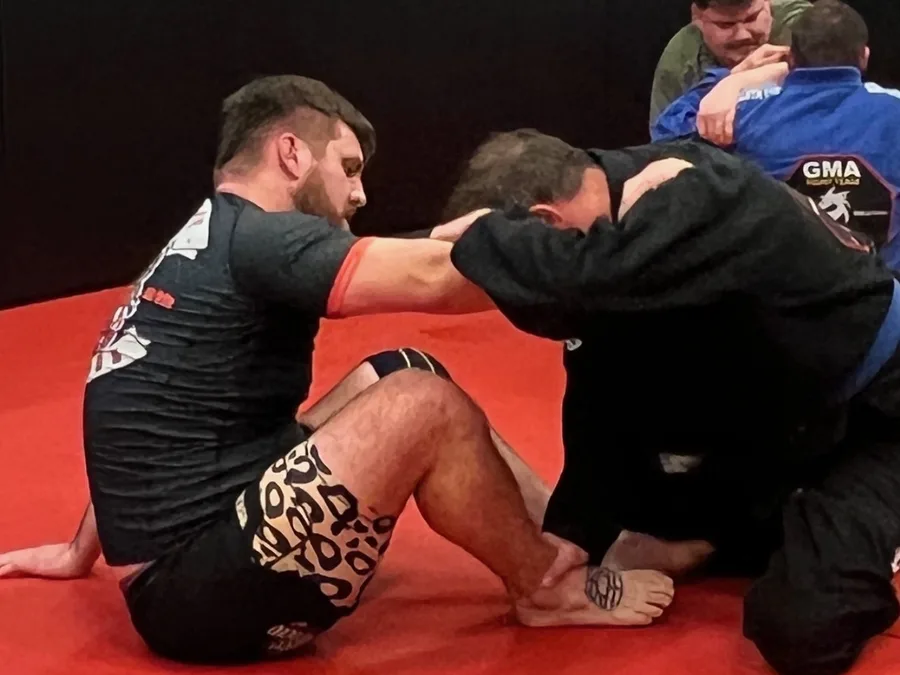
Quick comparison
| Japanese jiu-jitsu | Brazilian Jiu-Jitsu | |
|---|---|---|
| Roots | Hundreds of ryu, some dating to the 1500s | Kodokan judo and jujutsu brought to Brazil in 1914 |
| Main focus | Broad self-defense: throws, locks, strikes, weapons | Ground control, guard, submissions |
| Main training method | Kata with a cooperative partner | Drilling plus live sparring every class |
| Strikes | Part of the syllabus | Mostly left out of sparring; covered in self-defense |
| Competition | Varies by school; many don't compete | Large sport scene, with the IBJJF and others running tournaments |
| Uniform | Gi (keikogi) and belt | Gi and belt, plus no-gi training in shorts and rash guard |
What Stayed the Same
For all the changes, the two arts still share a lot. Both use leverage, balance and timing instead of size. Both use chokes and joint locks, and many submissions have Japanese ancestors. If you want a tour of them, our post on the types of chokes in BJJ covers the main ones. Both wear a gi and a colored belt and bow on and off the mat. And both are built on the same core promise: that technique can help a smaller person survive and control a bigger one.
Respect also carries over. A Brazilian Jiu-Jitsu academy still expects you to tap early, protect your training partners, keep your gi clean and listen to your coach. Any submission, from either tradition, should be learned under a qualified instructor, and you should always tap early when you are caught.
Which One Should You Train?
Pick based on what you want out of it:
- Choose a traditional Japanese jiu-jitsu school if you are drawn to a wide self-defense syllabus, kata, standing joint locks and weapon defense, and you are less interested in sparring.
- Choose Brazilian Jiu-Jitsu if you want to test what you learn against a resisting partner, care about ground control, want a strong workout, or may want to compete someday.
Whichever you pick, the instructor and the room matter more than the name on the sign. Visit, watch a class, and ask how they train.
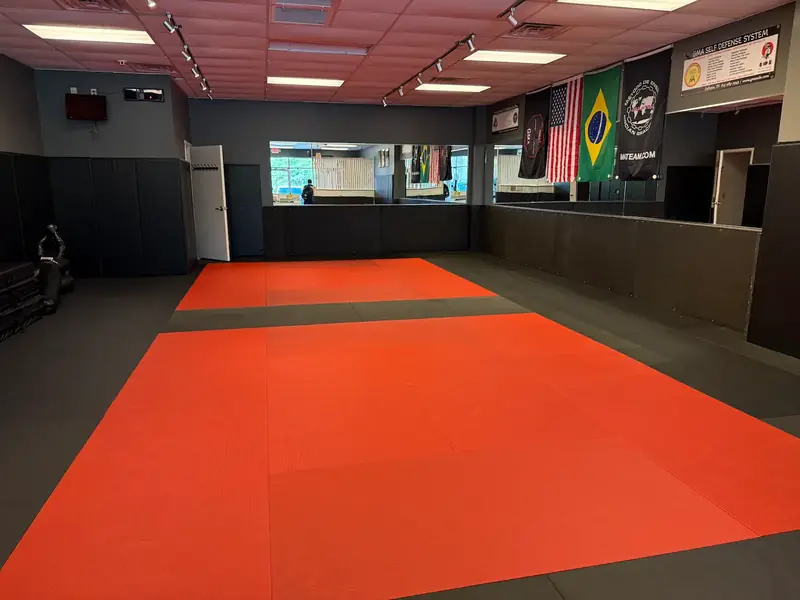
Try Brazilian Jiu-Jitsu in Gallatin, TN
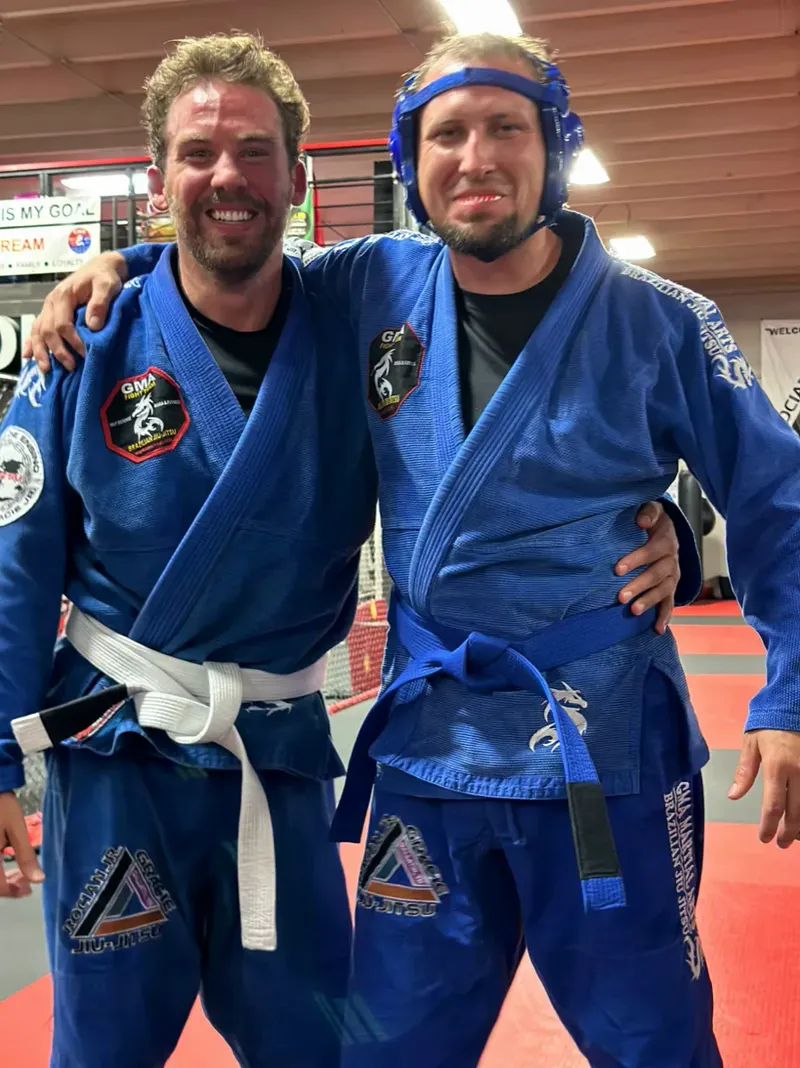
GMA is the home of Rocian Gracie Jr. Jiu-Jitsu in Gallatin, at 509 Garnet Ct, Suite 200. Kids Jiu Jitsu runs for ages 6 to 12, and adults and teens 14 and up train in our adult jiu-jitsu classes. Every class is beginner-friendly.
The best way to feel the difference between the two arts is to roll once. Book a free trial class, wear comfortable athletic clothes with no zippers or pockets, and arrive about ten minutes early. We will lend you a gi and walk you through your first class.
Feel the Difference on the Mat
Take a free Brazilian Jiu-Jitsu class in the Rocian Gracie Jr. Method in Gallatin, TN. No experience needed, and grapplers from any style are welcome.
Book Your Free ClassFrequently Asked Questions
Is Japanese jiu-jitsu the same as Brazilian Jiu-Jitsu?
No. They share roots and many techniques, but Japanese jiu-jitsu covers a broad self-defense syllabus taught mostly through kata, while Brazilian Jiu-Jitsu specializes in ground grappling tested through live sparring.
Did Brazilian Jiu-Jitsu come from judo or jujutsu?
Both. Mitsuyo Maeda, who brought the art to Brazil in 1914, was a Kodokan judoka, and judo itself was built from older jujutsu schools. In his era judo was often still called jiu-jitsu outside Japan, which is why the Brazilian art kept that name.
Which is better for self-defense?
Both include self-defense. Brazilian Jiu-Jitsu's advantage is that students spar against full resistance every class, so they learn what works under pressure. The quality of the instructor matters more than the style name.
Can I train at GMA if I have a Japanese jiu-jitsu or judo background?
Yes. Throws, grips and break-falls carry over well, and we will help you find the right class. Start with a free trial class.
What style of Brazilian Jiu-Jitsu does GMA teach?
GMA teaches the Rocian Gracie Jr. Method. Professor Konrado received his black belt directly from Master Rocian Gracie Jr. in 2000. Read more on our About page.