Leg locks used to be the part of Jiu-Jitsu people whispered about. Today they are a full branch of the game, and every grappler needs to understand them, even if only to stay safe. This guide covers BJJ leg locks from the ground up: what each one attacks, how the main entanglements work, and exactly what is legal at each belt under International Brazilian Jiu-Jitsu Federation (IBJJF) rules.
At GMA in Gallatin, TN, leg entanglements are part of our No-Gi grappling classes, taught progressively and with clear rules on what is permitted. A word before we start: this article explains what these techniques are and when they are used. It is not a how-to. Learn every submission under a qualified coach, apply it slowly in training, and tap early when you are caught.
What BJJ Leg Locks Attack
An armbar attacks one joint, the elbow, and you usually feel it coming. Leg locks are different. The leg has three joints that can be attacked (the ankle, the knee and the hip), and the knee in particular is built to bend in one direction and handle very little twisting. That is why leg locks are split into two broad groups:
- Compression and hyperextension locks. The straight foot lock, kneebar and calf slicer bend or crush a joint along its natural line. They are painful early, so you have time to tap.
- Rotational locks. The heel hook and other knee-twisting locks rotate the lower leg, which loads the ligaments of the knee. Pain often arrives late, after damage has started.
That difference explains almost every rule you will read below. The more a lock relies on rotation, the later it shows up in a student's development and in the IBJJF rule book.
The Main BJJ Leg Locks, One by One
Straight foot lock (ankle lock)
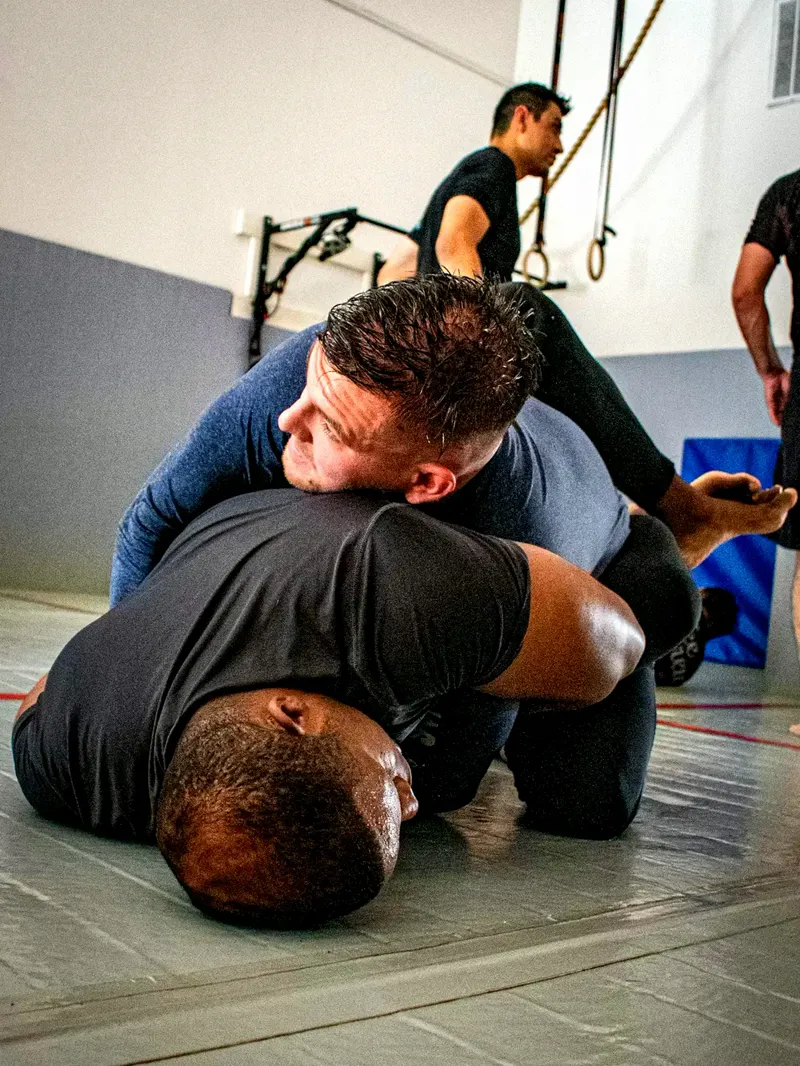
The straight foot lock is the first leg lock most students learn. The attacker traps the foot under the armpit, wraps the forearm under the Achilles tendon and arches back, putting pressure on the ankle and Achilles. It is the most widely legal leg lock in competition and a good entry point into leg entanglements, because the positions you learn to finish it are the same positions every other leg attack comes from.
Kneebar
The kneebar is an armbar for the leg. The attacker isolates one leg between their own legs, with the opponent's knee against their hips, and extends the hips to hyperextend the knee. It can come from guard, from passing, or from a scramble. Because it is a hyperextension lock, there is usually a clear moment to tap.
Toe hold
The toe hold uses a figure-four grip on the top of the foot to twist the ankle. Despite the name it attacks the ankle, not the toes. Note the specific restriction on it in the rules section: even where it is legal, IBJJF rules limit the direction of pressure in most divisions.
Calf slicer
The calf slicer is a compression lock. A shin or forearm is placed behind the knee and the leg is folded over it, crushing the calf and prying the knee joint. It often shows up when an opponent defends the back take or rolls to escape.
Heel hook
The heel hook is the lock that changed modern grappling. The attacker controls the leg in an entanglement, cups the heel in the crook of the elbow and rotates. Although it grips the heel, the force travels up the leg and twists the knee. Inside heel hooks turn the heel toward the outside of the body, outside heel hooks turn it inward. Both are powerful, fast and unforgiving, which is why they are the most restricted leg lock in the sport.
Where leg locks come from: the entanglements
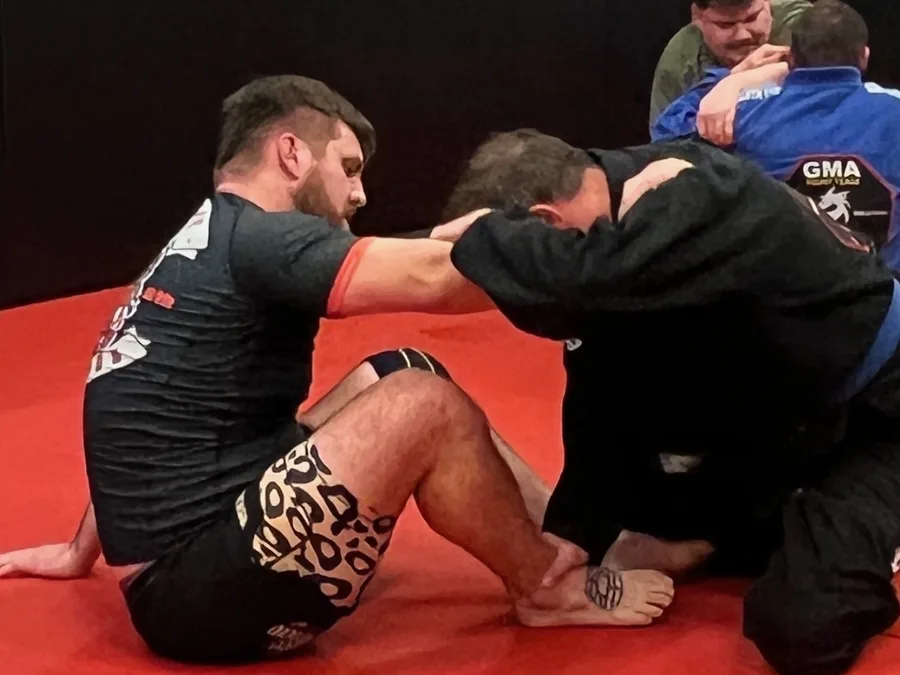
No leg lock works unless the leg is controlled first. Common entanglement positions include single leg X, the basic outside ashi (sometimes called ashi garami), 50/50, and the inside position known by several names, including inside sankaku or the saddle. The coach's job is to teach control of these positions before the finish. Positions first, submissions second, the same principle as the rest of Jiu-Jitsu. If you have read our guide to the types of chokes in BJJ, the logic is the same: control, then the finish.
Which BJJ Leg Locks Are Legal? IBJJF Rules by Belt
The IBJJF rule book (version 6.1, June 2024 edition) includes a chart of illegal techniques by age and rank. Using an illegal technique counts as a severe foul, and the penalty is disqualification from the match. Here is what the chart says for leg locks.
| Technique | Kids and teens (4-15) | Juveniles 16-17 and adult white belts | Adult and master blue and purple belts | Adult and master brown and black belts (gi, and master no-gi) | Adult brown and black belts, No-Gi |
|---|---|---|---|---|---|
| Straight foot lock | Illegal | Legal | Legal | Legal | Legal |
| Kneebar | Illegal | Illegal | Illegal | Legal | Legal |
| Toe hold | Illegal | Illegal | Illegal | Legal (no outward pressure) | Legal |
| Calf slicer | Illegal | Illegal | Illegal | Legal | Legal |
| Heel hook and knee-twisting locks | Illegal | Illegal | Illegal | Illegal | Legal |
| Knee reaping | Illegal | Illegal | Illegal | Illegal | Legal |
A few details that catch people out:
- Heel hooks are never legal in the gi under IBJJF rules, at any belt. In No-Gi they are legal only for brown and black belts in the adult age division. Master divisions (30 and older) are in the more restricted column.
- Turning in a straight foot lock. Rotating your body in the direction of the foot that is not being attacked is illegal for white, blue and purple belts. Brown and black belts may rotate under the 2024 rules.
- Toe hold pressure. Applying outward pressure on the foot in a toe hold is illegal in every division except adult brown and black belt No-Gi.
- Other events, other rules. Many submission-only and No-Gi events use their own rule sets, and some allow heel hooks at lower ranks. Always read the rules for the specific event you enter.

What knee reaping means
Knee reaping is a position, not a submission. The IBJJF defines it as one athlete placing a thigh behind the opponent's leg and passing their calf over the opponent's body above the knee, with the foot crossing the vertical midline of the opponent's body, while the opponent's foot is trapped between the attacker's hip and armpit. Reaping loads the knee from the outside in, which is the same direction a heel hook attacks. For divisions where it is illegal, crossing the midline is a serious foul (a penalty), and crossing the outer limit of the opponent's body, or reaping while either athlete has a submission hold, is a severe foul.
Why Heel Hooks Need Extra Respect
Coaches treat heel hooks differently for one reason: the warning signs come late. With an armbar or a kneebar, you feel the joint straighten and you tap. With a heel hook, the knee can be twisted past its limit before you feel much pain. The ligaments that hold the knee together do not stretch and spring back like muscle does.
That has practical consequences for training:
- Tap to the position, not the pain. If your heel is exposed, the lock is set and you can't free your knee line, tap. Don't wait to feel it.
- Don't spin blindly. Rolling or spinning to escape a heel hook can work, but spinning the wrong way, or too late, turns your own movement into the force that injures you.
- Apply slowly. In training, a finish is a controlled position held with gradual pressure. Cranking a heel hook on a partner is how training partners get hurt.
None of this means leg locks are reckless. Taught well, they are some of the most technical positions in grappling. It means the learning order matters, and that a coach should be on the mat when you learn them.
How We Teach BJJ Leg Locks at GMA
Our approach follows the same order as the rule book. Students start with the positions: how to enter an entanglement, how to keep it, and how to escape one. Then come the lower-risk finishes, such as the straight foot lock. Rotational attacks come later, in No-Gi, taught progressively and with clear rules about what is allowed in live rounds. Your coach decides what is appropriate for your level and for each drill.
Defense is part of every lesson, because a student who can't defend leg locks is at risk every time they roll with someone who knows them. Most leg lock defense comes down to a few principles: keep your knee line protected, hide the heel, don't cross your feet when your leg is trapped, and clear the entanglement before the attacker settles the grip. These sit right next to the frames and hip movement in our guide to BJJ escapes from mount, side control and back.
The best place to slow these positions down is our weekday Open Mat, 11:00 AM to 1:00 PM, where you can drill one entanglement for an hour and ask an instructor for corrections. Students who want to compete can bring their questions about specific rule sets to the fight team.
Getting Started With Leg Locks
If you are new to Jiu-Jitsu, you don't need leg locks on day one. Learn to survive, escape and hold position first. When you are ready, ask your coach where leg entanglements fit into your training. If you train somewhere else and want to see how we teach them, come try a No-Gi class with us in Gallatin. Every membership includes both Gi and No-Gi classes.
Whatever your level, the rules for leg locks in training are simple: learn them from a qualified coach, apply them with control, and tap early.
Learn Leg Locks the Safe Way
Leg entanglements are taught progressively in our No-Gi classes at GMA in Gallatin, TN, with clear rules on what is permitted. Your first class is free.
Book Your Free ClassFrequently Asked Questions
What are the most common BJJ leg locks?
The five you will hear about most are the straight foot lock (ankle lock), kneebar, toe hold, calf slicer and heel hook. The first four bend or compress a joint; the heel hook twists the knee, which is why it is the most restricted.
Are heel hooks legal in the gi?
Not under IBJJF rules. Heel hooks and other knee-twisting locks are illegal in the gi at every belt. In No-Gi they are legal only for brown and black belts in the adult age division.
Can white belts use leg locks in IBJJF tournaments?
Adult white belts (and juveniles 16-17) may use the straight foot lock, but not kneebars, toe holds, calf slicers or heel hooks. They also may not rotate toward the foot that is not under attack while finishing a straight foot lock.
Are leg locks dangerous?
Any submission can injure a partner if it is applied too fast. Rotational locks such as heel hooks carry extra risk because the pain often arrives late. Learn them under a qualified coach, apply them slowly and tap early.
Where can I learn leg locks in Gallatin, TN?
Leg entanglements are taught progressively in our No-Gi grappling classes, with clear rules on what is permitted. Adults and teens 14 and up are welcome, and you can book a free trial class to try one.