A sweep is how you go from the bottom to the top in jiu-jitsu without letting your partner pass your guard. If you have ever been stuck under someone heavier and wondered how smaller grapplers end up on top, the answer is usually a sweep. This guide covers the main BJJ sweeps for every guard: closed guard, half guard, butterfly, open guard and a few of the modern positions. It is the same map we use with adults and teens who train with us in Gallatin, TN.
Use it to put names to what you see in class. Sweeps are safer to drill than submissions, but they still involve falls and twisting knees, so learn them from a qualified coach, drill them at low speed first, and let go of grips when a partner's knee or shoulder is caught at a bad angle.
What Are BJJ Sweeps?
A sweep is a reversal that starts with you on your back, or sitting, with your partner inside your guard. You use your legs, hips and grips to take away their balance, and you finish on top. That last part matters: a sweep that leaves you both scrambling is not finished until you are settled in a top position.
Almost every sweep follows the same three steps:
- Break their posture or balance. Pull them forward, push them back, or lift them so their weight is no longer centered over their knees.
- Take away a post. When people start to fall, they put out a hand or a foot to catch themselves. Trap that arm or block that leg and they have nothing to stop the fall.
- Use a lever and come up. Your legs or hips move them over the blocked side, and you follow them so you land on top, not next to them.
Once you see sweeps this way, the long list below becomes a handful of ideas applied from different guards.
How Sweeps Score Under IBJJF Rules
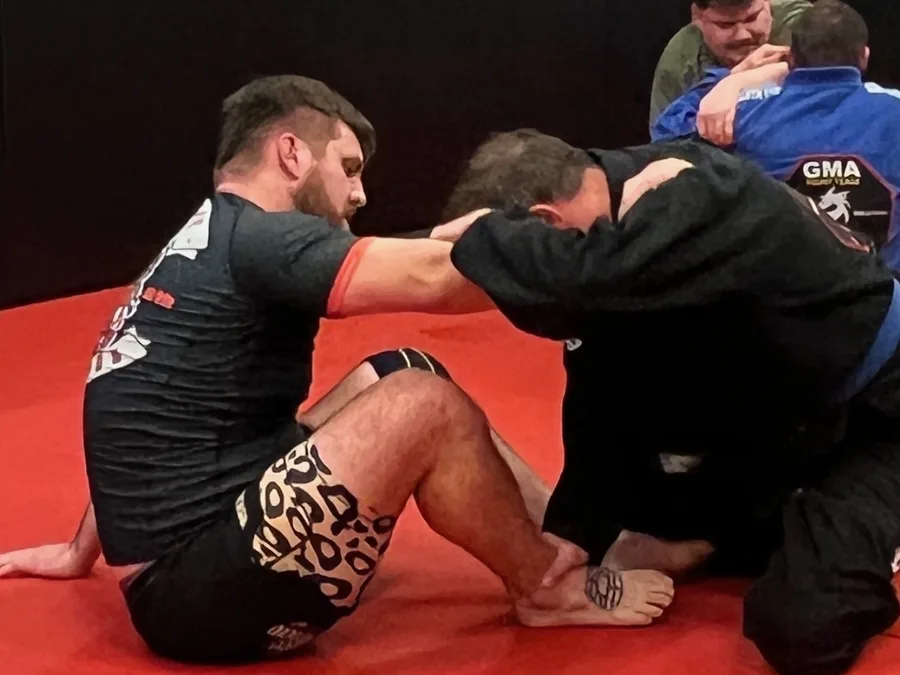
In a tournament that uses the International Brazilian Jiu-Jitsu Federation (IBJJF) rules, a sweep is worth 2 points, the same as a takedown or knee on belly. The 2024 IBJJF Rule Book describes three main ways to earn them:
- You start on bottom with your opponent in your guard or half guard, reverse the position so they end up on bottom, and hold them there for 3 seconds.
- You start the reversal from guard or half guard, your opponent turns to their hands and knees, and you control their back (hooks not required) with at least one of their knees on the mat for 3 seconds.
- You stand up from guard or half guard, put your opponent down, and keep the grips to hold them on bottom for 3 seconds.
If you get them off balance and reach the top but can't hold it for 3 seconds, the referee can award an advantage instead. The Rule Book also says no advantage is given for sweeps that start and end in a 50/50 guard, or for a sweep attempt that sends your opponent out of the area without you ever landing on top. If you plan to compete, those details shape how you finish: come up, settle your weight, and count to three.
Closed Guard Sweeps
Closed guard is where most people learn their first sweeps, because your legs are locked around your partner and you have the most control over their posture.
Scissor sweep
You hold a collar and a sleeve, open your guard, and put one shin across their belly while the other leg drops to the mat beside their knee. Pull them onto the shin, chop the bottom leg, and they roll over the side where you control the sleeve. It teaches the core idea of every sweep: control the arm on the side they will fall to.
Hip bump sweep
When your partner sits up tall to keep their posture, you sit up with them, post on one hand, reach over their shoulder to trap the arm, and drive your hips into them. They fall back over the trapped arm and you come up to mount. It pairs naturally with the kimura and the guillotine, because the same sit-up threatens all three.
Flower sweep (pendulum sweep)
You trap one arm and reach under their opposite leg. Then you swing your free leg like a pendulum to build momentum and use your legs on their back to tip them over the trapped side. It works well against someone who is leaning forward with their weight on you.
Half Guard Sweeps
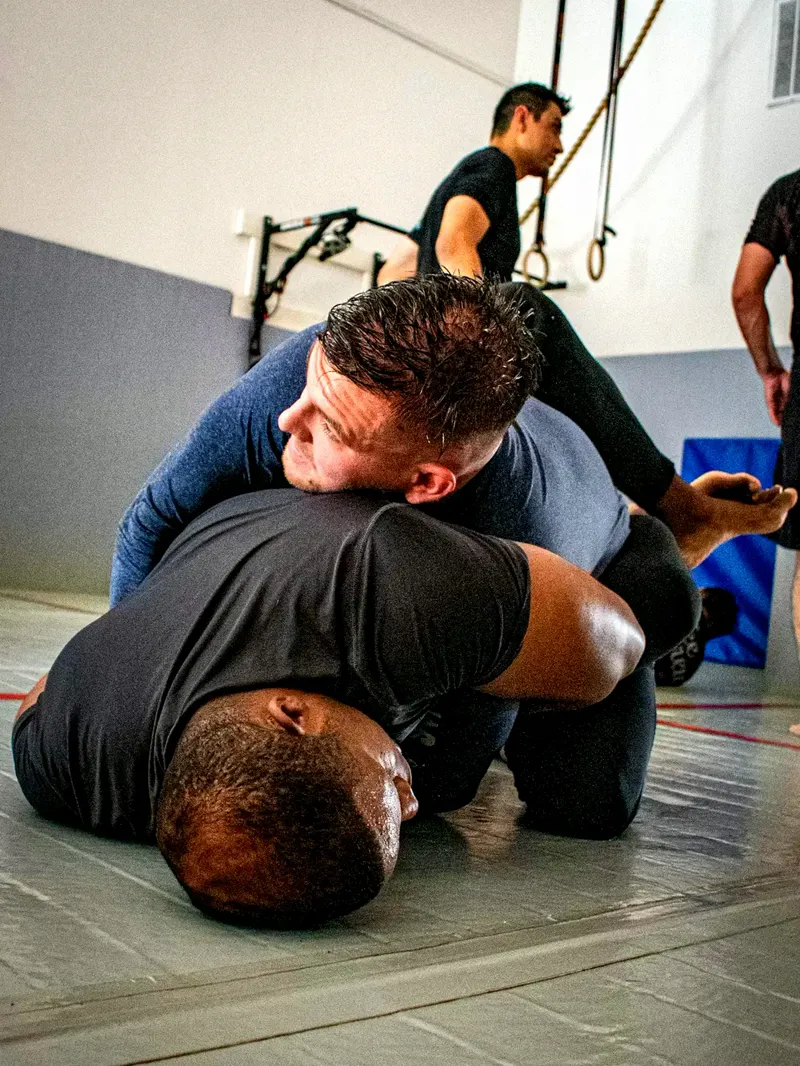
Half guard has a reputation as a place you end up when your guard is being passed. Played well from the bottom, it is one of the best sweeping positions in BJJ, because you are already close to your partner's legs.
Getting the underhook
Most half guard sweeps start with the same move: get on your side, face your partner, and win the underhook on the side of the trapped leg. Lying flat with their chest on yours is where half guard goes wrong. On your side with an underhook, you are attacking.
Old school sweep
From the underhook, you come up toward their back, reach for the ankle of the leg you are trapping, and drive forward so they fall over the side where you hold the ankle. It is simple and it holds up at every level.
Coming up to the knees (dogfight)
If you get your underhook and come up to your knees beside your partner, you are in what many coaches call the dogfight. From there you can drive into them to take them down, or go to their back if they turn away.
Deep half guard
In deep half you slide underneath your partner and hold their leg against your body. Their base is now above you, and small pushes with your legs tip them forward or backward. It feels strange at first, so it is usually taught after the basics.
Butterfly Guard Sweeps
In butterfly guard you sit up with your feet hooked inside your partner's thighs. It is a strong no-gi guard because it does not depend on grips on the gi.
Basic butterfly sweep
You pull your partner forward with an underhook and an overhook (or a sleeve grip), fall to one side, and lift with the hook on the opposite side. They go over the arm you control and you follow them to the top. The key is getting their weight onto your hooks before you lift.
Arm drag to the back
Not every butterfly attack ends with them on their back. Dragging their arm across your body opens their back, and a back take from guard can also score as a sweep if they end up on all fours and you hold them there.
Open Guard Sweeps
When your partner stands up to break your closed guard, you play open guard: feet on their hips, biceps or legs, using grips and distance to keep them off balance.
Tripod sweep
You grab their ankle, put one foot on the hip of the opposite side and the other behind their ankle or heel. Push with the hip foot while pulling the ankle, and they fall backward. You then come up to your knees or feet to get on top.
Sickle sweep
The sickle is the tripod's partner. Same ankle grip, but your second leg chops behind their knee or heel from the outside. When they defend one, the other often opens up.
De La Riva guard
Named after the Brazilian black belt who made it famous, De La Riva guard hooks one leg around the outside of your partner's lead leg. It sets up a long list of sweeps and back takes and is popular in gi competition.
X-guard and single leg X
From underneath your partner, you trap one of their legs with both of yours. In X-guard your legs make an X under their thigh; in single leg X you control one leg and keep a foot on their hip. Both let you knock them over in almost any direction, and both lead to the technical stand-up sweep: you come up to your feet holding their leg.
A Quick Reference Table
| Guard | Beginner sweep to learn first | What makes it work |
|---|---|---|
| Closed guard | Scissor sweep | Sleeve control on the side they fall to |
| Closed guard | Hip bump sweep | Sitting up as they posture |
| Half guard | Old school sweep | Underhook and getting on your side |
| Butterfly | Basic butterfly sweep | Their weight on your hooks before you lift |
| Open guard | Tripod sweep | Ankle grip plus hip push |
| X-guard | Technical stand-up sweep | Coming up while you hold the leg |
How to Get Better at BJJ Sweeps
Chain two sweeps together. One sweep on its own is easy to stop. The scissor sweep paired with the hip bump, or the tripod paired with the sickle, puts your partner in a choice where defending one sets up the other.
Work the position, not just the move. Sweeps fail mostly because the guard was weak before you tried them. Positional sparring from guard, where one person tries to sweep and the other tries to pass, builds that faster than anything else. Our adult Gi Jiu-Jitsu classes use exactly that kind of live training from specific positions.
Build the movement at home. Hip escapes, bridges and technical stand-ups are the engine of most sweeps. Our guide to solo jiu jitsu drills covers them.
Get extra reps. Weekday open mat (11:00 AM to 1:00 PM) is the place to slow a sweep down with a partner and ask an instructor for a correction.
Know what comes after. Sweeps often open up submissions. When your partner posts an arm to stop the scissor sweep, that arm is right there for a triangle. Our overview of the types of chokes in BJJ explains how those attacks connect.
At Rocian Gracie Jr. Jiu-Jitsu at GMA, closed, open, half and butterfly guard are all part of the adult curriculum, and beginners train in the regular classes from day one with an instructor guiding them. You do not need to know any of these sweeps before your first class.
Learn to Sweep From Every Guard
Train guard work with IBJJF-certified black belts in Gallatin, TN. Beginners welcome, and your first class is free.
Book Your Free ClassFrequently Asked Questions
What is the easiest BJJ sweep for beginners?
The scissor sweep and the hip bump sweep from closed guard are usually the first sweeps beginners learn. Both teach the basic idea of breaking balance and controlling the arm on the side your partner falls to.
How many points is a sweep worth in BJJ?
Under IBJJF rules a sweep is worth 2 points. You must start with your opponent in your guard or half guard, reverse the position, and hold the top position for 3 seconds. If you can't hold it, the referee may award an advantage.
What is the difference between a sweep and a reversal?
Every sweep is a reversal, but in IBJJF scoring a sweep has to start from guard or half guard. Rolling someone off you from under mount or side control is an escape, not a scoring sweep.
Which guard is best for sweeping?
There is no single best guard. Closed guard is the best place to learn, half guard and butterfly are strong for smaller grapplers, and open guards like X-guard give many angles. Most people end up with a favorite based on body type and whether they train mostly in the gi or no-gi.
Where can I learn BJJ sweeps in Gallatin, TN?
Sweeps from every guard are part of the curriculum in our adult Gi Jiu-Jitsu classes. Beginners are welcome, and you can book a free trial class to try one.