If you are trying to pick a martial art, kung fu and jiu-jitsu often end up on the same short list. Both have deep roots, devoted practitioners and a reputation for turning ordinary people into capable ones. But they train very different skills. When people compare kung fu vs jiu jitsu, the honest short answer is this: kung fu is a broad family of Chinese arts that mostly develop striking, footwork, forms and body control on your feet, while Brazilian Jiu-Jitsu is a grappling art that teaches you to control and submit a resisting partner, mostly on the ground.
Neither is "better" in the abstract. The right choice depends on what you want out of training, how you like to learn and what your body enjoys doing. We teach Brazilian Jiu-Jitsu here in Gallatin, TN, and kung fu, Tai Chi and Wing Chun are taught in the same building through Global Martial Arts USA, so we see students thrive in both. This guide lays out the real differences so you can decide for yourself.
What Is Kung Fu?
"Kung fu" (gongfu in Mandarin) did not originally mean fighting at all. The term describes any skill achieved through long, hard work and practice. A master calligrapher or a great cook could be said to have kung fu. In English, the word came to mean the Chinese martial arts in general, while in Chinese the more common umbrella term for martial arts is wushu.
That matters because kung fu is not one style. It is hundreds of them, with very different priorities. A few you may have heard of:
- Shaolin styles: associated with the Shaolin Temple tradition, known for athletic stances, kicks and long forms.
- Wing Chun: a southern Chinese close-range system built on centerline theory, simultaneous attack and defense, chain punching and trapping hands.
- Tai Chi (taijiquan): an internal art practiced slowly for balance, health and structure, with martial applications underneath.
- Bagua and Hung Gar: two more traditional styles, one built on circular stepping and the other on strong, low stances.
Most traditional kung fu schools teach through a mix of forms (set sequences, called taolu), partner drills, conditioning and applications. Many also include traditional weapons. There are full-contact competitive formats too, such as sanda (also called sanshou), a Chinese kickboxing sport that allows punches, kicks and throws.
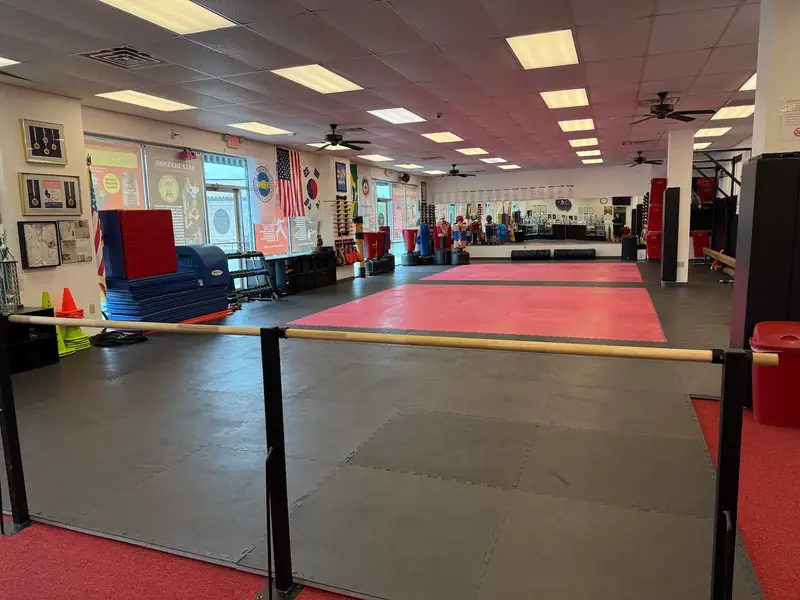
Wing Chun is the style most people in our building ask about. It became widely known after Ip Man began teaching it in Hong Kong in the early 1950s, and his most famous student, Bruce Lee, carried its reputation around the world. If you want a deeper look at the art itself, Global Martial Arts USA has a full guide: what is Wing Chun and how it trains.
What Is Brazilian Jiu-Jitsu?
Brazilian Jiu-Jitsu (BJJ) grew out of Japanese jujutsu and judo, which reached Brazil in the early 1900s and were reshaped there into an art focused on ground fighting. If you are curious how that happened, we covered it in Japanese jiu jitsu vs Brazilian jiu jitsu.
The core idea of BJJ is that a smaller person can control and defeat a larger one with leverage, position and timing instead of strength. In practice that means learning to:
- Take an opponent down or pull them into your guard
- Escape bad positions like mount, side control and back control
- Pass the guard and settle into dominant positions
- Finish with chokes and joint locks, or simply hold control until the situation is over
There are almost no strikes in BJJ training. The art is defined by grips, pressure, balance and problem solving at close range against someone who is actively fighting back.
Kung Fu vs Jiu Jitsu: The Key Differences
Here is how the two compare side by side. Keep in mind that "kung fu" covers a huge range, so some schools will fall outside these generalizations.
| Kung Fu (most styles) | Brazilian Jiu-Jitsu | |
|---|---|---|
| Main range | Standing, striking and kicking range, plus close-range trapping in styles like Wing Chun | Clinch and ground |
| Core tools | Punches, kicks, palm strikes, blocks, footwork, some throws and locks | Takedowns, positional control, escapes, chokes and joint locks |
| How it is taught | Forms, partner drills, conditioning, applications | Technique drilling, positional sparring and live rolling |
| Live sparring | Varies by school, from little to full contact | Part of most classes from early on |
| Weapons | Common in traditional schools | None |
| Pace of learning | Gradual, often built around forms and stances | Gradual, built around positions and repetition against resistance |
| Uniform | Varies: sash uniforms, school T-shirts | Gi with a belt, or rash guard and shorts for No-Gi |
Striking vs grappling
The biggest difference is simple. Kung fu mostly teaches you to strike and to avoid being struck. Jiu-jitsu mostly teaches you to control a person once you are tied up with them. Those are different problems, and each art is good at the one it was built for.
How resistance shows up in training
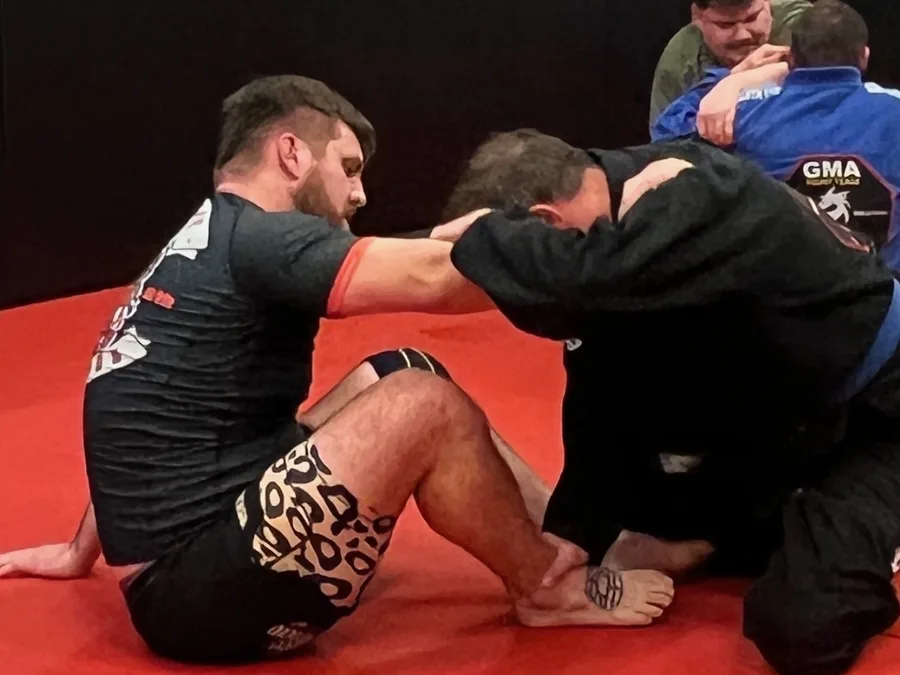
In BJJ, most of the techniques can be practiced at full effort against a resisting partner because chokes and joint locks can be applied with control and released the moment someone taps. That is why live rolling is a regular part of class, even for beginners once they know the basics. In striking arts, full-power contact carries more risk, so many kung fu schools rely more on forms, controlled partner work and sparring with protective gear. Neither approach is wrong; they just build skill in different ways.
Fitness and body
Kung fu tends to build flexibility, leg strength, balance and coordination, and internal arts like Tai Chi are especially gentle on the joints. Jiu-jitsu builds grip strength, core strength and the kind of full-body conditioning that comes from wrestling with another person for several minutes at a time. If you have health concerns about either, talk to your doctor before you start.
Which Is Better for Self-Defense?
This is the question everyone asks, and the honest answer is that each art covers a different part of the problem. A striking art helps you manage distance, protect your head and create space to get away. A grappling art helps you when the distance is already gone: someone has grabbed you, pushed you against a wall or taken you to the ground.
BJJ's strength here is that you practice against full resistance week after week, so you learn what actually works when someone is trying hard to stop you. Its gap is striking: a pure BJJ class will not teach you how to throw or block a punch. Kung fu's strength is its standing toolkit, footwork and awareness. Its gap, in many schools, is ground work and wrestling-style clinches.
That is why so many people who are serious about self-defense end up training both a striking art and a grappling art. We talked about how this plays out at the highest level in BJJ and MMA: nearly every modern fighter combines the two.
Kung Fu or Jiu Jitsu: Which Is Right for You?
Ask yourself what kind of training you will actually look forward to. That is what keeps people on the mat for years.
Kung fu may suit you if:
- You enjoy movement, forms and the artistic side of martial arts
- You want to develop striking, footwork and balance
- You are interested in traditional weapons or Chinese martial culture
- You prefer lower-impact training, or want a gentle option like Tai Chi
Brazilian Jiu-Jitsu may suit you if:
- You like problem solving and a physical game of chess
- You want to test what you learn against a resisting partner from the early weeks
- You want ground-level self-defense that works without needing size or strength
- You are interested in competing in grappling tournaments someday
And if both lists sound good, you do not have to choose. Plenty of our students train jiu-jitsu and a stand-up art at the same time.
Training Both at GMA in Gallatin
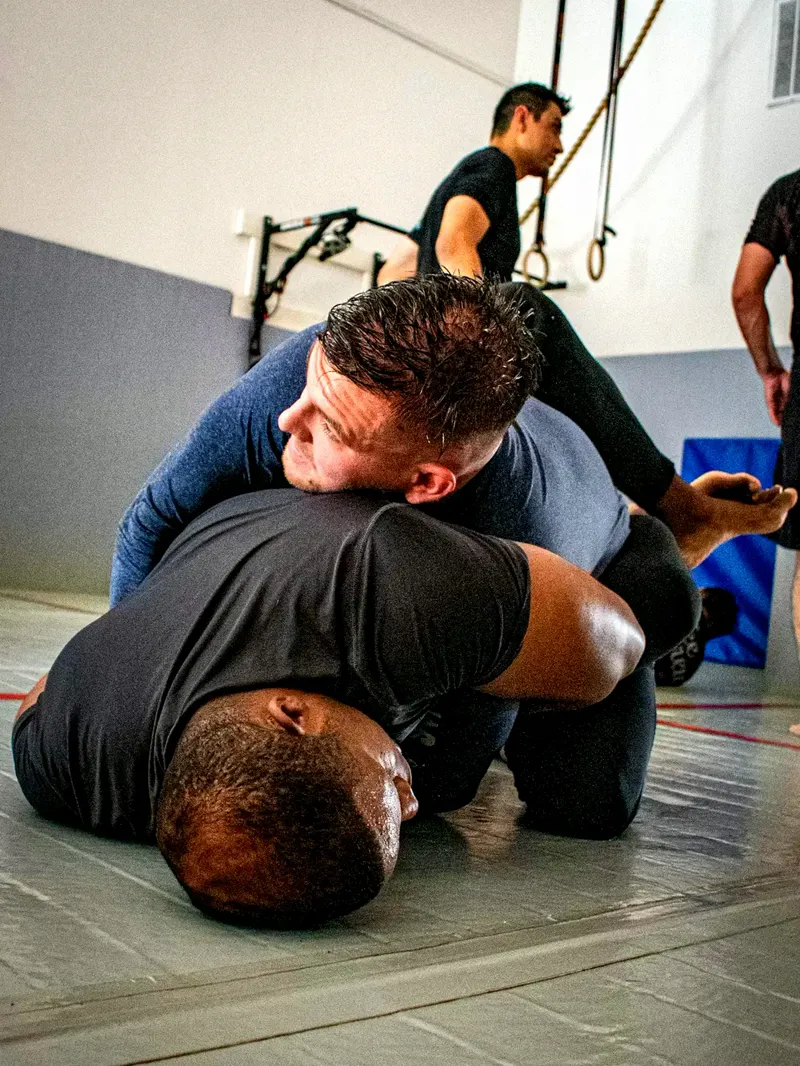
One building, two paths. Our adult Brazilian Jiu-Jitsu classes teach the Rocian Gracie Jr. Jiu-Jitsu curriculum for adults and teens 14 and up: guard and defense, takedowns, guard passing, escapes, submissions and positional sparring. Beginners train from their first class with an instructor guiding them. The program is led by Professor Konrado, who received his black belt directly from Master Rocian Gracie Jr. on December 12, 2000, as Rocian's first black belt.
Next door, Global Martial Arts USA runs TaeKwonDo, HapKiDo, Kung Fu, Tai Chi and Wing Chun. Kung fu, Tai Chi and Wing Chun are taught by Grandmaster W. Vardeman, who holds a black sash in Kung Fu and Tai Chi and has more than 50 years in the martial arts. Jiu-jitsu students often cross-train on that main floor for striking and takedown work.
The best way to decide is to feel it. Book a free jiu-jitsu trial class, roll for an hour and see how it fits. If you would rather start with kung fu or Wing Chun, those trials are on the Global Martial Arts USA site.
Try Jiu-Jitsu for Free
Take a free Brazilian Jiu-Jitsu class in the Rocian Gracie Jr. Method in Gallatin, TN. No experience needed, and martial artists from any style are welcome.
Book Your Free ClassFrequently Asked Questions
Is kung fu or jiu-jitsu better for self-defense?
They cover different situations. Kung fu focuses on striking and footwork on your feet, while Brazilian Jiu-Jitsu covers grabs, clinches and fighting on the ground against a resisting partner. Many people train both for a more complete skill set.
Can I train kung fu and jiu-jitsu at the same time?
Yes. At GMA in Gallatin, Kung Fu, Tai Chi and Wing Chun run in the same building through Global Martial Arts USA, and plenty of students cross-train. Start with a free jiu-jitsu trial.
Which is easier for beginners, kung fu or BJJ?
Neither is easy, and both welcome beginners. BJJ feels unfamiliar at first because most people have never grappled, but our adult classes put beginners on the mat from day one with an instructor guiding them.
Does Brazilian Jiu-Jitsu teach striking?
Very little. BJJ focuses on takedowns, positional control, escapes and submissions. For striking, students often add a stand-up art such as kung fu, Wing Chun or TaeKwonDo.