Most people come to Brazilian Jiu-Jitsu for fitness, self-defense or a new challenge. The ones who stay for years usually say the same thing: the art changed how they think. That is what jiu jitsu philosophy means in practice. It is not a set of slogans on a wall. It is a handful of working principles you test against a resisting partner every class, and they carry over into work, family and the rest of life.
This guide lays out those principles in plain terms: where the idea of a "gentle art" comes from, the core ideas that shape how Brazilian Jiu-Jitsu is trained, and how they show up on our mat here at GMA in Gallatin, TN. No mysticism, no hype. Just what the mat teaches and why.
Where the "Gentle Art" Name Comes From
Jiu-jitsu is an older Western spelling of the Japanese word jujutsu. The first character, ju, means soft, supple, flexible or yielding. The second, jutsu, means art or technique. Put together, it is usually translated as "the gentle art" or "the yielding art."
Gentle does not mean easy, and it does not mean nobody gets uncomfortable. It describes a strategy. Instead of meeting force head-on, you redirect it. When someone pushes, you pull or step off the line. When someone pulls, you follow and add your weight. The goal is to make an opponent's own energy work against them, so that a smaller person can control a larger one without trading blows.
Brazilian Jiu-Jitsu inherited that idea from the Japanese arts and from judo, then narrowed its focus to fighting on the ground against full resistance. If you want the longer history of how the art traveled from Japan to Brazil, we cover it in Japanese jiu-jitsu vs Brazilian jiu-jitsu.
The Core Principles of Jiu Jitsu Philosophy
Different schools phrase them differently, but nearly every serious academy teaches some version of the following ideas. None of them is a secret. What makes them powerful is that you can feel each one working, or failing, within the first few weeks of training.
1. Leverage and technique over strength
This is the founding promise of the art: a smaller, weaker person can defend against a larger, stronger one by using leverage, angles and timing. A well-placed hip, a frame with straight bones instead of bent arms, a grip on the right spot of the sleeve: each one lets you do more work with less muscle.
Beginners usually learn this the hard way. They try to bench press a heavier partner off of them, burn out in thirty seconds, and then watch an older, lighter training partner escape the same position with a calm bridge and a shrimp. That moment teaches more than any lecture.
2. Efficiency: the best use of energy
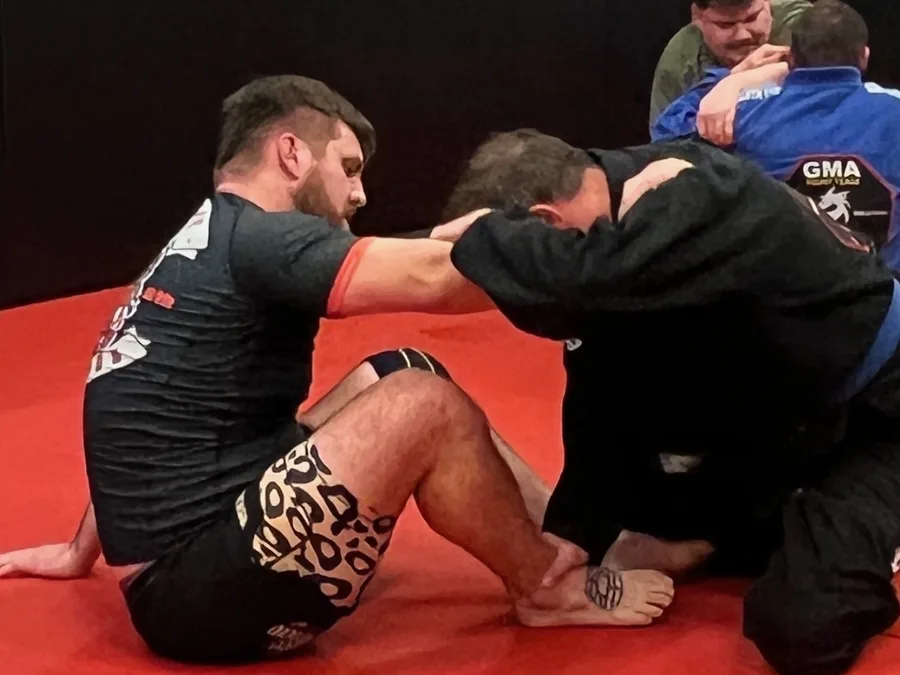
Judo founder Jigoro Kano built his art around a principle he called seiryoku zenyo, usually translated as "maximum efficiency, minimum effort" or, more literally, "the best use of energy." Brazilian Jiu-Jitsu carries the same idea. You learn to relax on the bottom, breathe, wait for an opening, and spend energy only when it buys you something.
Efficiency is why a skilled grappler can roll for an hour while a strong beginner gasses out in two rounds. It is also a useful habit off the mat: stop fighting the parts of a problem that will not move, and put your effort where it actually changes the outcome.
3. Position before submission
One of the most repeated sayings in any academy is "position before submission." Secure control first, then look for the finish. A student who chases an armlock from a loose position usually loses the position and the armlock. A student who settles into mount, takes away the opponent's frames and builds pressure finds that the submission shows up on its own.
The lesson underneath is patience and order. Build a base before you reach for the result. It applies to belt progress, to learning any new skill, and to most goals worth chasing.
4. The tap: honesty and ego
Every roll can end with someone tapping. That is the most honest feedback system in sports. You cannot talk your way out of a choke. When you tap, the round resets, you learn what went wrong, and you go again.
Tapping early keeps you safe and keeps you training. It also takes the ego out of learning. People who cannot stand to tap tend to get hurt or quit. People who accept it as information improve faster than anyone else in the room. A saying you will hear on many mats sums it up: you either win or you learn.
5. Mutual benefit
Kano paired efficiency with a second principle, jita kyoei, or "mutual welfare and benefit." The idea is simple: you cannot get better alone. Your training partner gives you their body to practice on, and you give them yours. If you hurt your partners, you run out of partners.
That is why good academies care so much about control. Higher belts slow down for newer students. Training partners let go when someone taps. Everyone leaves the mat a little better than they arrived.
6. Comfort in uncomfortable places
Being stuck under side control is uncomfortable. It is heavy, it is hard to breathe, and every instinct says to panic. Jiu-jitsu trains you to stay calm there, think, protect your neck, and work one small step at a time toward an escape.
That kind of composure under pressure is one reason so many students talk about what training does for their mood and stress levels. We look at what the studies actually show in our post on jiu-jitsu and mental health.
How the Philosophy Shows Up in Class
Principles only matter if they shape how people train. Here is what they look like on a normal night at an academy that takes them seriously.
- Drilling before sparring. Students rehearse a technique with a cooperative partner until the movement makes sense, then test it with live resistance. That is efficiency and position before submission built into the lesson plan.
- Positional sparring. Rounds that start from a specific position give dozens of focused repetitions, so students learn to stay calm and work in bad spots.
- Rolling with control. Partners match intensity to each other, especially across size, age and experience gaps.
- Tapping without shame. Nobody is mocked for tapping. Beginners are taught to tap early and often.
- Respect on and off the mat. A bow at the edge of the mat, a handshake before rolling, clean gear and trimmed nails are all small ways of looking after the people you train with.
Our Philosophy at GMA: The Rocian Gracie Jr. Method
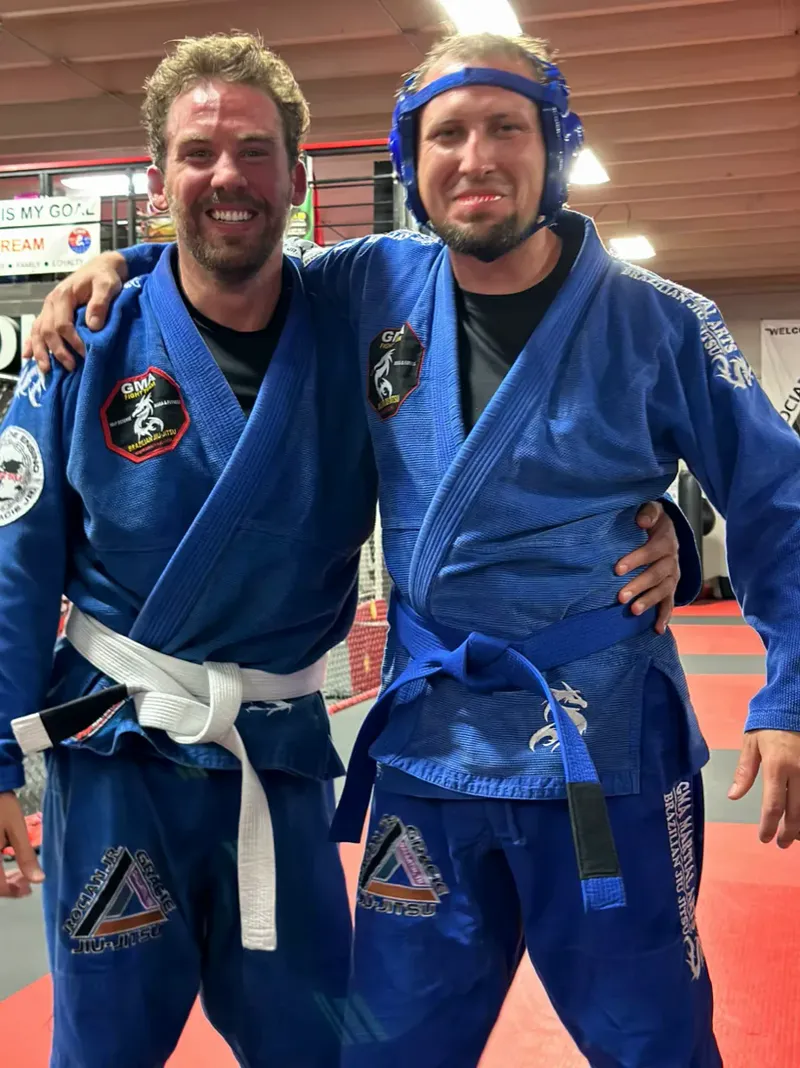
Every class at GMA follows the Rocian Gracie Jr. Method. Professor Konrado received his black belt directly from Master Rocian Gracie Jr. on December 12, 2000, the first black belt Master Rocian ever awarded, and the method he teaches here comes straight from that source. You can read the full story on our About page.
The heart of the method is that it measures what a student actually knows, not whether they compete. Two people can train side by side with the same understanding and the same ease of learning, and only one of them will have the physical and emotional makeup for tournaments. A curriculum built only around competition fails the other one. The Rocian Gracie Jr. Method measures knowledge, so both progress honestly. Competing is welcome here, and our Fight Team trains for it, but it is never required to earn rank.
The method is also strict about consistency. Every coach on our mat teaches the same system, in the same order, to the same standard. That matters philosophically as much as practically: a student's progress should not depend on which instructor happened to be teaching that night.
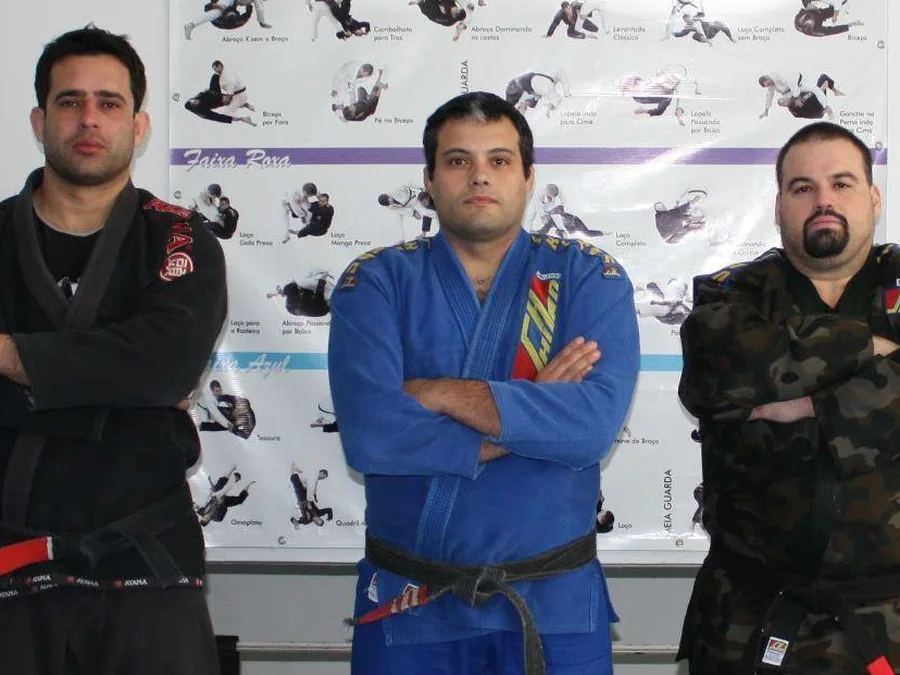
Professor Konrado has been teaching martial arts full time for more than four decades, and GMA has been part of the Gallatin community since 2012. The values the academy is built on (discipline, respect and community) are the same ones the gentle art has always taught: control yourself first, look after your partners, and keep showing up.
Taking the Philosophy Off the Mat
Students rarely sign up to learn philosophy. They sign up to get in shape or learn to defend themselves. Months later they notice they handle a stressful meeting differently, or they have more patience with their kids, or they stopped needing to win every argument. Those changes come from repetition, not from reading about them.
- Stay calm under pressure. Breathe first, then solve the problem in front of you.
- Use leverage. Look for the smart angle instead of forcing your way through.
- Build the base first. Position before submission works for careers, money and health.
- Tap and learn. Losing a round is information, not a verdict on who you are.
- Lift your partners up. The people around you are why you get better.
The fastest way to understand any of this is to feel it. Ten minutes under a patient training partner will teach you more about the gentle art than any article, including this one. If you are in or around Gallatin, book a free trial class and see how the principles work for yourself. No experience is needed, and beginners train with everyone from the first day.
Feel the Gentle Art for Yourself
Take a free Brazilian Jiu-Jitsu class in the Rocian Gracie Jr. Method in Gallatin, TN. No experience needed, and every beginner trains with the whole team from day one.
Book Your Free ClassFrequently Asked Questions
Why is jiu-jitsu called the gentle art?
The Japanese word ju means soft, supple or yielding, and jutsu means art or technique. The name describes a strategy of redirecting an opponent's force instead of meeting it head-on, not a lack of intensity.
What is the main principle of Brazilian Jiu-Jitsu?
That leverage, timing and technique let a smaller, weaker person control and defend against a larger, stronger one. Most of the other principles, like efficiency and position before submission, grow out of that idea.
What does "position before submission" mean?
Secure a controlling position first, then look for the finish. Chasing a submission from a loose position usually costs you both the position and the submission.
Do I have to compete to progress at GMA?
No. The Rocian Gracie Jr. Method measures what a student knows, not tournament results. Competition is welcome through our Fight Team, but it is never required. Learn more on our About page.
How can I try Brazilian Jiu-Jitsu in Gallatin?
Book a free trial class. No experience is needed, and we will lend you a gi for your first class.