Almost everyone who starts jiu-jitsu has the same experience in their first few rounds: two minutes in, your lungs are on fire, your forearms are locked up and you are lying on your back hoping the timer goes off. Most people decide they need a better BJJ cardio workout. Sometimes they do. More often, the fix is a mix of better pacing on the mat and the right kind of conditioning off it. This guide covers why grapplers gas out, what the research on match demands shows, and a simple weekly plan you can follow whether you train with us in Gallatin or anywhere else.
One honest note before we start: no amount of running replaces rolling. The most specific conditioning for jiu-jitsu is jiu-jitsu. Everything below is meant to support your mat time, not replace it.
Why You Gas Out in BJJ (It Is Usually Not Your Lungs)
New students tend to blame their cardio when the real problem is how they are spending energy. Three habits burn through a gas tank faster than any fitness gap:
- Tension. Squeezing every grip as hard as you can and bracing your whole body for the entire round is like sprinting with the parking brake on.
- Breath-holding. Under pressure, most beginners stop breathing or breathe fast and shallow from the chest. We covered how to fix this in our guide to BJJ breathing techniques.
- Explosive efforts with no purpose. Bridging as hard as you can without a frame or a plan feels productive, but it usually just tires you out while your partner rides it.
This is why a fit runner or cyclist can still gas out in their first month of grappling. Their heart and lungs are fine, but they are fighting every position with maximum effort. As technique improves, the same round costs far less energy. That is also why our adult Gi classes spend so much time on position, frames and escapes: efficient technique is the best cardio upgrade there is.
What a BJJ Cardio Workout Has to Prepare You For
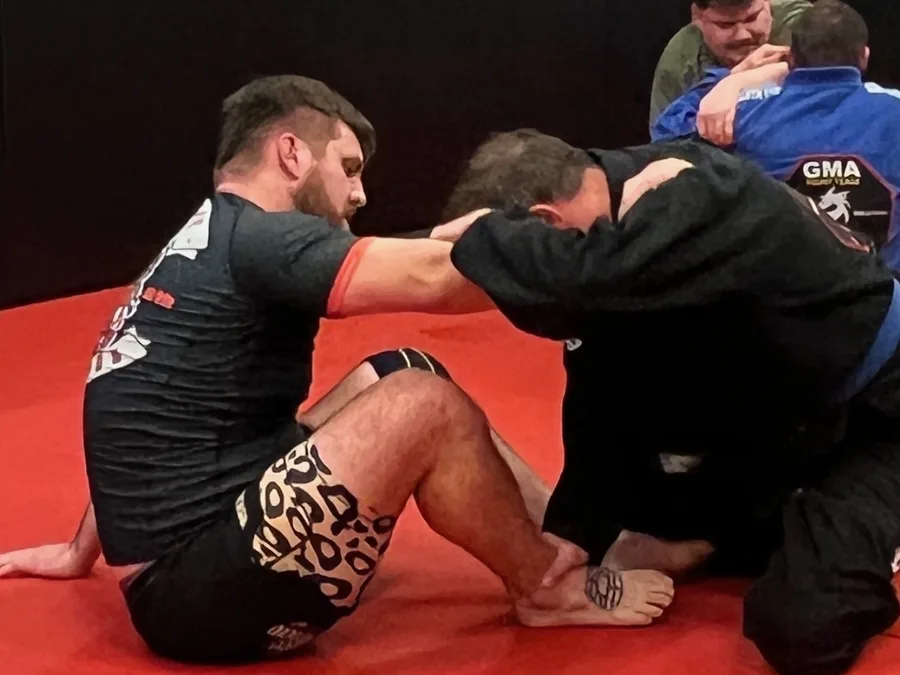
Jiu-jitsu is not steady like a jog. A round is a mix of slower positional work, short bursts of high effort (a scramble, an escape, a takedown attempt), and brief pauses. Researchers who study grappling describe it as intermittent: repeated high-intensity efforts on top of a steady aerobic base.
A 2017 study by Andreato and colleagues in the journal Kinesiology compared jiu-jitsu matches of different lengths and found that longer matches led to higher perceived exertion, more pause time and lower strength endurance afterward. In plain terms: the longer you go, the more your ability to keep producing hard efforts fades, and your body starts taking more breaks whether you want it to or not.
How long are BJJ matches?
If you plan to compete, match length gives you a useful target. Under the IBJJF Rule Book (version 6.1, June 2024), adult match times depend on belt:
| Adult belt (IBJJF) | Regulation match time |
|---|---|
| White | 5 minutes |
| Blue | 6 minutes |
| Purple | 7 minutes |
| Brown | 8 minutes |
| Black | 10 minutes |
Master 1 divisions run 5 minutes for white and blue belts and 6 minutes for purple, brown and black. Most academy rounds fall in the same range, so a well-built BJJ cardio workout should leave you able to work hard for five to ten minutes, recover quickly, and do it again.
The Two Engines: Aerobic Base and Anaerobic Bursts
Think of your conditioning as two engines that work together.
The aerobic base
Your aerobic system powers the slower parts of a round and, just as important, drives recovery between bursts and between rounds. A better base means your heart rate comes down faster after a scramble and you start the next round fresher. This is built with longer, easier work where you can still hold a conversation: brisk walking, easy cycling, rowing, swimming or light jogging for 30 to 45 minutes.
The anaerobic bursts
The anaerobic side handles the hard efforts: the explosive bridge, the shot, the scramble to your knees. It is trained with intervals, short bouts of hard work followed by rest. Intervals are demanding, so a little goes a long way, especially if you are already rolling several times a week.
For general health, the CDC recommends that adults get at least 150 minutes of moderate activity or 75 minutes of vigorous activity each week, plus muscle-strengthening work on two or more days. A few hard jiu-jitsu classes a week will take care of a big share of that on their own.
A Simple Weekly BJJ Cardio Workout Plan
Here is a starting template for someone training jiu-jitsu two to four times a week. Adjust the volume down if you are new to exercise, and never stack hard conditioning the day before a hard training session.
- One easy aerobic session (30 to 45 minutes). Bike, rower, brisk walk, swim or light jog at a conversational pace. This should feel easy. Its job is to build the base without taking anything away from your mat time.
- One interval session (15 to 25 minutes of work). For example, on a bike or rower: 30 seconds hard, 90 seconds easy, repeated 6 to 10 times after a good warm-up. As you adapt, move toward round-style intervals such as 3 minutes moderate with a few 10-second surges inside, then 1 minute easy, repeated 4 to 5 times.
- Strength work twice a week. Stronger muscles work at a lower percentage of their max during a roll, which saves energy. Our strength training for jiu-jitsu guide lays out a full program.
- Rounds on the mat. Your classes are your most specific conditioning. If you want more, add an extra session or a few extra rounds rather than another hard run.
Main GMA also publishes a broader look at strength and conditioning for MMA if you are curious how fighters in striking and grappling sports organize the same pieces.
Mat-based conditioning drills
When you want conditioning that looks like jiu-jitsu, these drills are hard to beat (do them with a partner and a coach nearby):
- Shrimping and technical stand-ups across the mat and back, in sets of 2 to 3 lengths.
- Sprawl to base for 20 to 30 seconds at a time.
- Positional rounds of 1 to 2 minutes from a bad spot, like bottom side control, where the goal is to escape and reset.
- Shark-tank style rounds, where one person stays in and a fresh partner rotates in every minute. Save these for when you already have a solid base, and keep them supervised.
Pacing on the Mat: The Cardio Skill Nobody Talks About
Good grapplers are not always the fittest people in the room. They are the best at spending energy only when it buys them something. A few habits that help:
- Relax in safe positions. When you have closed guard or your frames are set, breathe and let your grips soften a little.
- Explode on purpose. Save your big efforts for moments with a clear payoff, like an escape window or a sweep you have set up.
- Use your skeleton. Frames with straight arms and good angles hold weight much more cheaply than muscle does.
- Exhale on effort. Breathe out as you bridge, shrimp or drive, instead of holding your breath.
Most people notice that their "cardio" improves within the first few months just from relaxing and moving better, before their actual fitness has changed much.
Building Your Gas Tank at GMA in Gallatin
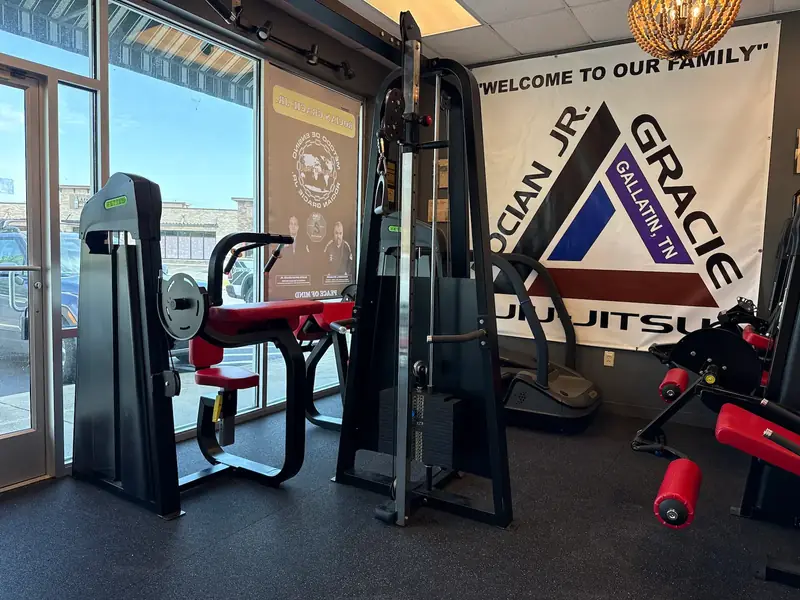
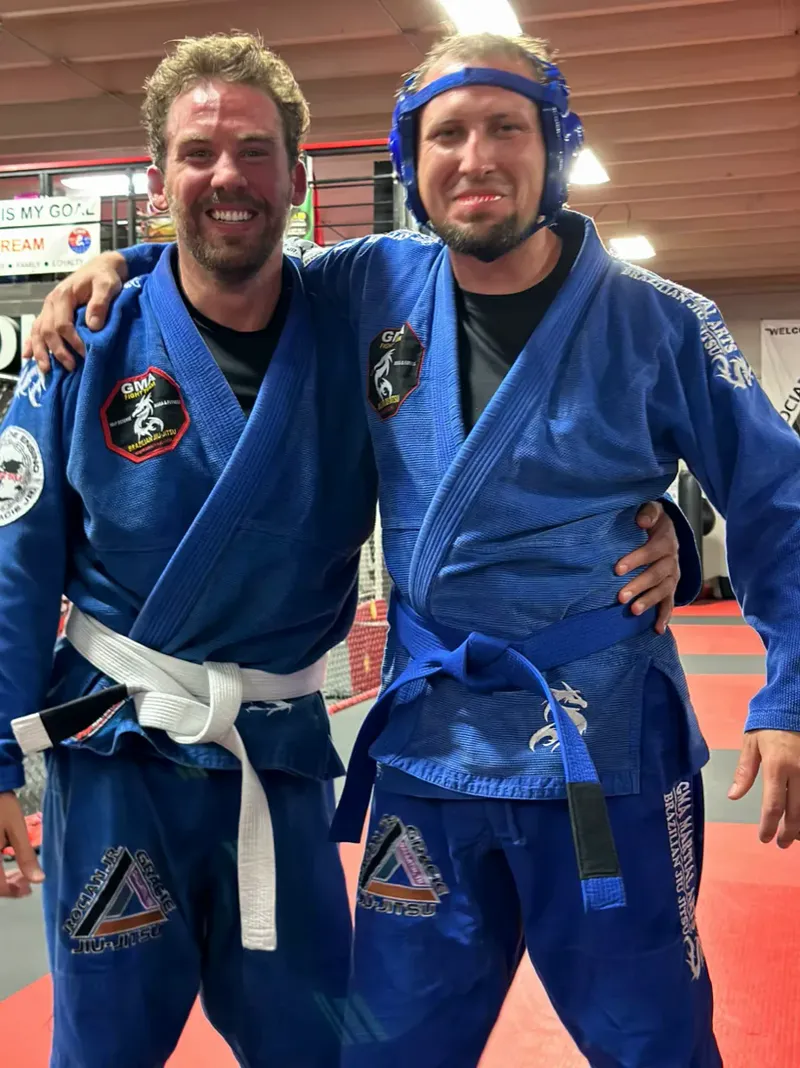
At Rocian Gracie Jr. Jiu-Jitsu at GMA, the classes themselves are a serious workout. Adult and teen (14+) Gi classes run on weekday evenings, and the weekday morning Open Gym (11:00 AM to 1:00 PM, four-person minimum) gives you extra drilling and rounds when you want more volume. Adult members also get free access to the weight room in the same building, so you can fit an interval or strength session around class without a second gym membership.
You do not need to get in shape before you start. Plenty of our students used their first months on the mat as their conditioning program. Book a free trial class, train at your own pace, and let the gas tank build as your technique does. If you have a heart condition, a past injury or any health concern, talk to your doctor before starting a new training program.
Build Your Gas Tank On The Mat
No fitness needed to start. Try a free adult jiu-jitsu class in Gallatin, TN and let your conditioning build with your technique.
Book Your Free ClassFrequently Asked Questions
What is the best cardio for BJJ?
Rolling is the most specific conditioning for jiu-jitsu. Off the mat, combine one easy aerobic session (bike, rower or brisk walk) with one interval session each week, plus strength work twice a week.
Why do I gas out so fast in jiu-jitsu?
Most beginners gas out from tension, breath-holding and big efforts with no plan, not from poor fitness. Relaxing in safe positions, using frames and exhaling on effort usually help more in the first months than extra running.
How long are BJJ matches?
Under the IBJJF Rule Book (v6.1), adult matches are 5 minutes at white belt, 6 at blue, 7 at purple, 8 at brown and 10 at black belt. Master 1 matches are 5 or 6 minutes depending on belt.
Do I need to get in shape before starting BJJ?
No. Classes are a workout on their own and you train at your own pace. Many students use their first months on the mat as their conditioning program. Book a free trial class and start where you are.
How often should I do cardio for BJJ?
If you train jiu-jitsu two to four times a week, one easy aerobic session and one interval session is plenty for most people. Keep hard conditioning away from the day before a hard training session.