If you have booked a trial class and are wondering what to wear to Brazilian Jiu Jitsu, the short answer is simple: comfortable athletic clothes with no zippers, buttons or pockets, plus a water bottle and short nails. You do not need to buy anything before your first class. This guide covers what to wear on day one, what a gi is and how to buy your first one, what No-Gi students wear, what to bring in your bag, and the few habits that keep everyone on the mat healthy. It is the same advice we give every new student who walks into our academy in Gallatin, TN.
If you have not picked a day yet, you can book a free trial class online and choose kids or adults. Arrive about 10 minutes early so there is time to meet the instructor, change and get a loaner gi sorted before warm-ups start.
What to Wear to Brazilian Jiu Jitsu for Your First Class
For a trial class at GMA, wear what you would wear to a workout, with one rule: nothing that can catch a finger or tear the mat. That means:
- A fitted t-shirt or rash guard. Snug is better than baggy. Loose tank tops and oversized shirts ride up, get tangled and give your partner a handful of fabric you did not mean to offer.
- Shorts or leggings. Athletic shorts with no zippers, buttons, rivets or pockets. Board shorts with a velcro fly and gym shorts with zip pockets are the usual problem. Leggings or compression pants work well for anyone who prefers covered legs.
- Nothing on your feet. Training is barefoot. Shoes come off before you step on the mat, and sandals or slides go back on when you step off.
We lend every trial student a gi for their first class, so you do not need to show up with one. You will wear your t-shirt underneath it and your shorts or leggings underneath the gi pants. If you would rather wear your own clothes for the first session, that is fine too. Just tell the instructor when you arrive.
Leave jewelry at home or in your car: rings, earrings, necklaces, watches and fitness bands. They scratch partners, snag on fabric and are easy to lose. If you wear glasses, plan to train without them or with contacts, since glasses do not survive a roll. Tie long hair back with a soft elastic and skip hard clips.
The Gi: What It Is and When to Buy One
The gi is the traditional Jiu-Jitsu uniform: a heavy cotton jacket, reinforced pants with a drawstring, and a belt that shows your rank. Unlike a karate uniform, a BJJ gi is built to be grabbed. Students grip the collar, sleeves and pants to control a partner, set up sweeps and finish chokes, so the fabric has to take a lot of pulling. Our adult Gi Jiu-Jitsu classes are trained in the gi, and that is where most of the weekly schedule sits.
Most of our students buy their own gi within the first few weeks, once they know they are sticking with it. A single white gi is enough to start. Students on a 12-month program receive a free gi, so check the plan options before you buy one yourself.
Buying your first gi
- Color. White is the safe first choice. It is accepted at every academy and every tournament. If you ever plan to compete, the IBJJF allows only white, royal blue or black, with the jacket, pants and collar all the same color. Our post on IBJJF gi and uniform rules covers the full competition checklist.
- Weave. Gis come in different weaves and weights. A mid-weight pearl weave is the common all-round choice for beginners: durable enough for daily training without being so heavy it is hot and slow to dry.
- Size. Adult gis are sized with letters and numbers (A1, A2, A3 and so on), but sizes are not standardized between brands. One company's A2 can fit like another's A3. Always use the specific brand's chart for your height and weight, and if you fall between sizes, ask one of our coaches before you order.
- Shrinkage. Most cotton gis shrink a little, mainly from heat. A gi that fits perfectly out of the bag can end up short in the sleeves and pants after a hot dryer cycle. Many manufacturers recommend washing in cold water and hanging to dry for the first few washes, then reassessing the fit.
Every new adult starts at white belt, and stripes and belts are earned from there through mat time and technique.
What goes under the gi
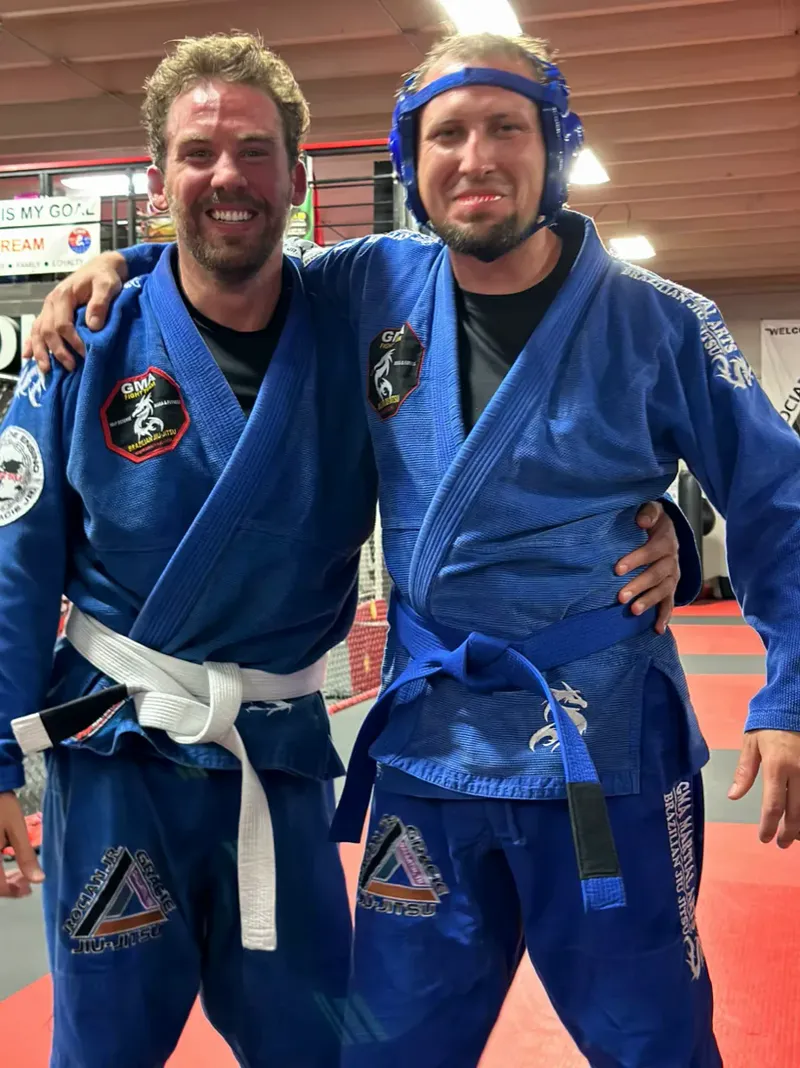
In regular class, most people wear a t-shirt or rash guard under the jacket and briefs or compression shorts under the pants. That is comfortable, helps keep sweat off your partner and keeps the jacket from rubbing your skin raw in the first weeks. Competition rules are stricter (men cannot wear a shirt under the jacket at IBJJF events, for example), but for training at the academy a fitted shirt underneath is normal.
What to Wear for No-Gi Grappling
No-Gi is Jiu-Jitsu without the uniform. Since there is no jacket to grab, the clothing is designed to be hard to grip and close to the body. Our No-Gi Grappling classes are included in every membership, and the standard outfit is:
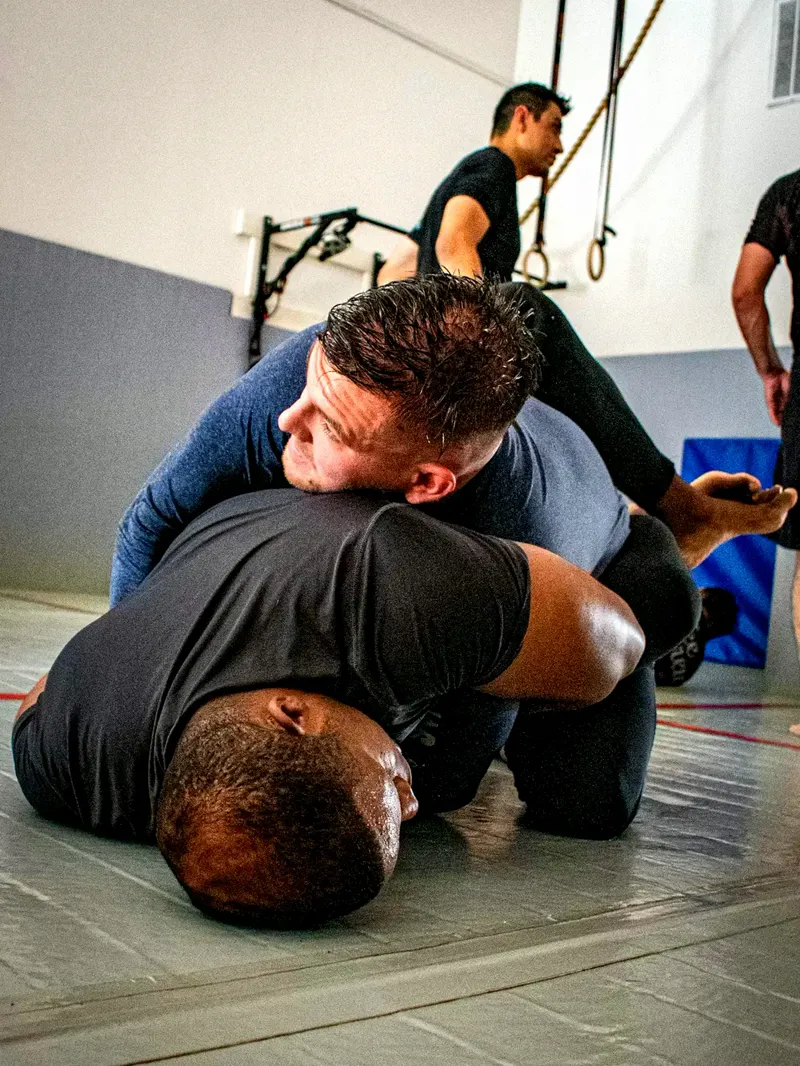
- A rash guard. A tight, stretchy athletic top, short or long sleeved. It does not ride up, protects your skin from mat burn and keeps sweat contained.
- Grappling shorts. Usually a board-short style with a stretch panel and a drawstring or velcro waist, but no metal, buttons or pockets.
- Spats (optional). Compression leggings worn alone or under shorts. They reduce mat burn and scratches on your legs. Plenty of people train in shorts only.
The no-zippers, no-buttons, no-pockets rule applies here too. If you are deciding whether to start in the gi or without it, our sister school has a good overview of gi vs no-gi BJJ. Most of our students end up training both.
What to Bring in Your Gym Bag
Once you are training regularly, a small bag covers everything. A good checklist:
- A water bottle. Jiu-Jitsu is harder work than it looks, especially in a heavy cotton gi.
- Sandals or slides. For walking off the mat to the bathroom or water fountain, so you do not track dirt back onto the mat.
- A clean gi or a clean rash guard and shorts. Every session.
- A mouthguard. Not needed for your first class, but a good idea once you start live rolling. Elbows and knees find faces now and then.
- A towel and a change of clothes. You will want to change before you drive home.
- Nail clippers. More on this below.
- A plastic bag for sweaty gear. It keeps the rest of your bag and your car clean until you get home.
Some people add ear guards (soft headgear that protects the ears from friction) or athletic tape for fingers. Neither is required to start. Ask a coach if you are not sure you need something.
Hygiene Rules That Come With the Outfit
What you wear only matters if it is clean. Jiu-Jitsu is a close-contact sport, and the mat is shared by everyone, so a few habits are part of the dress code:
- Wash your gear after every session. Do not wear a gi or rash guard twice without washing it, and do not leave it balled up in your bag overnight.
- Trim your fingernails and toenails. Long nails scratch partners and break easily when you grip. Short and smooth is the standard.
- Shoes off on the mat, sandals on off the mat. Feet that have walked through a bathroom should not walk back onto the training surface.
- Stay home if you have a skin issue. Any rash, cut or spot you are not sure about should be covered or checked before you train. If in doubt, sit out and talk to your doctor.
Nobody expects a new student to know all of this on day one. Most people pick up the customs within a week or two. Our frequently asked questions page covers the dress code and mat etiquette in one place.
What Kids Wear to Jiu-Jitsu
The same rules apply to children: comfortable athletic clothes with no zippers, buttons or pockets for the first class, bare feet on the mat, short nails, and no jewelry. Kids get a loaner gi for their trial too. Our kids Jiu Jitsu classes are built for ages 6 to 12, and teens 14 and up train in the adult Gi classes.
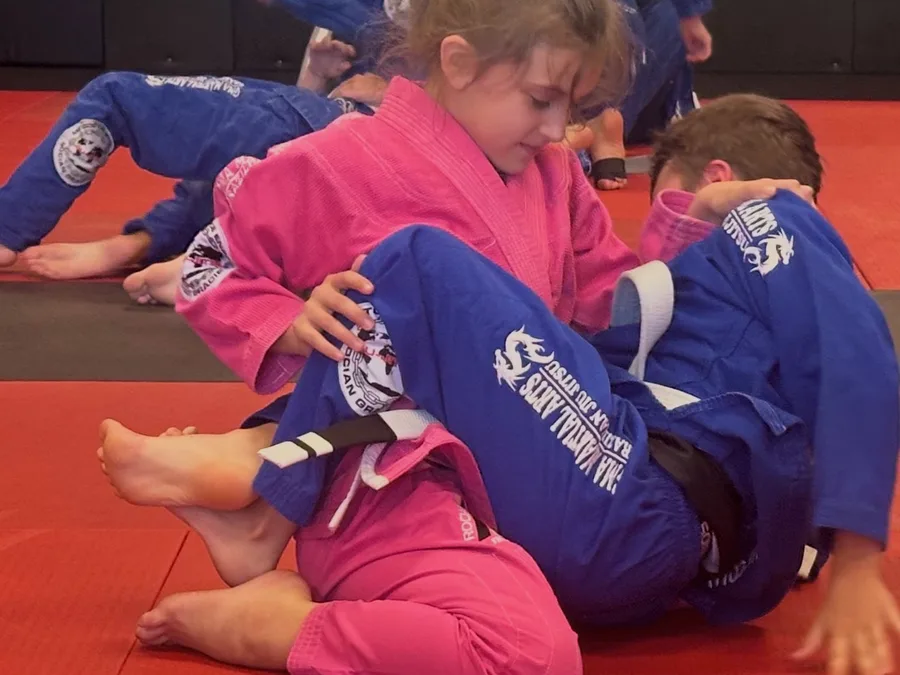
For parents, the practical tip is sizing. Kids grow fast and gis shrink a little, so many families buy a size that leaves some room, then wash cold and hang dry so it lasts longer. Label the gi and belt with your child's name, because a dozen white kids' gis on a bench all look the same.
Ready for Your First Class?
That is genuinely all there is to it. Show up in a t-shirt and shorts or leggings, bring water, trim your nails and leave the jewelry at home. We handle the gi. Check the class schedule to find a time that works, and if getting fitter is part of why you are starting, our post on Jiu-Jitsu for weight loss covers what to expect from regular training.
Your First Class Is Free
Wear comfortable clothes and we will lend you a gi. Book a free trial at GMA Brazilian Jiu-Jitsu in Gallatin, TN.
Book Your Free ClassFrequently Asked Questions
What should I wear to my first Brazilian Jiu-Jitsu class?
Comfortable athletic clothes with no zippers, buttons or pockets: a fitted t-shirt and shorts or leggings. Training is barefoot. At GMA we lend you a gi for your trial class, so you do not need to buy one first.
Do I need my own gi to start BJJ?
No. We lend one for your first class. Most students buy their own within the first few weeks, and a single white gi is enough to start. Students on a 12-month program receive a free gi.
Can I wear a t-shirt under my gi?
Yes, for regular training a t-shirt or rash guard under the jacket is normal and helps with sweat and skin irritation. Competition rules are stricter, so check our guide to IBJJF gi rules before a tournament.
What do you wear for No-Gi Jiu-Jitsu?
A rash guard and grappling shorts or spats, with no zippers, buttons or pockets. See our No-Gi Grappling classes for more.
Do I need a mouthguard for Jiu-Jitsu?
Not for your first class. Once you start live rolling, a mouthguard is a smart, inexpensive piece of protection, and many students wear one every time they spar.